Vibro compaction helps you to enhance soil stability, mitigate settlement risks, and prevent liquefaction, making it essential for your large-scale infrastructure projects.
This article will introduce the working principle, applicable soil types, and advantages of vibro compaction. With this information, you can quickly assess whether this method suits sites with reclaimed sand or gravel.
What is Vibro Compaction?
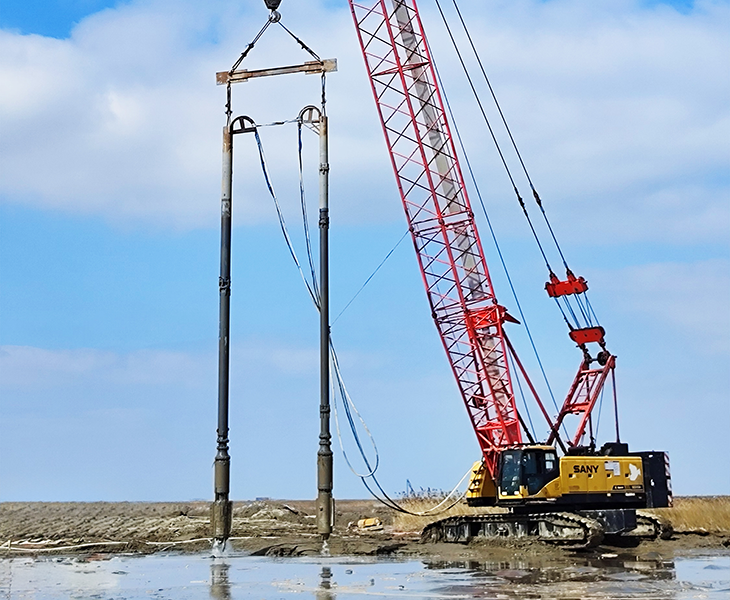
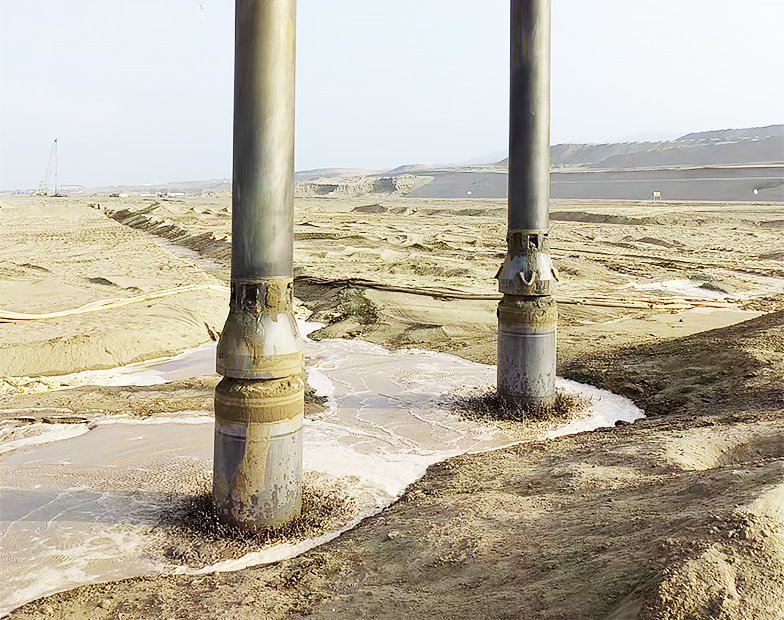
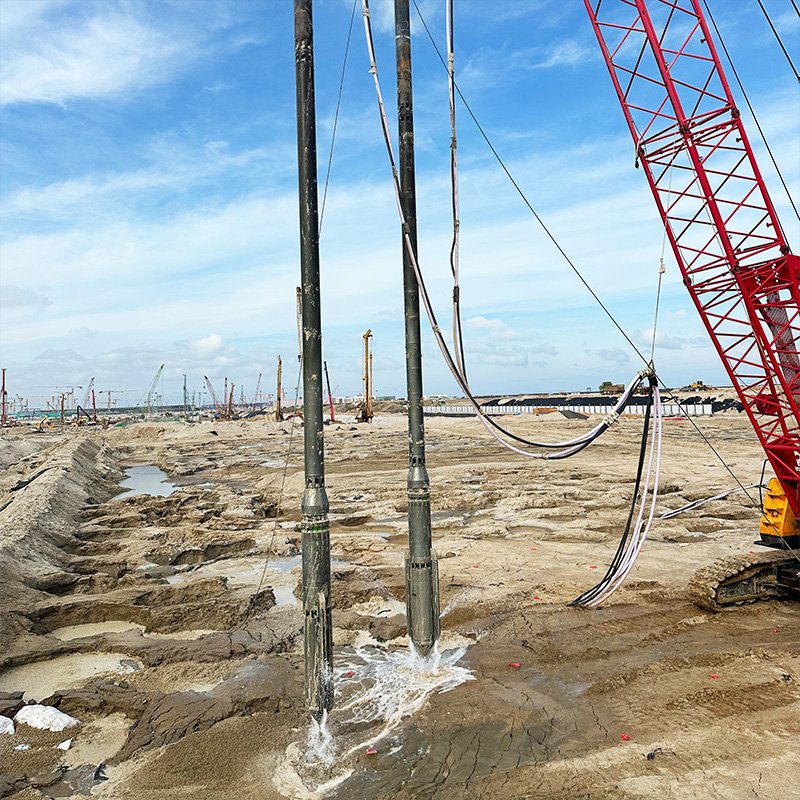
Vibro compaction uses a vibroflot that generates horizontal vibration,and high-pressure water helps the vibroflot penerate deep into the soil.This creates localised soil liquefaction. Soil particles lose friction and rearrange into tighter layers, raising overall soil density.
How Does Vibro Compaction Work?
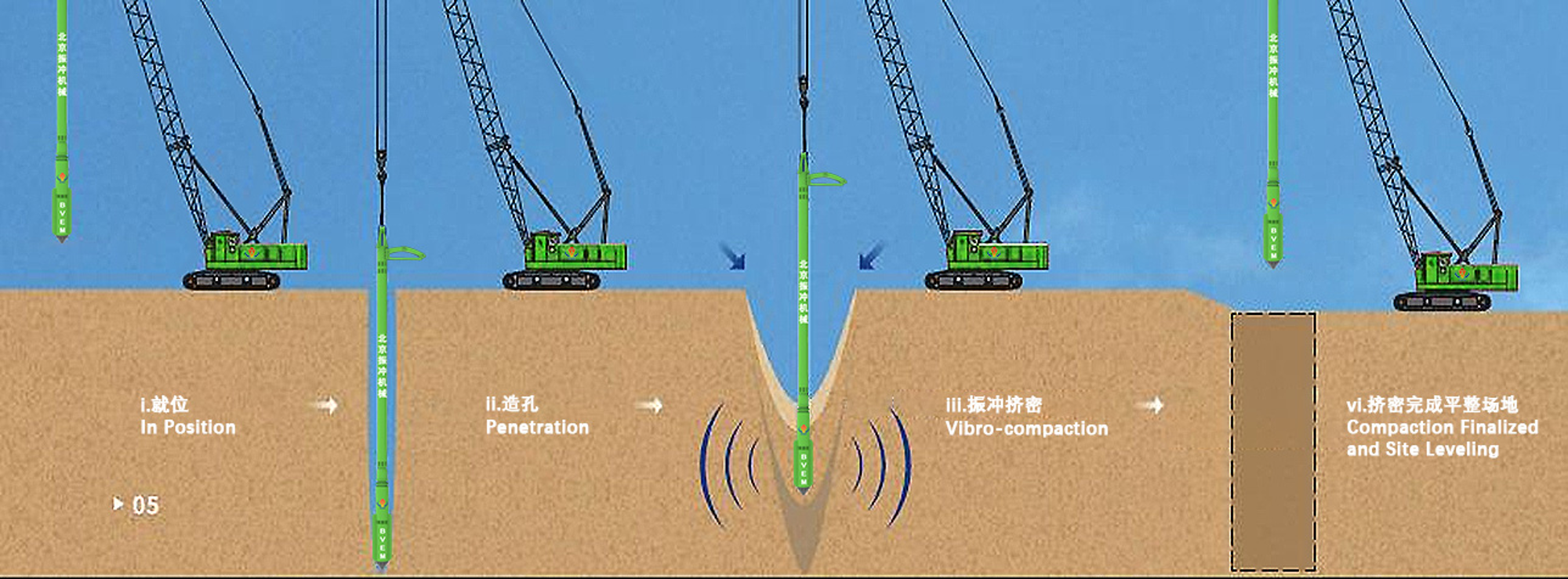
Vibro compaction is a ground improvement method that uses a vibroflot to densify loose granular soils by rearranging soil particles under vibration. The process involves three basic actions: penetrating the ground to the required depth, densifying the surrounding soil through vibration, and gradually withdrawing the probe after achieving the required level of soil improvement.
Vibroflot Penetration
The vibroflot is lowered vertically into the ground until it reaches the required treatment depth. High-frequency vibration, combined with water or air flushing when needed, reduces soil resistance and helps the probe penetrate loose soil layers.
Soil Densification Under Vibration
At the design depth, vibration is applied to the surrounding soil. The vibration allows loose soil particles to move and rearrange into a denser structure, reducing void spaces and improving properties such as relative density, bearing capacity, and settlement resistance.
Stepwise Withdrawal and Surface Compensation
After the required densification is achieved at depth, the vibroflot is gradually withdrawn in stages while vibration continues. Each section of soil is compacted before moving upward to the next level. In some cases, clean sand may be added during the process to compensate for surface settlement and maintain the required ground elevation.
What Benefits Can You Expect from Vibro Compaction?
Geotechnical Improvements
Reduced Settlement Risk
Vibro compaction increases the density of loose granular soils, reducing total and differential settlement under foundation loads. By improving ground conditions, you can achieve a more stable foundation base for large structures and infrastructure projects.
Increased Bearing Capacity and Soil Stiffness
Densified soil provides higher bearing capacity and improved stiffness, allowing you to consider more economical foundation solutions where site conditions permit.
Improved Resistance to Liquefaction
By reducing soil voids and increasing relative density, vibro compaction lowers the liquefaction potential of loose saturated sands. This makes it a suitable option when you need to improve ground performance in seismic-prone areas and reclaimed land.
Improved Ground Stability
The process increases soil shear strength and helps stabilize weak granular layers. This provides you with more reliable ground conditions for applications such as embankments, industrial platforms, and large foundation projects.
Construction and Cost Advantages
Fast Installation
Vibro compaction can treat large areas efficiently within a relatively short construction period. This makes it a practical solution when you need to improve extensive ground areas while keeping your project schedule on track.
Cost-Effective for Suitable Soil Conditions
For loose granular soils, vibro compaction often provides an economical alternative to deeper foundation solutions. By improving the existing ground instead of replacing weak soil, you can reduce the need for additional foundation measures and control overall construction costs.
Flexible Design Options
Treatment depth, spacing, and compaction parameters can be adjusted according to soil conditions and project requirements. When planning your ground improvement scheme, you can select a suitable treatment layout based on the required bearing capacity, settlement control, and site limitations.
Reduced Need for Imported Fill
Where suitable surface soils are available, vibro compaction can reduce the need for additional fill materials during ground improvement. This allows you to make better use of existing site materials while reducing material handling and transportation requirements.
Environmental and Site Benefits
Low Disturbance Construction
Compared with many deep foundation methods, vibro compaction produces relatively low noise and limited ground disturbance. This makes the method suitable for projects where you are working near existing structures, industrial facilities, or environmentally sensitive areas.
Lower Material Consumption
Because the method improves existing soil without requiring large volumes of replacement materials, you can reduce the amount of imported fill required for ground improvement. This reduces material handling requirements and simplifies site logistics.
Is Vibro Compaction Right for Your Project?
Before selecting vibro compaction for your project, you need to evaluate several key factors, including soil type, fines content, groundwater conditions, required improvement depth, and project objectives. Vibro compaction is highly effective for loose granular soils, but its suitability depends largely on the characteristics of the existing ground.
Suitable Soils
Vibro compaction is primarily used for loose, cohesionless soils where particles can be rearranged under vibration. The method is most effective in clean sands and gravels with sufficient drainage capacity.
Typical suitable soils include:
- Loose sand
- Silty sand with low fines content
- Gravelly soils
- Hydraulic fill
- Reclaimed land formed with granular materials
When you are working with these types of granular soils, vibro compaction can improve bearing capacity and reduce settlement potential by rearranging soil particles into a denser structure.
Treatment Depth
The achievable treatment depth depends on soil conditions, equipment capacity, and project requirements.
When you evaluate vibro compaction for your project, you should consider:
- foundation loading conditions
- compressible layer thickness
- settlement criteria
- geotechnical investigation results
Groundwater Conditions
Groundwater level is an important factor when you assess whether vibro compaction is suitable for your site.
Saturated granular soils are often suitable because water helps reduce particle resistance during vibration and allows soil particles to rearrange more easily.
However, groundwater conditions should be considered during design, including:
- groundwater depth
- drainage conditions
- potential environmental restrictions
Fine Content
The percentage of fine particles significantly affects vibro compaction performance.
Clean sands and gravels with low fines content generally respond well to vibration. As fines content increases, soil permeability decreases and particle movement becomes more restricted, reducing the effectiveness of densification.
A detailed grain-size analysis is therefore required before selecting vibro compaction.
Coefficient of Uniformity
The coefficient of uniformity (Cu) describes the particle size distribution of granular soils and is an important parameter for evaluating their suitability for vibro compaction. Generally, well-graded granular soils are more likely to achieve effective densification during vibro compaction. The Cu value should be evaluated together with fines content and relative density during the geotechnical assessment, as soils with a very uniform grading may respond differently from well-graded soils during densification.
How Is Vibro Compaction Designed?
Every vibro compaction project requires a site-specific design. The treatment parameters are determined based on the geotechnical investigation, project requirements, and foundation performance criteria. The following factors are typically considered during the design process.
Treatment Depth
The required treatment depth is determined by the thickness of the loose soil layer, foundation loading, settlement criteria, and geotechnical investigation results. When planning your project, you should ensure that the treatment depth covers the soil layer requiring improvement.
Grid Pattern
Treatment points are arranged in a predefined grid pattern to achieve uniform ground improvement. Triangular and square grids are the most common layouts, and the final selection depends on soil conditions, project requirements, and the required degree of densification.
Treatment Spacing
Treatment spacing is selected according to soil conditions, foundation loads, and the required improvement level. When you require higher soil density or greater bearing capacity, closer spacing may be adopted.
Water Pressure
Water pressure is adjusted according to soil conditions and the construction method. Adequate flushing helps the vibroflot penetrate to the design depth and promotes effective soil densification. The required pressure should be sufficient to aid penetration without causing excessive soil disturbance.
Hold Time
Hold time refers to the period during which the vibroflot remains at a specific depth while vibration continues. Sufficient hold time allows the surrounding soil to reach the required degree of densification before the probe is withdrawn.
Relative Density
The target relative density is determined during the design stage based on project requirements and expected foundation performance. You should verify that the specified relative density can be achieved under the proposed construction parameters.
Bearing Pressure
The required foundation bearing pressure influences the overall ground improvement design. Higher foundation loads generally require greater soil densification, which may affect treatment depth, spacing, and construction parameters.
Probe Selection
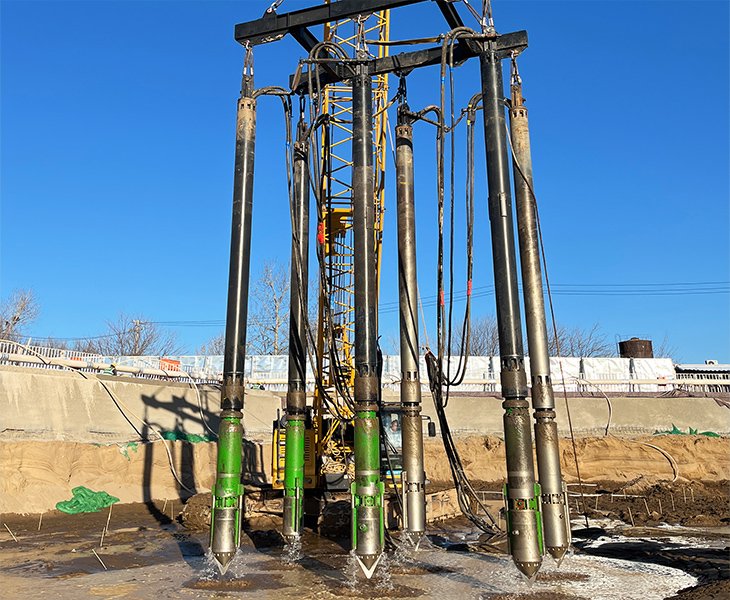
Probe selection depends on soil conditions, treatment depth, and construction requirements. When selecting a vibroflot, you should consider factors such as probe diameter, motor power, centrifugal force, and vibration frequency to match the equipment to your project.
How Does Vibro Compaction Compare with Other Ground Improvement Methods?
No single ground improvement method is suitable for every project. The most appropriate solution depends on soil conditions, design requirements, construction constraints, and project budget. Understanding the differences between common ground improvement methods will help you choose the most suitable approach for your site.
Vibro Compaction
Best suited for loose, saturated granular soils where increasing soil density is the primary objective. It improves bearing capacity, reduces settlement, and mitigates liquefaction without introducing additional reinforcement materials.
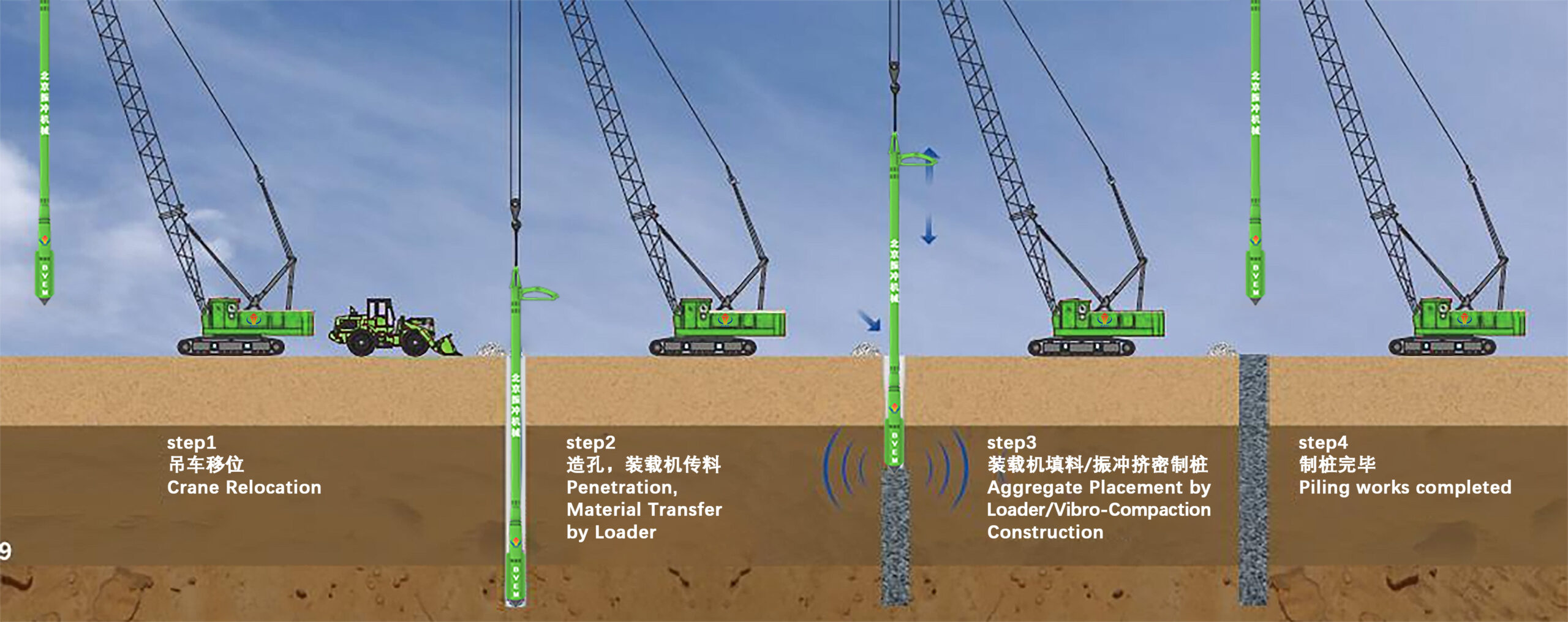
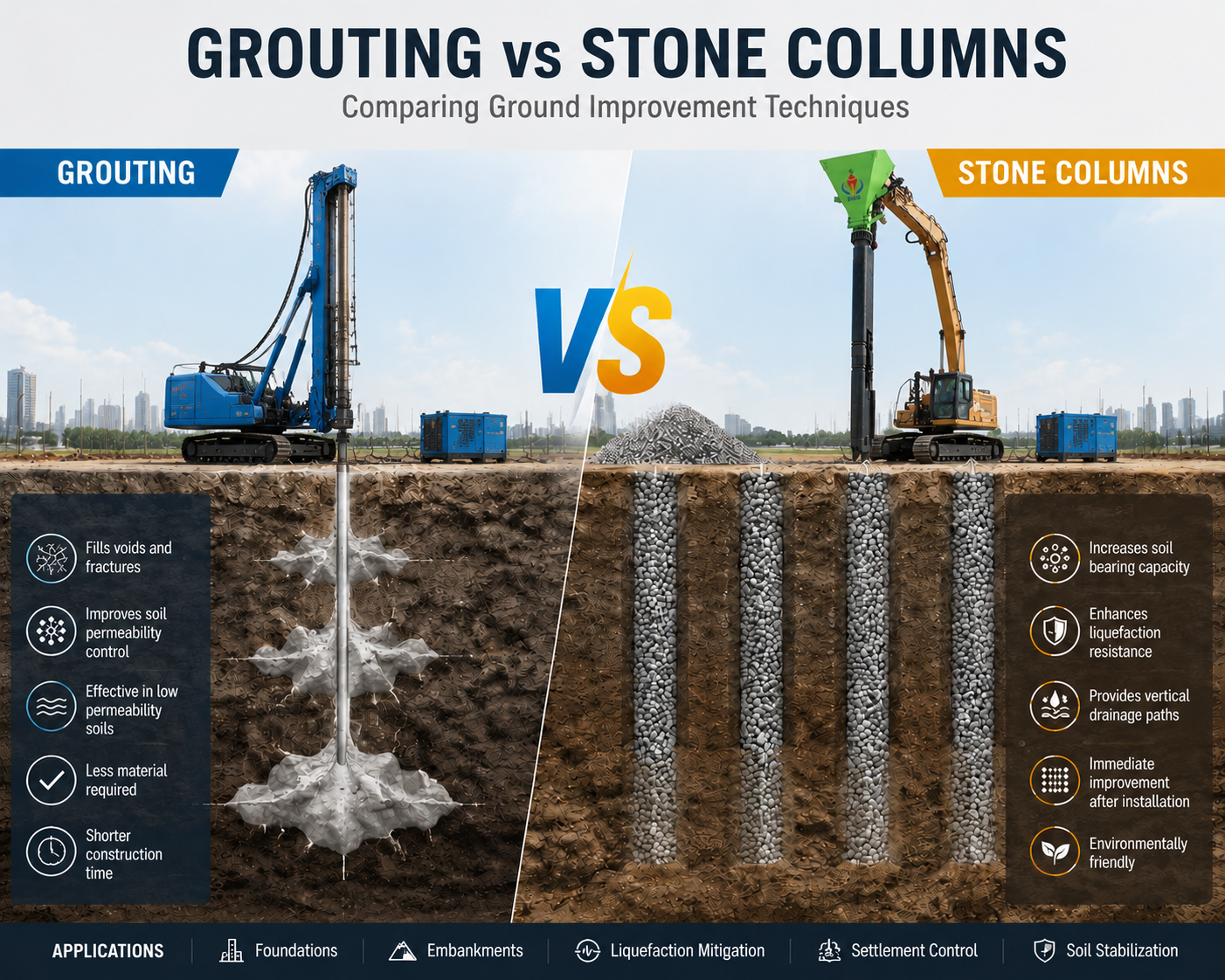
Vibro Replacement (Stone Columns)
Used where soils contain excessive fines or cohesive materials that cannot be effectively densified by vibration alone. Stone columns improve bearing capacity while also providing reinforcement and drainage.
Comparison Table
| Criteria | Vibro Compaction | Stone Columns |
| Best Soil Type | Loose sand & gravel | Soft clay, silty soils, loose sand |
| Improvement Mechanism | Soil densification | Reinforcement + drainage |
| Typical Depth | Deep(up to 30 m+) | Deep(up to 100 m+) |
| Liquefaction Mitigation | Excellent | Good |
| Bearing Capacity Improvement | High | High |
| Settlement Control | Excellent | Excellent |
| Groundwater Conditions | Usually saturated soils | Suitable for saturated soils |
| Noise | Low | Low |
| Vibration | Moderate | Moderate |
| Construction Speed | Fast | Moderate |
| Typical Applications | Ports, airports, reclaimed land, container terminals, industrial platforms | Embankments, bridge approaches, storage tanks, industrial facilities |
| Suitable Fines Content | Low | Moderate to high |
| Relative Cost | Low | Moderate |
FAQ
How much bearing capacity can vibro compaction provide?
The achievable bearing capacity depends on the soil type, treatment layout, foundation loading, and project performance requirements. In many projects, vibro compaction can support spread footings with design bearing pressures of approximately 5 to 10 ksf (240–480 kPa) while maintaining acceptable settlement. The final design bearing capacity should always be confirmed through geotechnical analysis and, where required, field load testing.
What tests are performed after vibro compaction?
The tests performed after vibro compaction depend on the project requirements and the performance criteria established during design. In most projects, engineers use Cone Penetration Tests (CPT) or Standard Penetration Tests (SPT) to evaluate soil improvement, while Plate Load Tests may be conducted to confirm foundation bearing capacity. Settlement monitoring is often used for projects with strict deformation limits, and relative density measurements may be performed where required to verify the degree of soil densification.
What factors can reduce the effectiveness of vibro compaction?
The effectiveness of vibro compaction depends on proper site investigation, suitable soil conditions, and correct construction procedures. Performance may be reduced if the soil contains excessive fines or cohesive materials that cannot be effectively densified by vibration. Other factors include inadequate geotechnical investigation, inappropriate treatment spacing, insufficient vibration energy or inadequate hold time, poor quality control during construction, and unexpected site conditions such as variable fill materials or buried obstructions. Selecting appropriate design parameters and verifying field performance are essential to achieving the required ground improvement.
What equipment is used for vibro compaction?
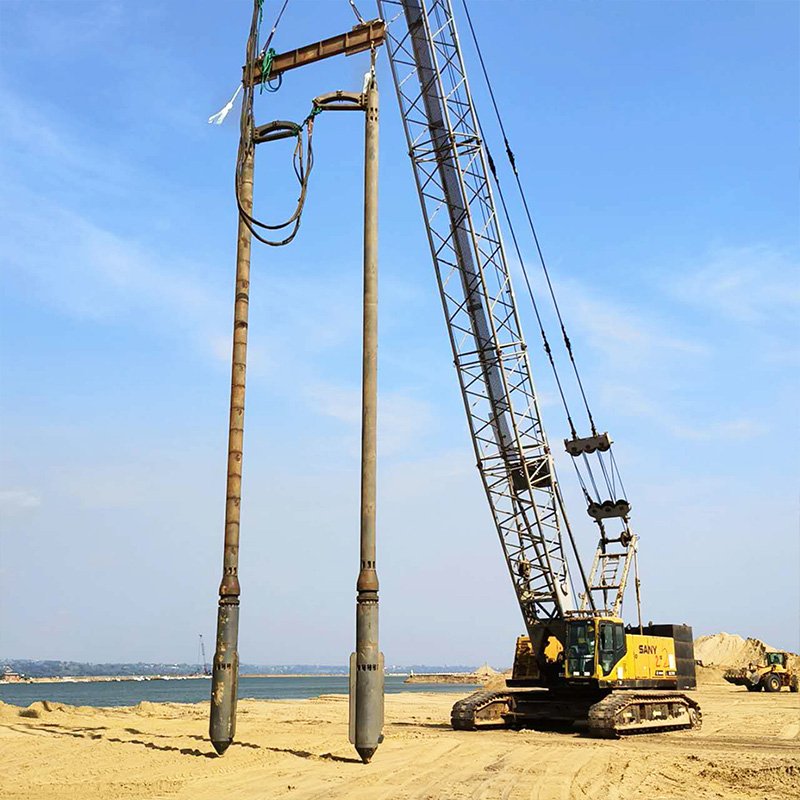
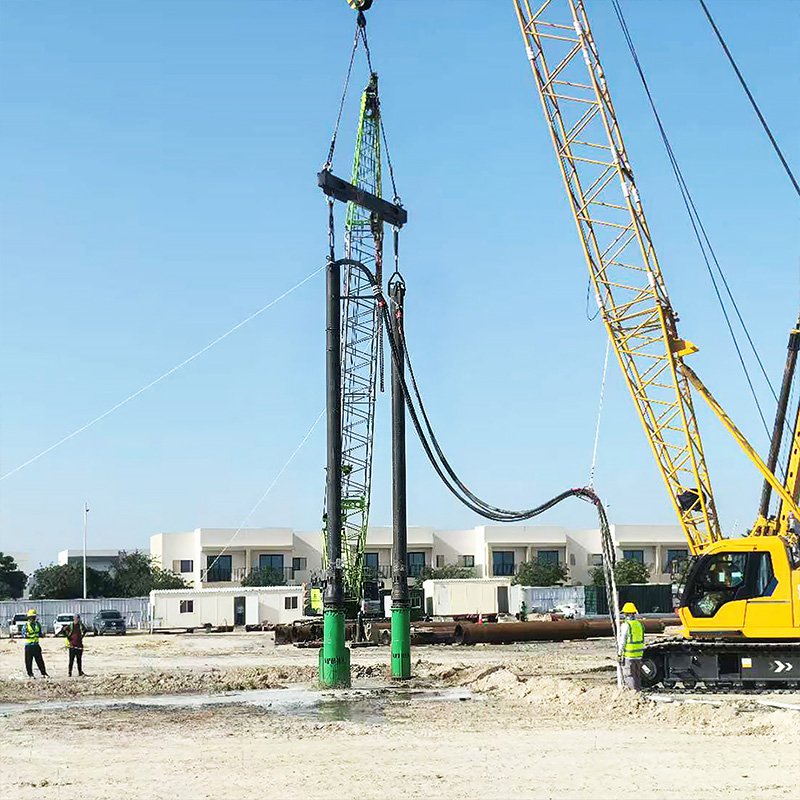
Vibro compaction requires specialized equipment to deliver vibration, position the probe, and support the construction process. A typical setup includes a vibroflot, a crawler crane or specialized rig for handling the probe, an electrical control cabinet and generator to supply power, and a water supply system for flushing during penetration where required. Depending on the project and site conditions, supporting equipment such as desanding units, filter presses, pumps, air compressors, and monitoring instruments may also be used to maintain construction efficiency, manage slurry, and ensure quality control.
Why Choose BVEM Vibroflots?
As an experienced vibroflot manufacturer, BVEM provides reliable vibroflot equipment and customized solutions for ground improvement projects worldwide. Our products support applications including vibro compaction and soil densification, backed by professional technical support for contractors and engineers. Contact BVEM for expert equipment selection and project solutions.