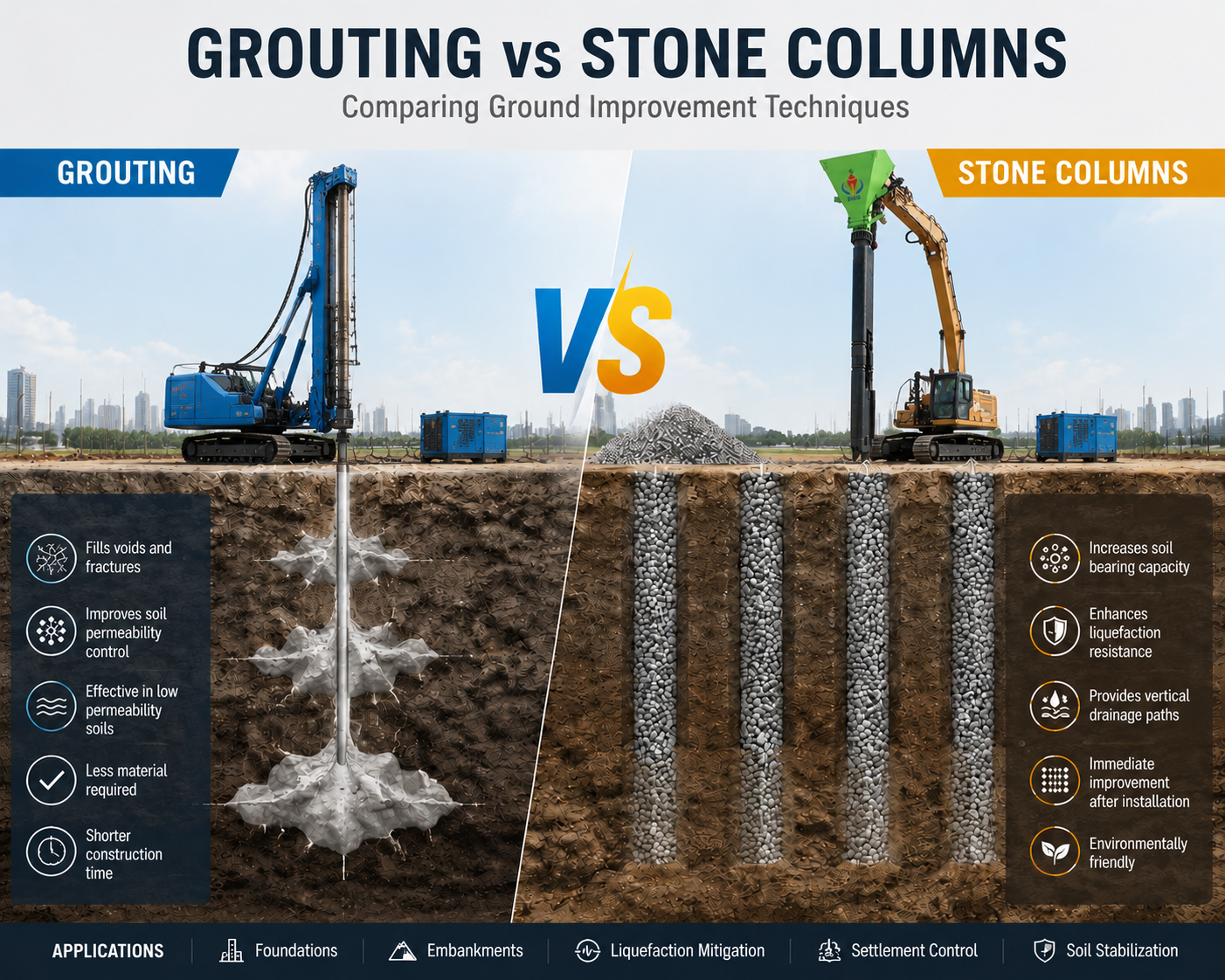
Vibro Replacement, also known as vibro stone columns, is one of the most widely used stone column ground improvement techniques for improving weak soils, increasing bearing capacity, and reducing settlement.
This guide covers its process, methods, applications, benefits, and Vibro Compaction comparison.
How Does Vibro Replacement Work?
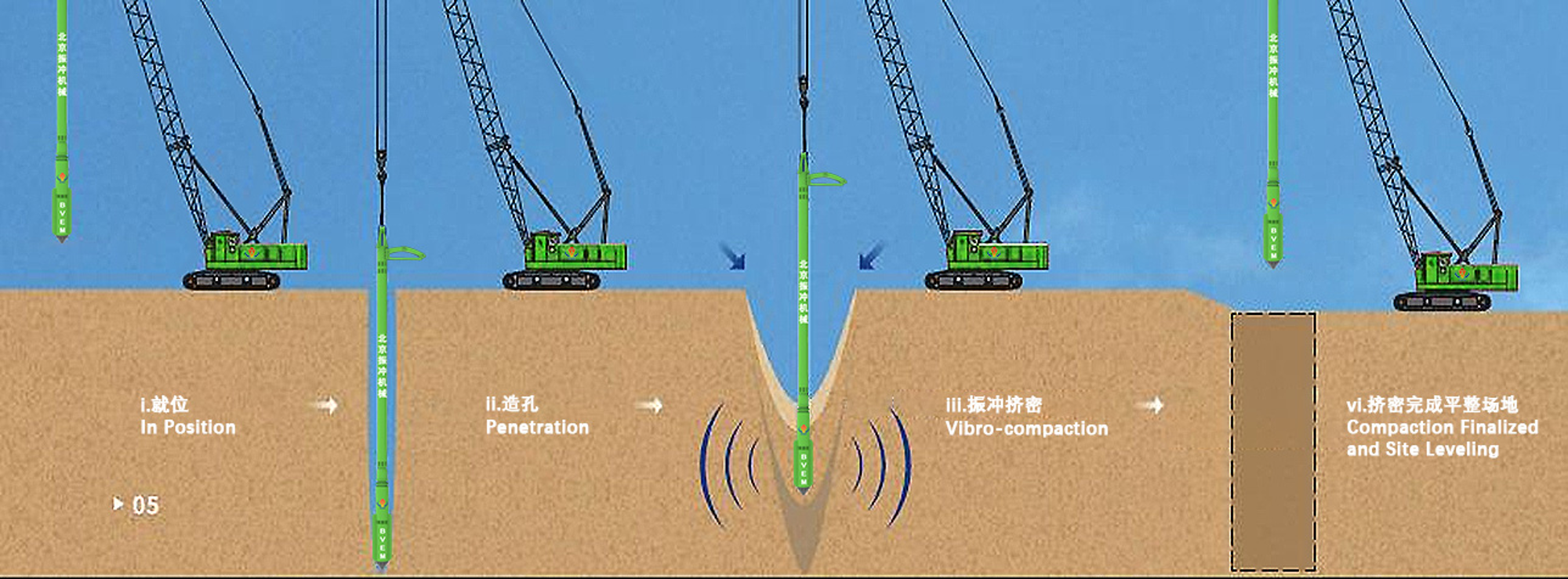
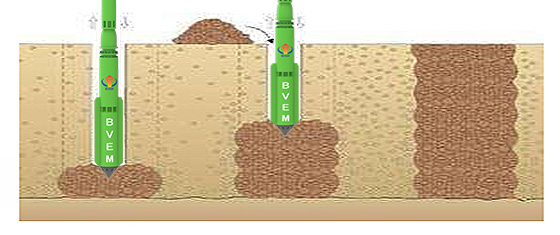
Vibro Replacement uses a crane-suspended Vibroflot to install compacted stone columns in weak soils through controlled vibration and aggregate placement. During construction, the equipment is positioned, and crushed stone is added and compacted in layers, creating a reinforced composite ground system that improves bearing capacity, reduces settlement, and enhances soil performance.
Step 1:Equipment Positioning
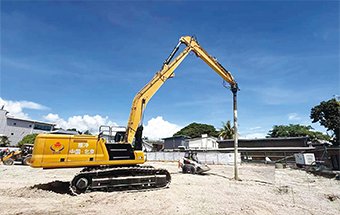
A crane-suspended Vibroflot (or a Vibroflot mounted on an excavator, rotary drilling rig, offshore barge, or other carrier equipment) is positioned at the designated installation point according to the specified stone column layout.
Step 2: Vibroflot Penetration
The Vibroflot penetrates the soil to the required design depth through vibration and its self-weight. In dense or hard soil layers, pre-drilling or additional penetration assistance may be required to reduce resistance and improve installation efficiency.
Step 3: Aggregate Placement and Compaction
Once the Vibroflot reaches the design depth, crushed stone or suitable granular material is introduced into the cavity. The vibratory probe compacts the aggregate in successive lifts, allowing the stone particles to interlock with the surrounding soil and form a dense, high-modulus stone column. This process allows you to achieve consistent aggregate placement and reliable ground improvement performance.
Step 4: Stone Column Formation
The filling and compaction process continues until the stone column reaches the ground surface or the required installation level. Multiple stone columns installed in a designed pattern work together with the surrounding soil to create a composite ground system, helping you improve bearing capacity, reduce settlement, and enhance overall ground stability.
Vibro Replacement Construction Methods
The main methods include the wet top-feed method and dry bottom-feed method. The main difference between these methods is how the Vibroflot penetrates the soil and how aggregate is introduced during stone column installation.
Wet Top-Feed Method
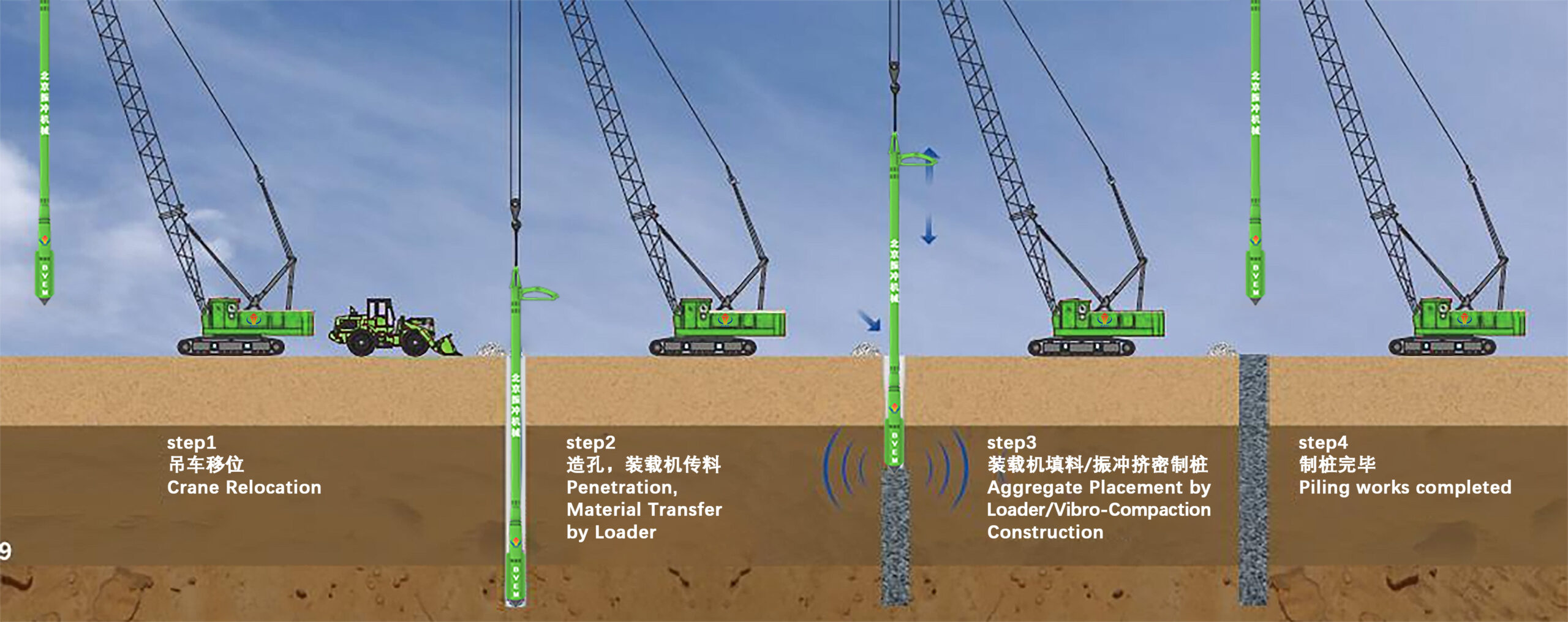
The wet top-feed method is one of the most widely used Vibro Replacement installation methods. The Vibroflot penetrates the soil to the required design depth using vibration combined with water jets at the vibrator tip.
Crushed stone is then fed from the ground surface into the annular space around the Vibroflot. During the lifting and lowering process, vibration compacts the aggregate and creates a dense stone column that reinforces the surrounding soil.
This method is effective in loose and water-saturated soils. When you use this method, you need to ensure adequate water supply and implement proper wastewater management to control soil fines generated during construction.
Dry Bottom-Feed Method
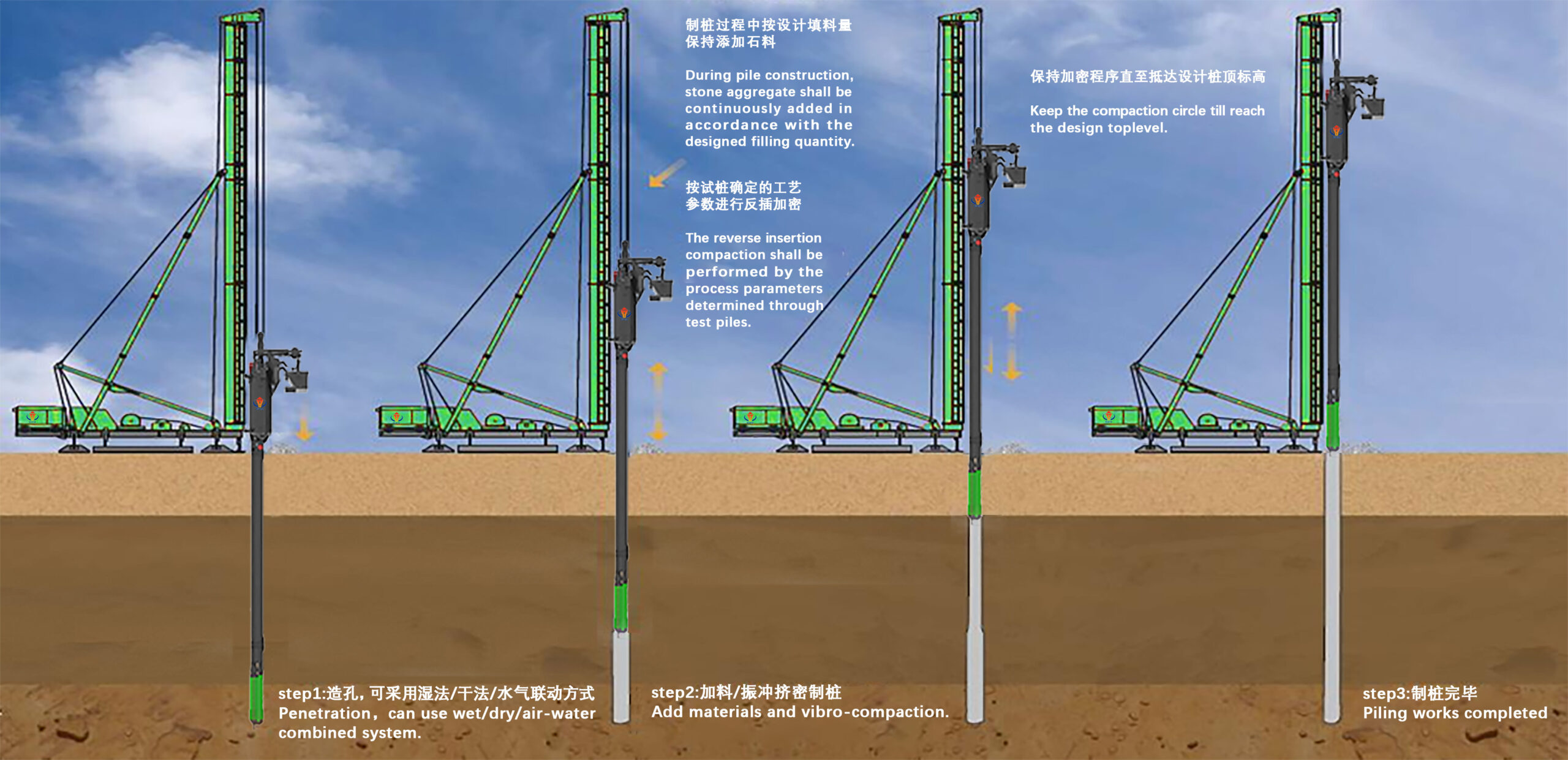
The dry bottom-feed method, which can be performed using a double-bin bottom-feed Vibroflot system or a hopper bottom-feed Vibroflot system, is used to construct stone columns without water jetting. The Vibroflot penetrates the soil through a combination of vibration and downward force, while crushed stone is delivered directly to the vibrator tip through an attached feed pipe.
The aggregate is added and compacted in successive lifts, forming a dense, high-modulus stone column that interlocks with the surrounding soil. This method allows you to achieve better control of aggregate placement and is suitable for projects where water supply is limited.
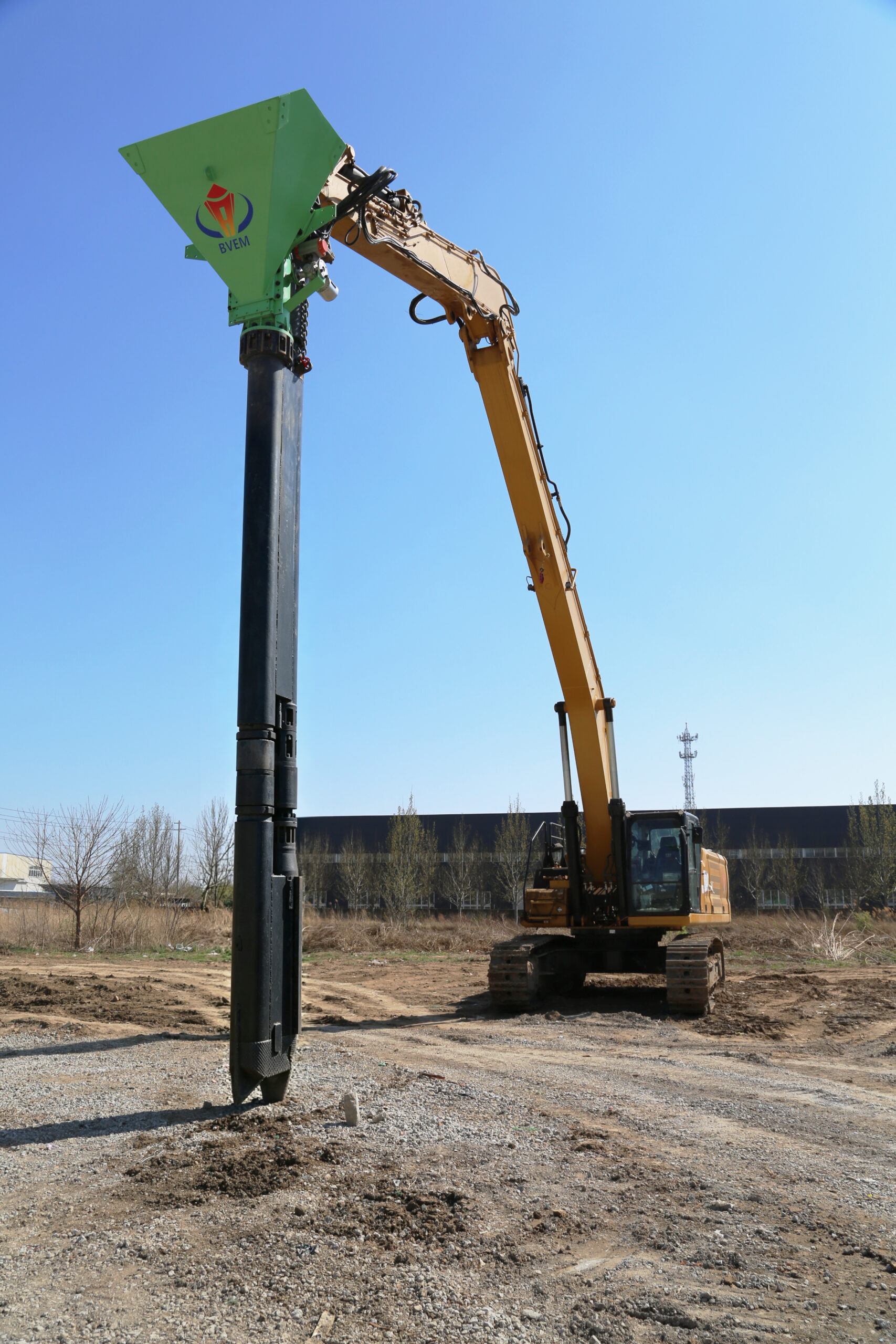
BVEM provides bottom-feed vibroflot systems designed for efficient aggregate delivery and deep stone column installation in challenging ground conditions.
Benefits of Vibro Replacement
Compared with conventional deep foundation systems, Vibro Replacement helps you improve soil performance while offering potential savings in construction time and overall project costs.
The main benefits of Vibro Replacement include:
Increased Bearing Capacity
Stone columns reinforce weak soils and improve load transfer, allowing the treated ground to support higher structural loads.
Reduced Total and Differential Settlement
The composite ground system improves soil stiffness and helps control both overall and uneven settlement.
Improved Soil Stiffness and Strength
Compacted stone columns increase the mechanical performance of weak soils and improve ground stability.
Liquefaction Mitigation
Stone columns improve drainage and densify surrounding soils, reducing liquefaction risks in suitable ground conditions.
Improved Drainage and Consolidation
The permeable stone columns provide drainage paths that accelerate excess pore water pressure dissipation.
Enhanced Slope Stability and Cost Efficiency
Vibro Replacement improves shear resistance while reducing the need for more expensive deep foundation solutions.
Suitable Soil Conditions and Applications of Vibro Replacement
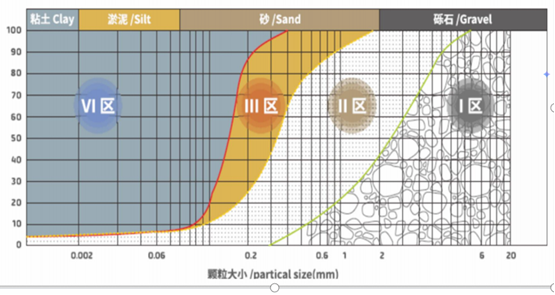
Vibro Replacement is mainly applied to weak and compressible soils where Vibro Compaction is not effective. It is particularly suitable for soft cohesive soils, soils with high fines content, and sites with variable ground conditions.
Suitable Soil Conditions
Vibro Replacement can be applied to a wide range of weak ground conditions, including:
- Soft to medium stiff clays and cohesive soils
- Soft silts, sandy silts, and muddy soils
- Loose fills and uncontrolled fills
- Variable layers of sand, silt, and clay
- Reclaimed land and coastal deposits
- Liquefiable soils requiring densification and liquefaction mitigation
- Collapsible or moisture-sensitive soils requiring settlement control
Typical Applications
Vibro Replacement is widely used for projects requiring large-area ground improvement, improved bearing performance, and settlement control. It is often selected as a cost-effective alternative to piled foundations and grouting systems.
Typical applications include:
- Residential, commercial, and public buildings
- Industrial facilities and warehouses
- Power plants and energy infrastructure
- Petrochemical facilities and storage terminals
- Highway and railway embankments
- Hydropower and water conservancy projects
- Port, harbor, and coastal developments
- Wind turbine foundations and renewable energy projects
- Agricultural structures, including grain silos and storage facilities
- Projects requiring liquefaction mitigation and seismic ground improvement
Understanding these suitable soil conditions and applications helps you determine whether Vibro Replacement is suitable for your project requirements.
Vibro Replacement vs Vibro Compaction
Although both methods use a Vibroflot to improve ground conditions, Vibro Replacement and Vibro Compaction are designed for different soil types and achieve ground improvement through different mechanisms.
| Item | Vibro Replacement | Vibro Compaction |
| Main Objective | Increase bearing capacity and reduce settlement | Increase soil density and mitigate liquefaction |
| Target Soil | Soft and cohesive soils | Loose granular soils |
| Suitable Soils | Clay, silt, loose fills, and mixed soils | Clean sand and gravel with low fines content |
| Improvement Method | Installation of stone columns | Densification of existing soil |
| Soil Fines Content | Medium to high fines content | Low fines content |
| Additional Material | Crushed stone or gravel required | No additional material required |
| Structure Formed | Stone columns | Dense soil zone |
| Ground Improvement Result | Reinforced composite ground system | Densified soil mass |
| Typical Applications | Buildings, tanks, and embankments | Reclaimed land, ports, and loose sand deposits |
When selecting between these two methods, you should consider soil conditions, fines content, groundwater conditions, and project requirements to determine the most suitable ground improvement solution.
FAQ
How deep can Vibro Replacement stone columns be installed?
Vibro Replacement stone columns can typically be installed from several meters to several tens of meters deep, depending on your soil conditions, equipment capacity, construction method, and project requirements. In standard applications, you can use excavator-mounted hydraulic vibroflots to achieve installation depths of approximately 5–11.5 meters.
For deeper ground improvement projects, you may require higher-capacity vibroflot equipment and specialized construction methods. Under suitable geological conditions, conventional vibroflot systems can reach greater depths, while advanced bottom-feed vibroflot systems can be applied for specialized deep ground improvement projects with installation depths exceeding 100 meters in suitable geological conditions.
What Size Aggregate Is Used for Vibro Replacement Stone Columns?
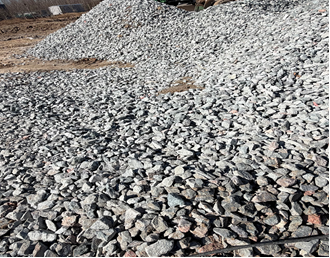
The typical aggregate size used for Vibro Replacement stone columns ranges from 30 to 150 mm, depending on your soil conditions, vibroflot equipment, construction method, and project requirements.
Crushed stone or gravel with proper aggregate gradation is commonly selected to help you achieve effective compaction, reduce voids, and form stable stone columns. A well-graded mixture of larger and smaller aggregates improves load transfer, drainage performance, and the overall strength and stability of the improved ground.
How Is Quality Control Ensured During Vibro Replacement Construction?
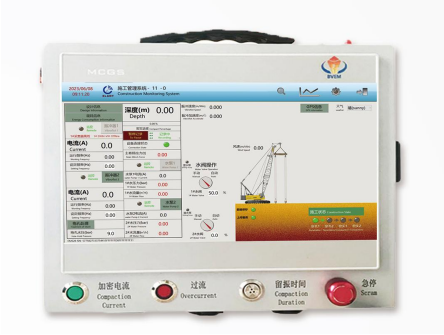
Quality control during Vibro Replacement construction can be achieved through an onboard Data Acquisition (DAQ) system installed on the vibro replacement rig. The system allows you to monitor and record key installation parameters, such as amperage, lift rate, and target values, in real time through an in-cab monitor.
By tracking these parameters during construction, you can quickly identify and correct any deviations from the required specifications, ensuring consistent stone column installation.
What Soil Conditions Are Suitable for Bottom-Feed Vibroflots?
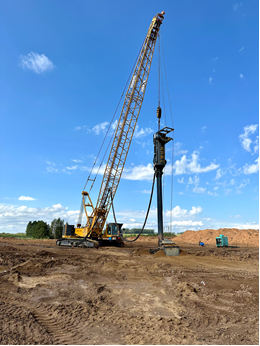
Bottom-feed vibroflots are particularly suitable for projects requiring deep stone column installation, precise aggregate placement, or construction in challenging ground conditions.
These applications may include soft clay, silt, dredged fill, and other weak cohesive soils where controlled aggregate delivery and improved construction accuracy are required.
When you work with challenging ground conditions, bottom-feed vibroflots help you deliver aggregate directly to the required depth and improve soil strength, drainage performance, and foundation performance through effective stone column installation.
How Do You Verify the Quality of Vibro Replacement Stone Columns After Installation?
After Vibro Replacement construction is completed, you can verify stone column quality through field testing and acceptance inspections. Common evaluations include column density, diameter, position accuracy, surrounding soil improvement, composite ground bearing capacity, and deformation modulus.
You can use methods such as load tests, dynamic penetration tests, standard penetration tests, and cone penetration tests to evaluate the treated ground and confirm its performance.
About BVEM: Your Vibroflot Partner for Ground Improvement Solutions
Understanding Vibro Replacement methods, applications, and equipment requirements helps you select the right ground improvement solution for your project.
BVEM provides vibroflot selection, bottom-feed vibroflot systems, and customized technical solutions to support efficient stone column installation and reliable foundation improvement worldwide.
Contact BVEM to discuss your ground improvement requirements and find the right equipment solution for your project.