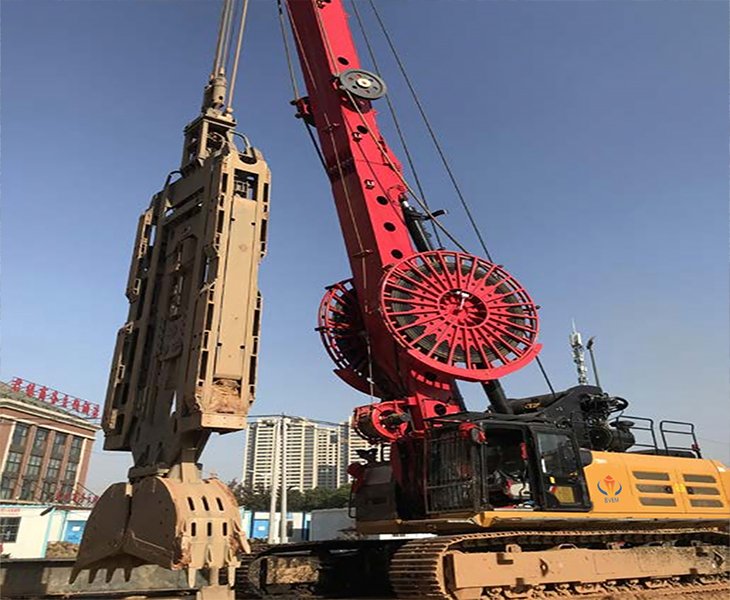
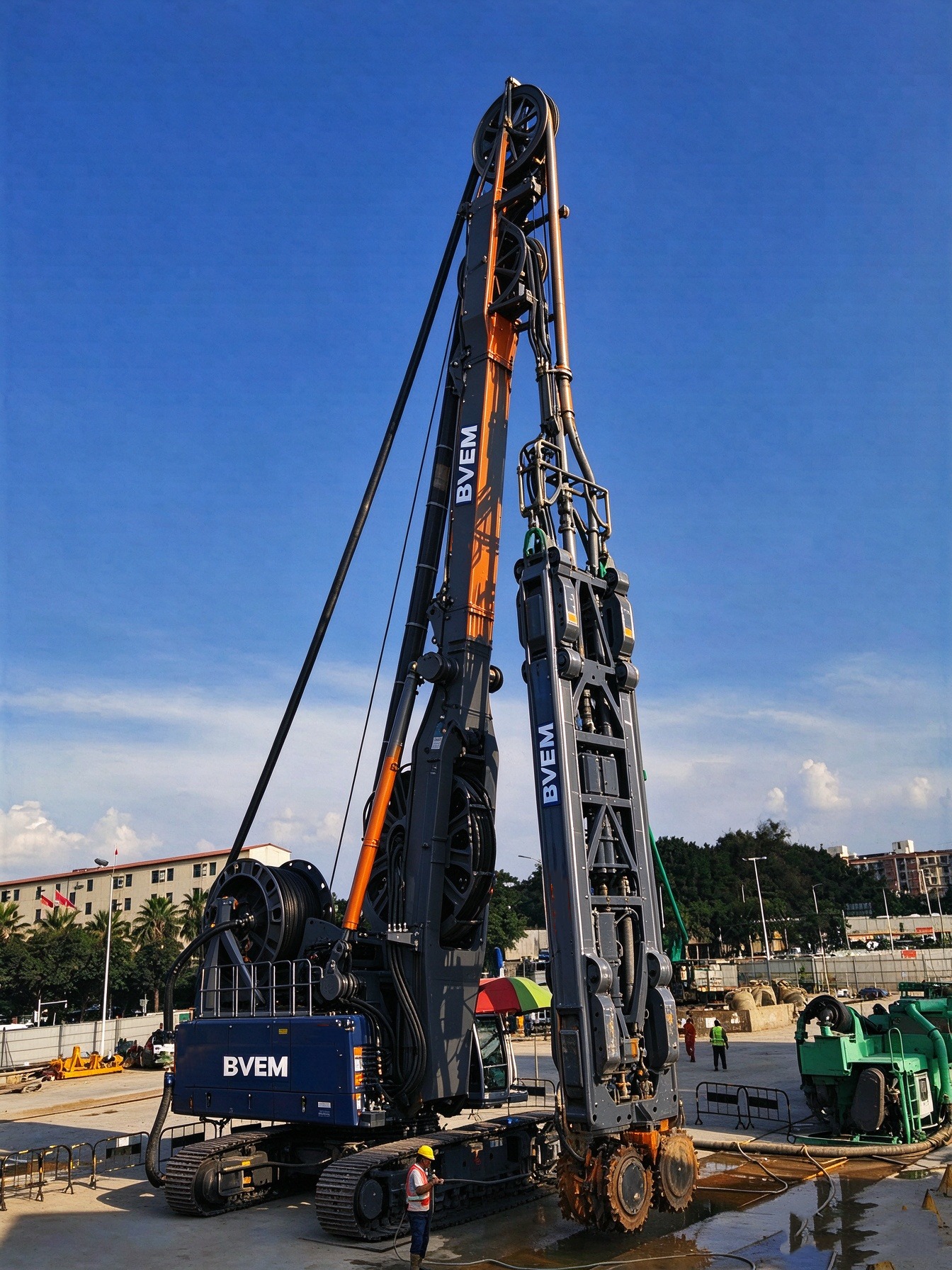
A trench cutter and a rotary piling rig are both used in foundation construction, but they serve different purposes. A trench cutter excavates narrow, deep trenches for diaphragm walls, while a rotary piling rig drills individual holes for bored piles. Understanding their working methods, applications, and suitability for different ground conditions can help you choose the right equipment for your project.
What Is a Trench Cutter?
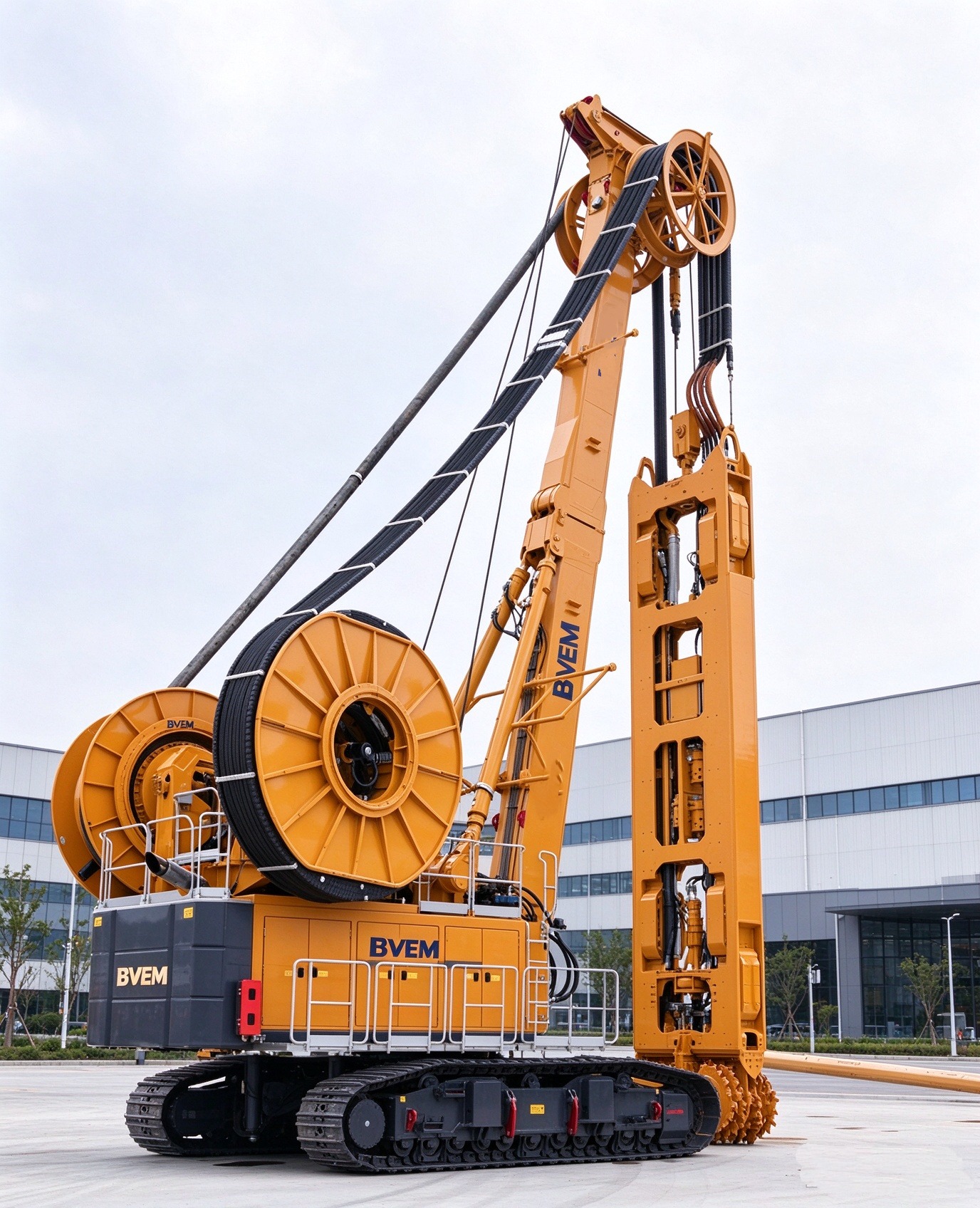
A trench cutter, also known as a diaphragm wall cutter or hydromill, is used to excavate deep, narrow trenches for diaphragm wall construction. It uses rotating cutting wheels to excavate soil or rock, while slurry circulation helps remove excavated material and stabilize the trench.
What Is a Rotary Piling Rig?
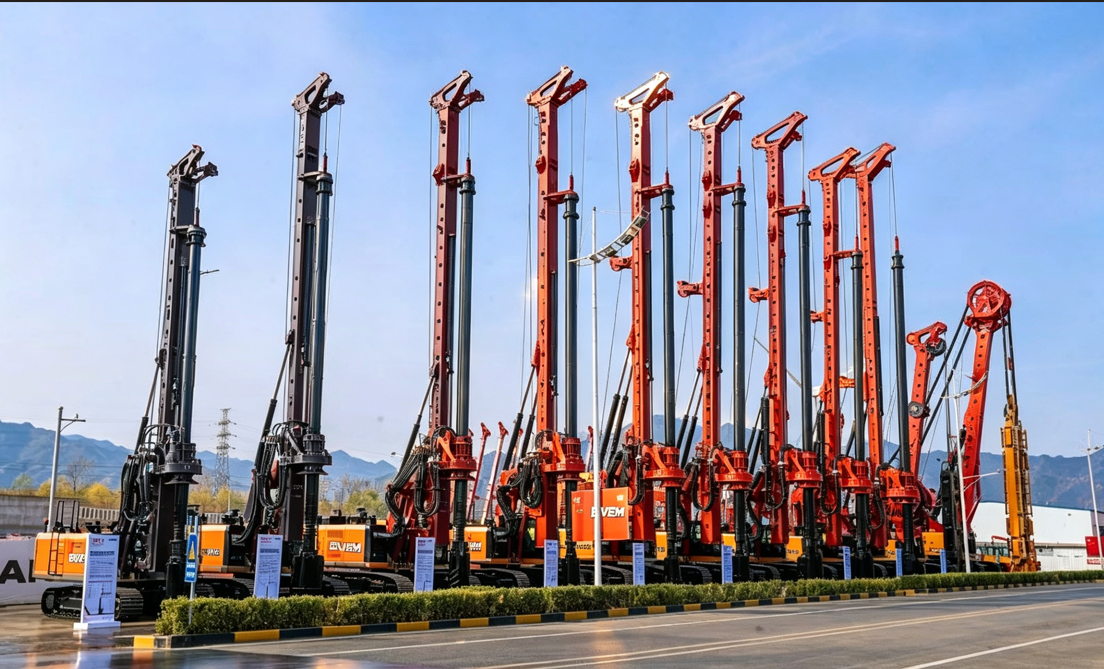
A rotary piling rig is used to drill boreholes for pile foundations. It rotates a drilling tool to cut through soil or rock, while buckets, augers, or other tools remove the excavated material. It is commonly used for building, bridge, and other deep foundation projects.
Trench Cutter vs. Rotary Piling Rig: Key Differences
Both trench cutters and rotary piling rigs are used in foundation construction. They differ in the structures they create, how they excavate, and the supporting equipment they require. Understanding these differences helps you identify the construction method suited to your project.
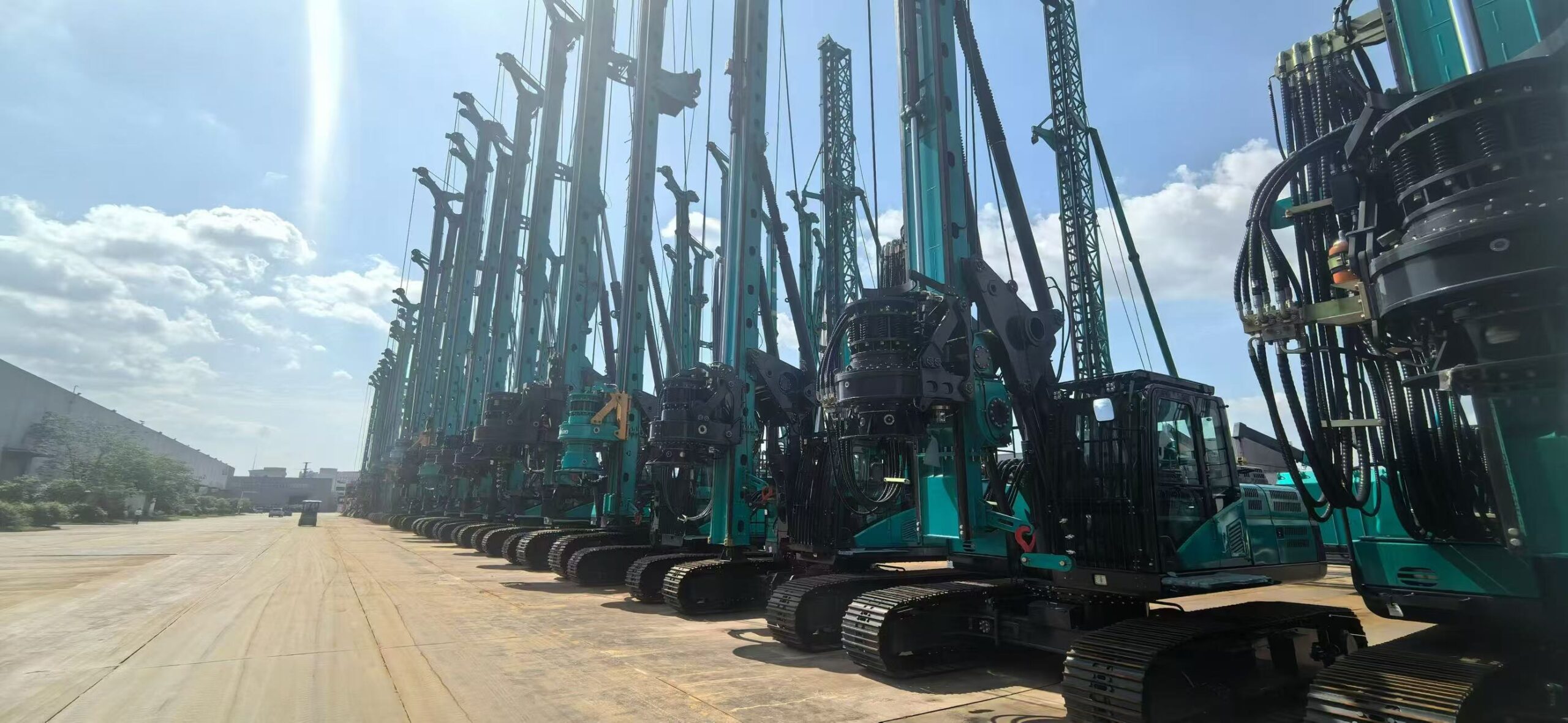
Construction Target and Applications
A trench cutter is used to construct diaphragm walls. These walls consist of reinforced concrete panels connected to form a continuous underground wall. They are commonly used for basements, underground stations, and other projects requiring excavation support or groundwater cutoff.
A rotary piling rig is used to construct bored pile foundations. Each pile is formed in a separate borehole, with the piles arranged according to the foundation design. Typical applications include building foundations, bridges, and infrastructure projects. Rotary piling rigs can also be used to construct secant pile walls, in which overlapping piles form a retaining wall.
The main difference is the resulting structure: a continuous diaphragm wall or individual piles that may form part of a pile-based retaining system.
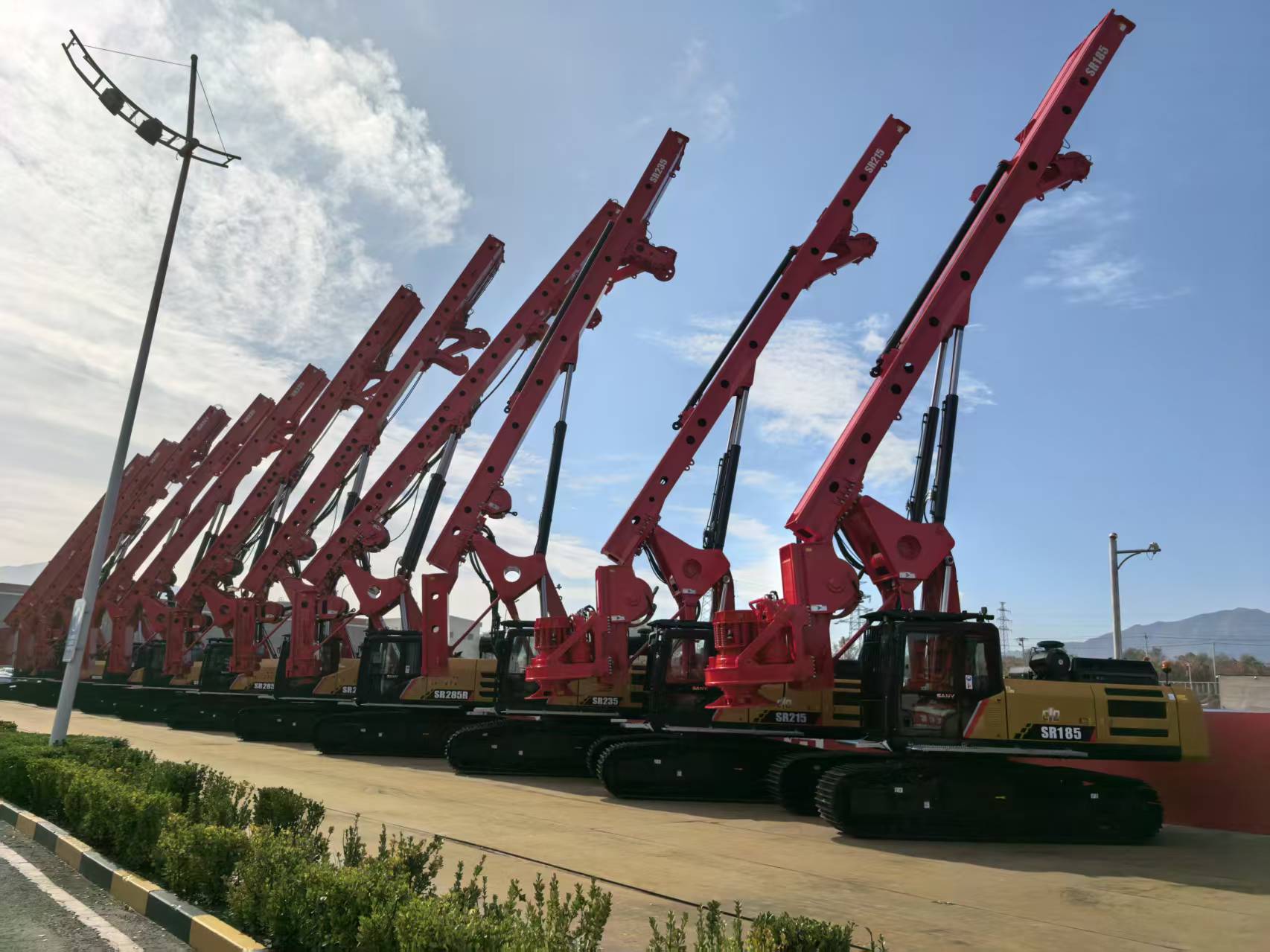
Excavation Method and Ground Removal
A trench cutter excavates a trench panel by panel using rotating cutting wheels. Slurry is commonly circulated to support the trench walls and carry excavated material to the surface. This process allows each trench panel to be excavated to the required dimensions.
A rotary piling rig drills a separate borehole at each planned pile location. Depending on the drilling method, augers, drilling buckets, or other tools remove the excavated material. Each borehole is prepared individually before reinforcement and concrete is installed.
Although both machines can excavate soil and rock, they create different excavation shapes. A trench cutter forms a trench for a diaphragm wall panel, while a rotary piling rig drills a borehole for a pile.
Supporting Equipment and Material Handling
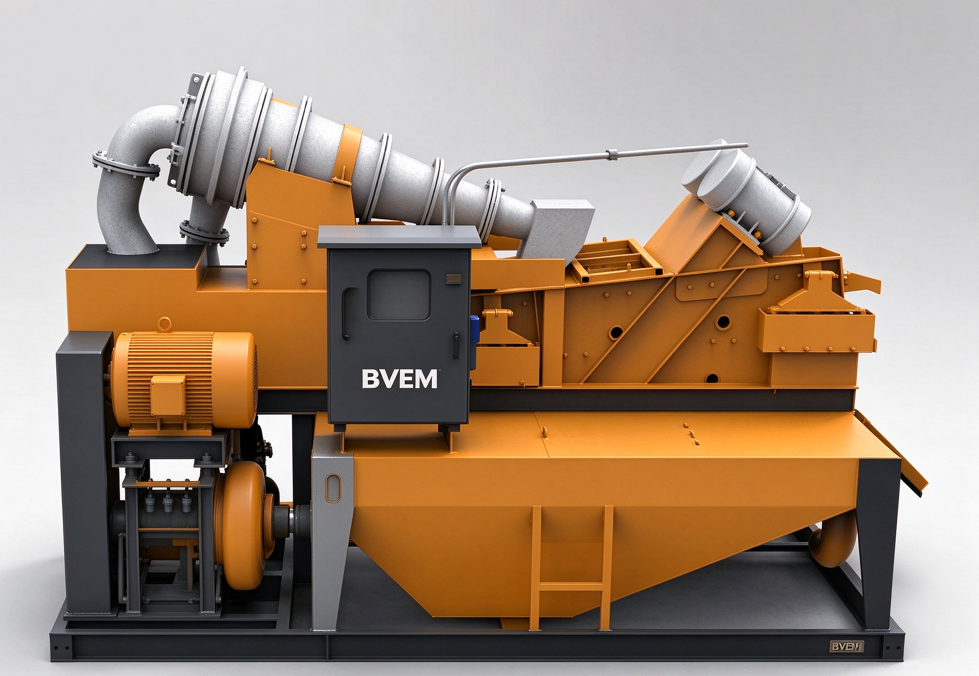
The supporting equipment also differs between the two construction methods.
For diaphragm wall excavation, slurry is commonly circulated between the trench and the surface. A desander removes soil particles so the slurry can be reused, while a filter press may be used to dewater slurry waste when required. The setup depends on the slurry system and project requirements.
For bored piling, the main supporting requirements include suitable drilling tools and equipment for removing and handling excavated material. Depending on the ground conditions and drilling method, additional borehole support systems may also be needed.
These differences affect how you arrange equipment on site. Diaphragm wall construction may require dedicated slurry treatment facilities, while bored piling requires suitable drilling and spoil-handling arrangements.
Ground Conditions and Equipment Suitability
A trench cutter can excavate challenging ground, including hard rock layers, depending on its cutting capacity and configuration. A rotary piling rig can handle a range of soil and rock conditions when fitted with suitable drilling tools, such as augers or drilling buckets. Harder formations may require specialized tooling and an appropriate rig configuration.
Before selecting a machine, review the ground investigation report to understand the soil profile, rock layers, and groundwater conditions. This information helps you determine whether the proposed equipment and excavation method are suitable for your project.
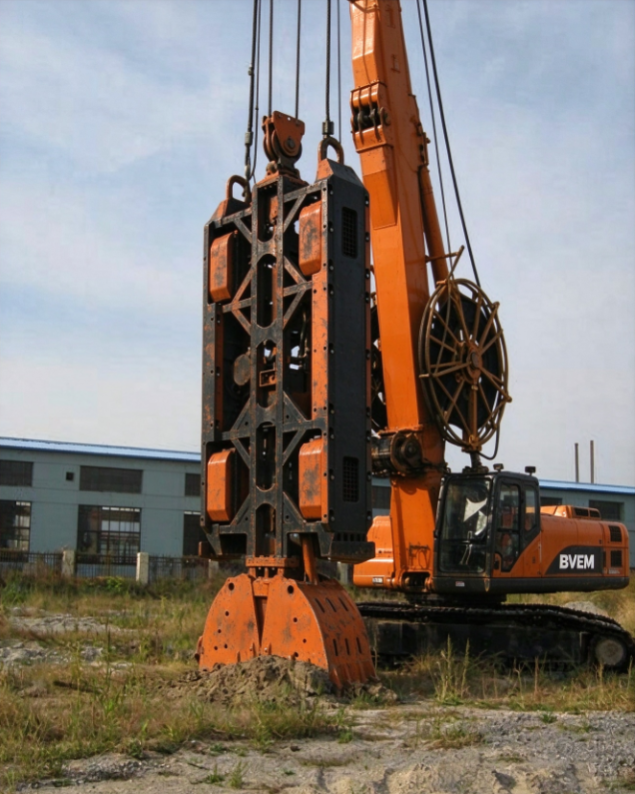
Site Planning and Equipment Setup
For diaphragm wall construction, a trench cutter setup requires sufficient space for the cutter, slurry circulation system, desanding equipment, and other slurry treatment facilities. The site layout should allow these systems to operate efficiently throughout excavation.
For bored piling, the site needs enough working space for the rotary piling rig, drilling tools, and excavated material handling. Depending on the project, additional space may be required for reinforcement cages, concrete delivery equipment, and borehole support systems.
Site access is another important consideration. Check whether the machine and its supporting equipment can enter the site, move into position, and operate within the available working space. Planning these requirements in advance helps reduce the risk of equipment setup problems and construction delays.
| Comparison Factor | Trench Cutter | Rotary Piling Rig |
| Construction target | Continuous diaphragm wall | Individual piles or secant pile walls |
| Excavation geometry | Trench panels connected to form a wall | Separate boreholes at planned locations |
| Material removal | Slurry carries excavated particles to the surface | Drilling tools remove excavated material |
| Supporting equipment | Slurry circulation, desander, and other treatment equipment as required | Drilling tools, spoil-handling equipment, and borehole support as required |
| Typical applications | Deep basements, underground stations, and cutoff walls | Building foundations, bridges, and piled retaining walls |
| Ground conditions | Suitable for various ground conditions, including hard strata, depending on cutting capacity and configuration | Suitable for various soil and rock conditions with appropriate drilling tools and rig configuration |
| Site planning | Requires space for the cutter system, slurry facilities, and related equipment | Requires working space for the rig, drilling tools, and spoil handling |
In short, a trench cutter is designed for diaphragm wall trench excavation, while a rotary piling rig is primarily used for bored pile construction. The right machine depends first on the foundation system specified in your project design.
When Should You Use a Trench Cutter or a Rotary Piling Rig?
Choosing foundation equipment starts with your project design, ground conditions, and construction requirements. The right machine depends on the structure you need to build and the work involved on-site.

When to Choose a Trench Cutter
Consider a trench cutter when your project requires a diaphragm wall rather than individual pile foundations. It is commonly used for deep basements, underground metro stations, and suitable cutoff wall projects. If your project requires good trench verticality and consistent wall geometry, a trench cutter may be worth considering. Before choosing one, check the ground conditions, required trench depth and thickness, and whether the slurry circulation and treatment system can support the excavation work.
When to Choose a Rotary Piling Rig
A rotary piling rig is generally the appropriate choice when your project requires bored pile foundations. You can drill individual boreholes to hit the exact diameter and depth set out in your foundation design. With interchangeable drill tools, this rig can adapt to many different soil and rock types on site when rotary piling methods are specified.
One key point to remember: some major projects include both diaphragm walls and pile foundations. These are separate structural works, so you will often need different machines for each task. Never choose your equipment purely based on the project name alone.
What Factors Should You Consider When Choosing?
Before choosing a machine, make sure its specifications match your project requirements. These four checks can help you compare equipment options.
Verify the Required Dimensions
Prepare the required wall thickness, trench depth, and panel dimensions for diaphragm wall construction, or the pile diameter and drilling depth for bored piling. Ask the supplier to confirm that the proposed machine can meet these requirements rather than relying only on its maximum rated depth.
Check Ground Compatibility
Share your ground investigation report with the supplier, including details about soil layers, boulders, rock strength, and groundwater conditions. Ask which cutting system or drilling tools are suitable for the expected ground conditions and whether any additional tools are needed.
Confirm Production Capacity
Estimate the excavation volume and the time available for construction. Ask the supplier for a realistic production estimate based on similar ground conditions, taking into account factors that could affect the construction schedule. Also, confirm that the machine can meet your required excavation tolerances.
Check Site and Equipment Compatibility
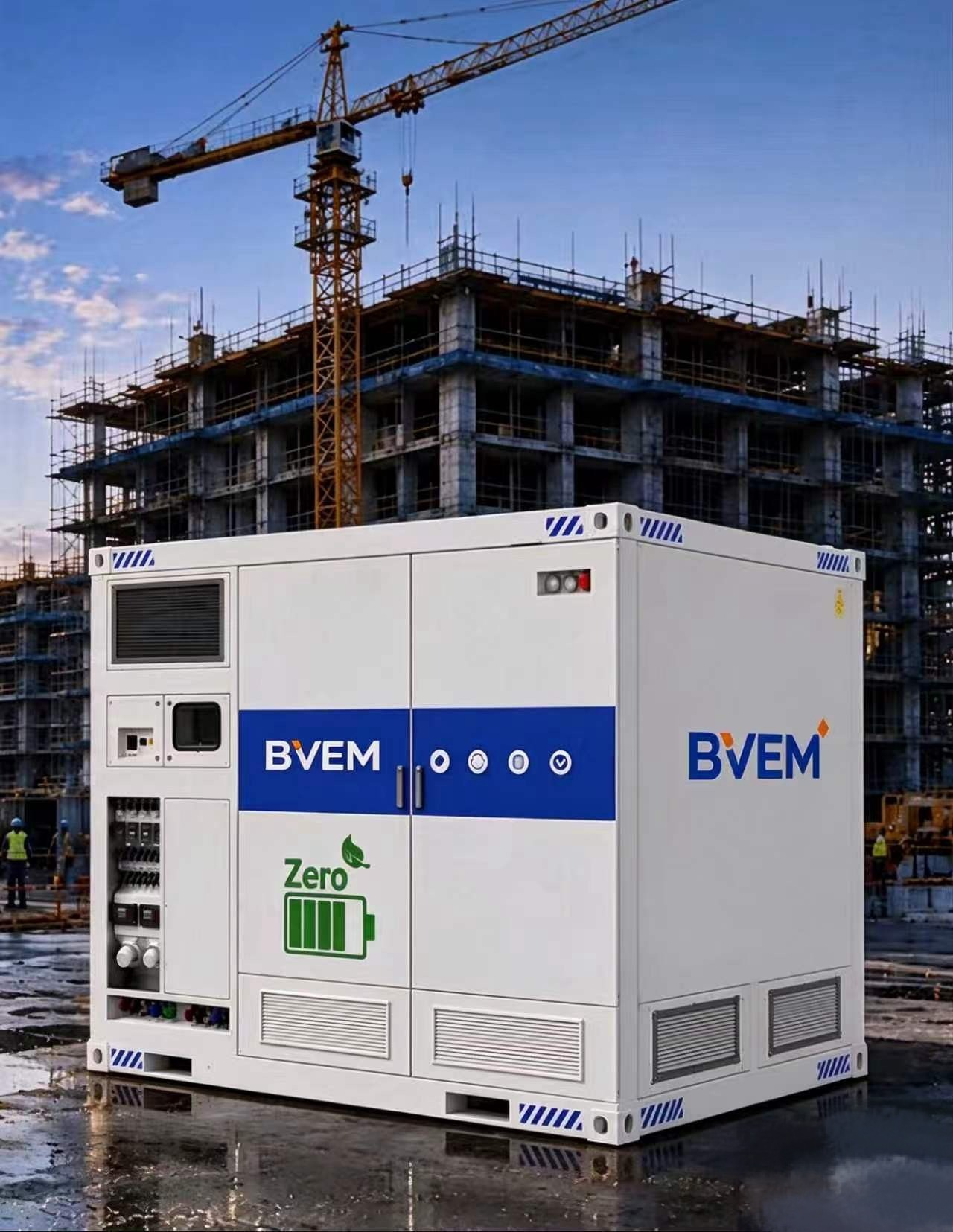
Make sure the machine can access your site, operate within the available space, and work with your existing equipment. Check the crane’s lifting capacity where applicable, power supply requirements, and any auxiliary equipment needed. If you plan to use a generator, confirm that its output and electrical configuration are compatible with the machine.
Before requesting a quotation, provide the supplier with your project specifications, ground investigation report, and site constraints so they can recommend a suitable configuration.
What Should You Check Before Buying a Trench Cutter?
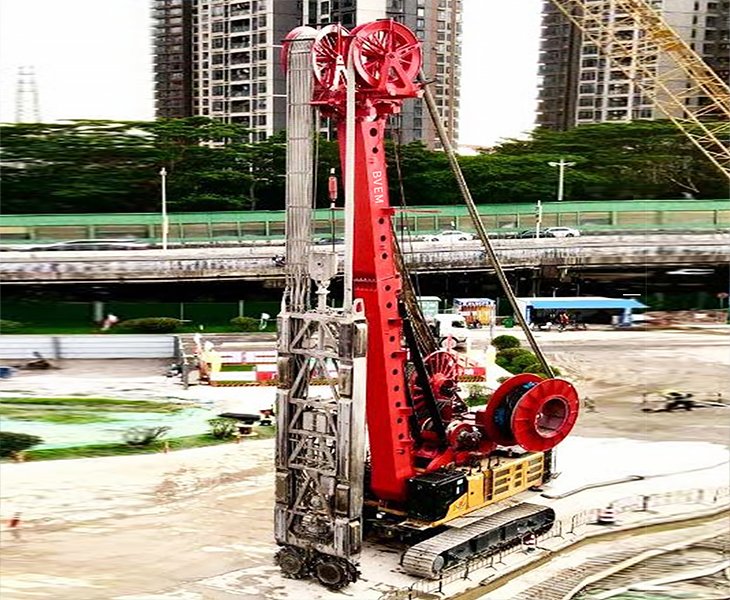
Before requesting a quote for a trench cutter, gather the key details of your project. This helps the supplier understand your requirements and recommend suitable equipment.
- Project Type and Location: Explain what kind of project you are working on and where the site is located.
- Ground Conditions: Share any available soil investigation reports, information about rock conditions, and the groundwater level.
- Wall Dimensions: Specify the required trench depth, wall thickness, and panel length.
- Construction Requirements: State the required verticality, target daily output, and project deadline.
- Existing Equipment: Provide the model of your crane, its lifting capacity, and any other relevant specifications.
- Power and Support Systems: Confirm the available power supply and whether you already have slurry circulation and treatment equipment.
- Site Constraints: Describe any access limitations, space restrictions, or other site conditions that could affect equipment operation.
With these details, the supplier can assess the cutting system, power configuration, and supporting equipment needed for your project. Rather than choosing a trench cutter based only on its maximum cutting depth, you can compare equipment options and find a configuration that better matches your actual requirements.

FAQs
Can a Rotary Piling Rig Be Used to Construct a Diaphragm Wall?
A rotary piling rig is mainly used to drill boreholes for pile foundations. It is not designed to excavate trenches for conventional diaphragm walls. However, rotary piling rigs can be used in some pile-based retaining wall systems, such as secant pile walls.
If your project requires a diaphragm wall, you need to select equipment suited to the specified construction method. The options may include a diaphragm wall grab or a trench cutter, depending on the wall design, ground conditions, and site requirements.
What Affects Trench Cutter Excavation Efficiency?
Trench cutter excavation efficiency depends on several factors, including ground conditions, trench depth, cutting wheel performance, and slurry circulation. In hard or abrasive ground, the cutting wheel may wear faster, reducing excavation efficiency. If the excavated material is not removed efficiently, the machine may need to pause, delaying construction.
Equipment configuration and the performance of the supporting slurry treatment system also affect excavation output. When planning a project, consider the cutter’s excavation capacity and make sure the supporting equipment is suitable for the required working conditions.
Can a Trench Cutter Be Used for Rock Excavation?
Yes, a trench cutter can excavate some types of rock, depending on the rock strength and the machine’s cutting capacity. The cutting tools, cutter power, and applied downforce can all affect excavation performance.
Before choosing a machine, review the site investigation report to check whether the cutter is suitable for the expected rock conditions. For very hard or abrasive rock, a more detailed assessment may be needed to determine the right equipment configuration.
What Supporting Equipment Is Needed for a Trench Cutter?
A trench cutter system may require slurry circulation and treatment equipment, a suitable power supply, and equipment for handling excavated material. A desander removes soil particles from the slurry, while a filter press can be used to dewater slurry waste and reduce its volume. The required setup depends on the excavation method, ground conditions, slurry properties, and project specifications. Contractors should also check power requirements and the compatibility of the supporting equipment before selecting a complete system.
Can a Trench Cutter Work With an Existing Crane?
A trench cutter may be compatible with an existing crane, but compatibility must be checked before purchase. Key factors include the trench cutter’s operating weight, the crane’s rated lifting capacity at the required working radius, the lifting arrangement, and site conditions. Depending on the equipment configuration, power and hydraulic requirements may also need to be assessed. Provide the supplier with the crane model and relevant specifications so they can evaluate whether the proposed setup is suitable for your project.
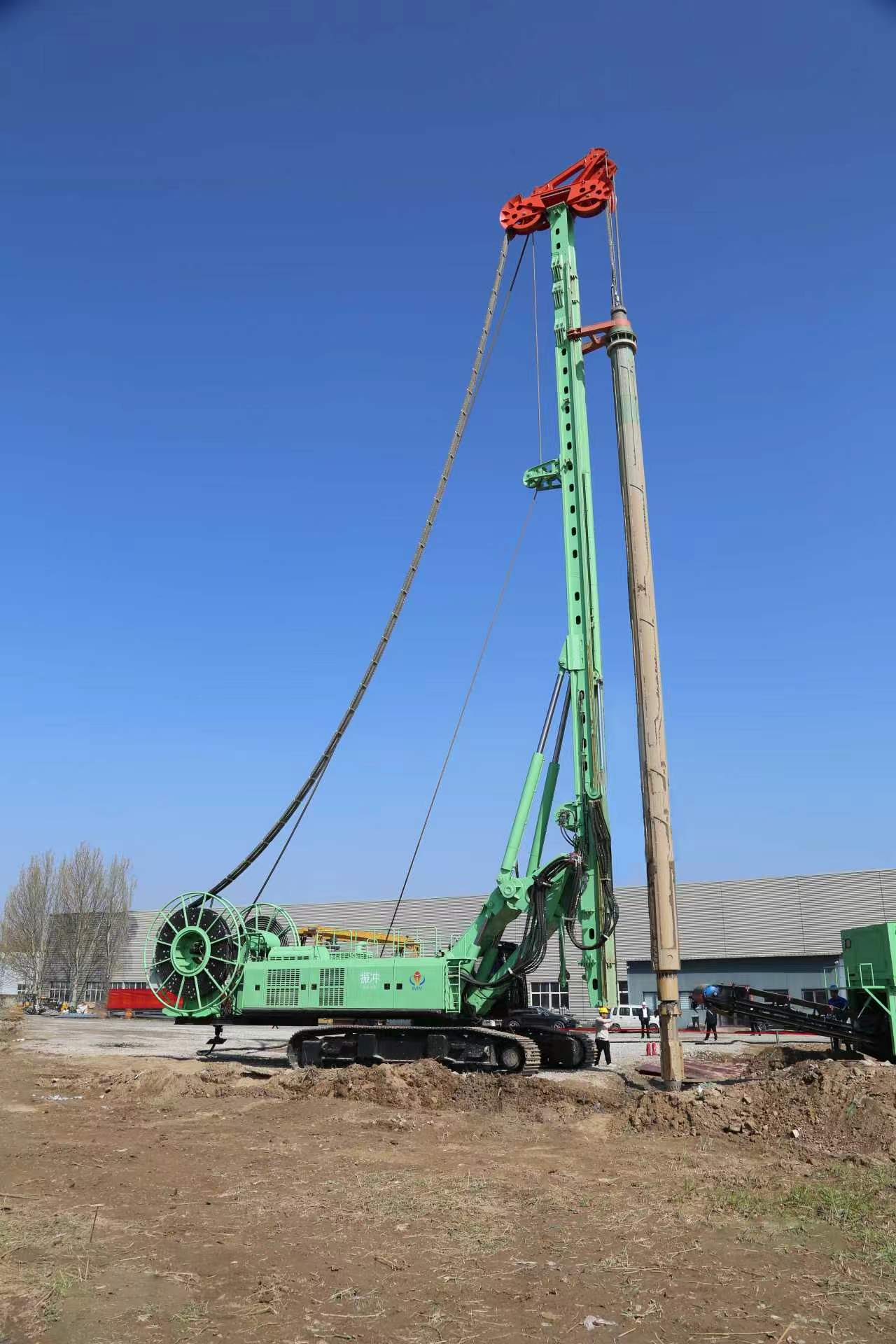
Choose Equipment Based on Your Project Requirements
Choose equipment based on your construction method, ground conditions, and project requirements. BVEM supplies trench cutters, diaphragm wall grabs, rotary piling rigs, and supporting equipment for foundation construction projects.
Share your required excavation depth, wall or pile dimensions, ground conditions, and available site equipment with BVEM. Our team can help you assess suitable equipment configurations for your project.