Selecting a suitable ground improvement method requires a clear understanding of soil conditions, site challenges, and project goals. Grouting and stone columns are two common solutions, but they work in different ways.
This comparison highlights the main differences between these two methods and their suitability for different project conditions.
What Are Stone Columns?
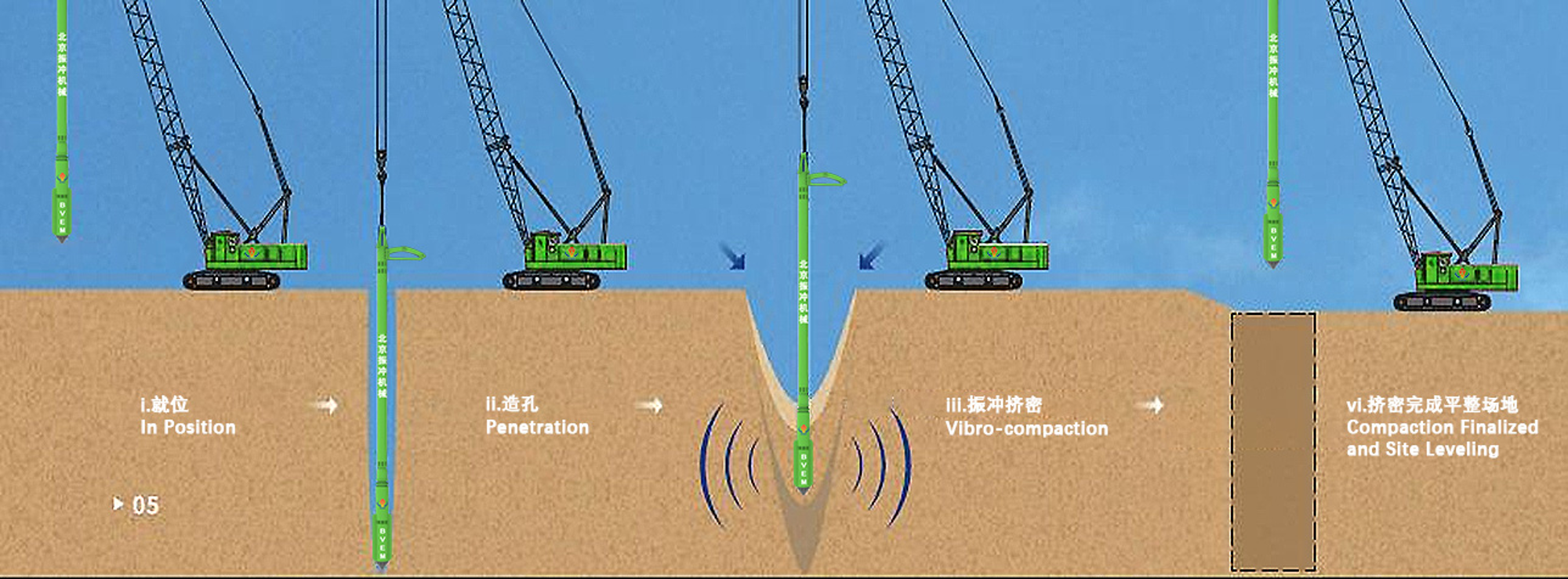
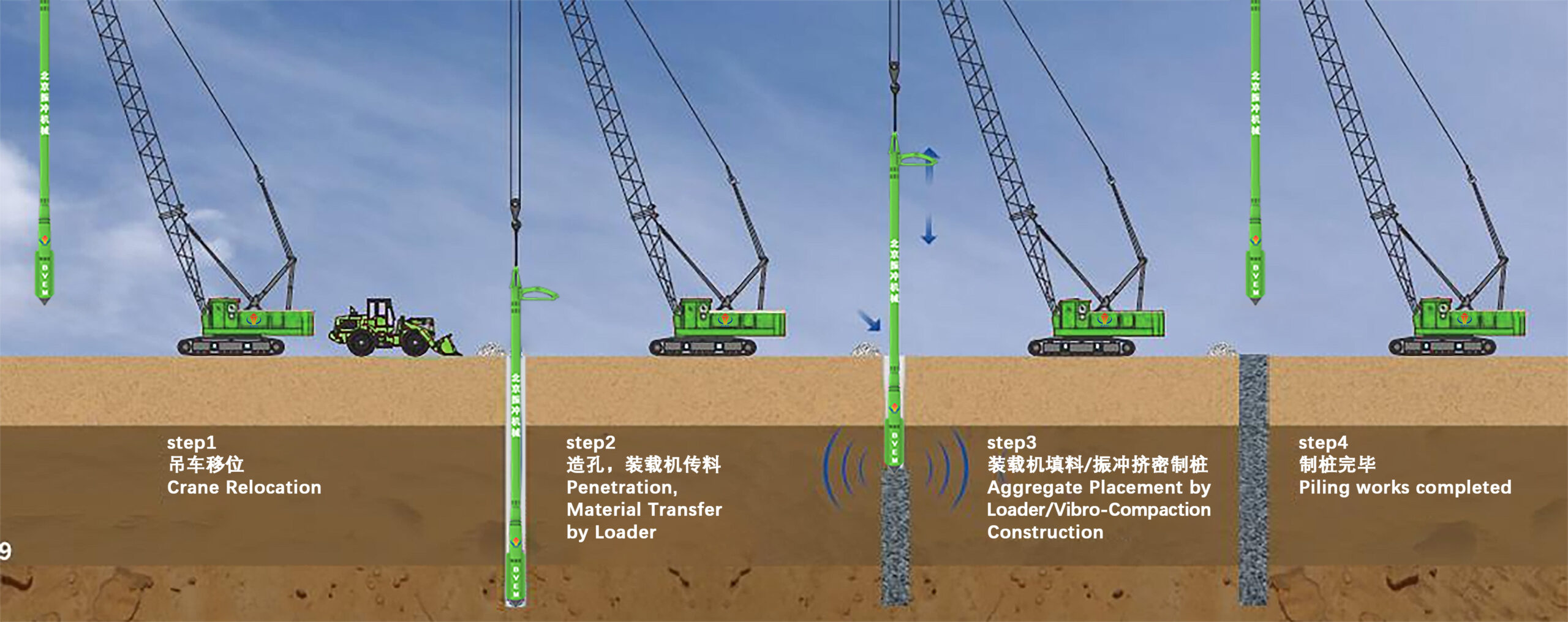
Stone columns are vertical columns formed by installing and compacting stone aggregates into weak soil layers. They form reinforced zones within weak ground and are applied in projects where improved soil support is required.
What Is Grouting?
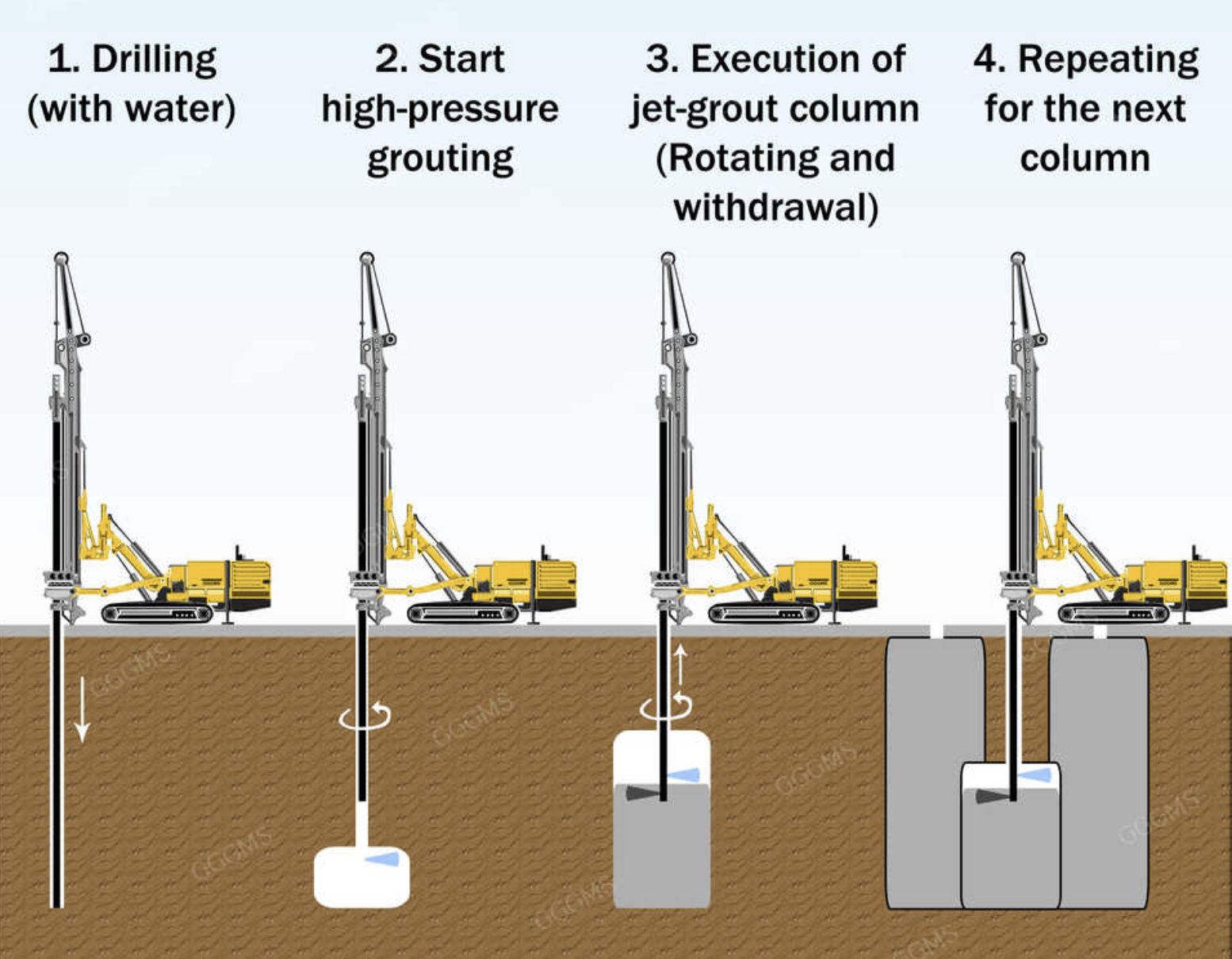
Grouting is a ground improvement technique that injects cementitious materials into soil or rock to fill voids, increase strength, and reduce permeability. It is applied for soil stabilization, leakage control, underground reinforcement, and localized treatment where precise improvement is required.
Stone Columns vs Grouting: Key Differences
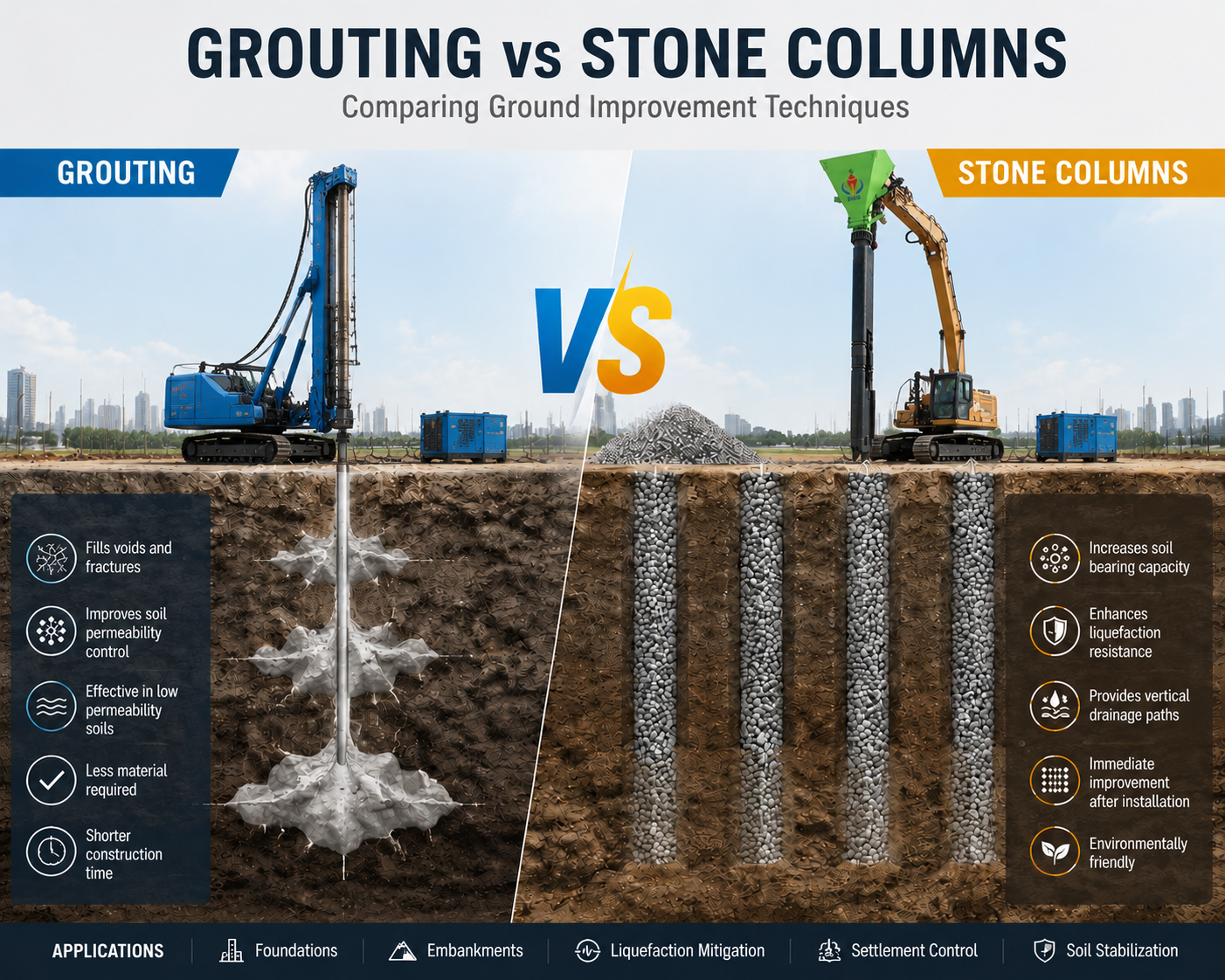
Stone columns and grouting use different approaches to improve weak ground. The most suitable method varies according to ground conditions, treatment objectives, and the required performance of the improved ground.
Improvement Mechanism
Stone Columns: Aggregate Reinforcement
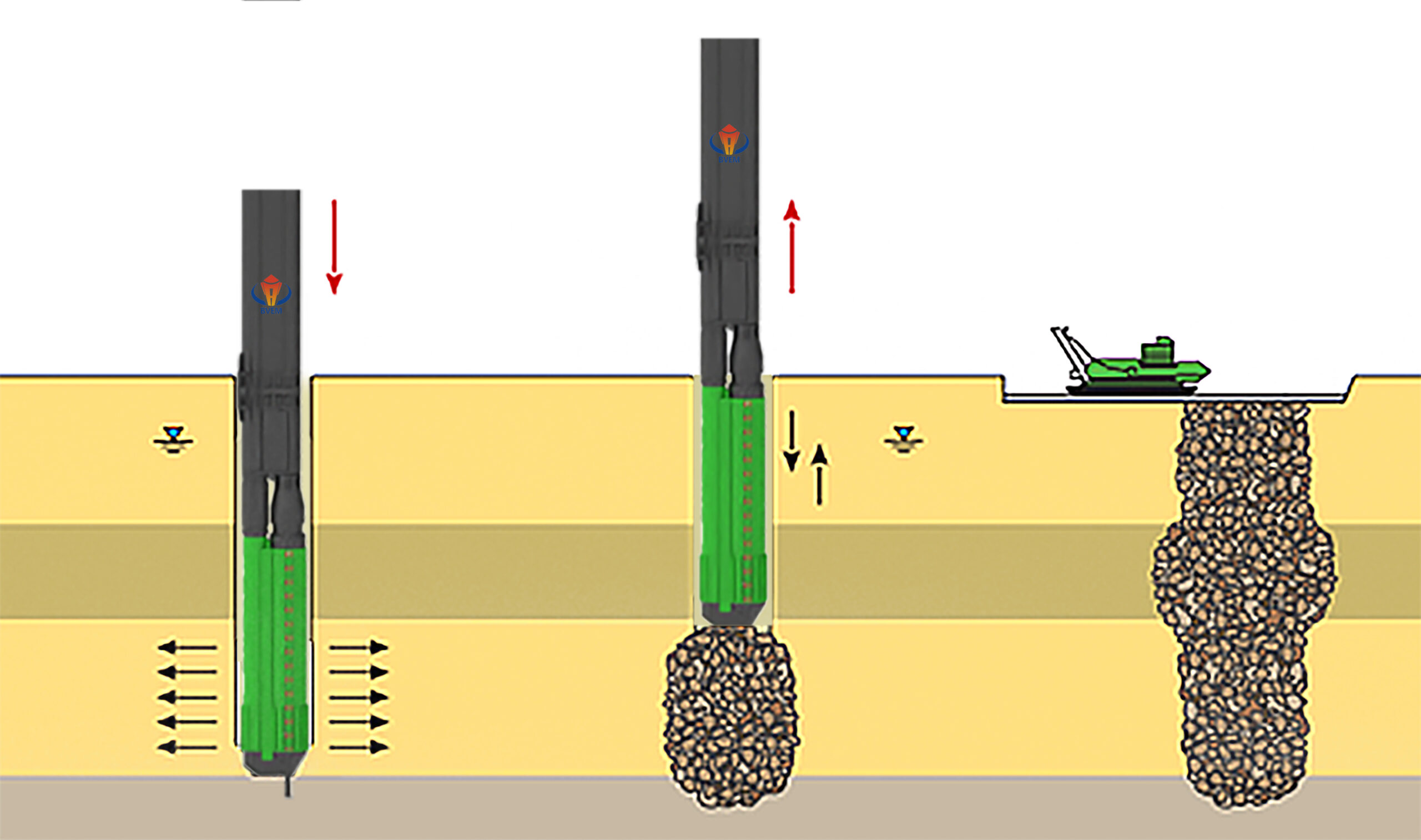
Stone columns are formed by compacting aggregate into weak soil layers to create reinforced zones within the ground. The interaction between the compacted stone and surrounding soil improves load distribution and helps the foundation perform better under applied loads.
Because the aggregate is highly permeable, stone columns can also act as drainage paths. This drainage effect is especially useful in compressible soils where consolidation time and settlement need to be managed.
Grouting: Soil Stabilization
Grouting improves ground conditions by injecting cementitious materials into soil or rock. The grout fills voids, bonds soil particles, and creates a stronger treated zone without replacing the existing soil.
Soil Conditions
Stone Columns in Soft and Compressible Soils
Stone columns are typically used in soft cohesive soils, silts, loose fills, and reclaimed ground where sufficient lateral support is available from the surrounding soil. These conditions provide the confinement required for stable column formation and effective load transfer.
When you consider stone columns for a project, you should first check soil confinement and compressibility.
Grouting in Weak or Complex Ground Conditions
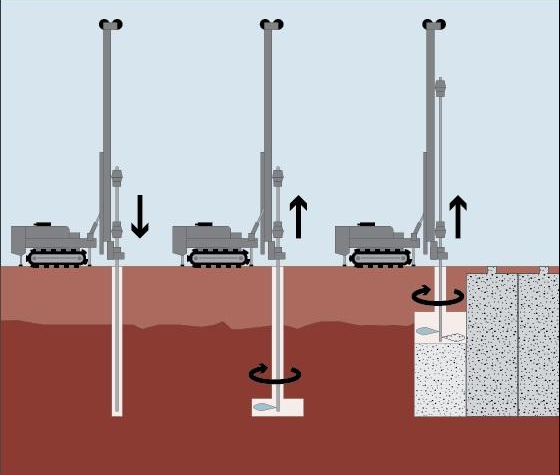
Grouting is commonly applied in weak or complex ground conditions where targeted improvement is required. It is commonly used in fractured rock, loose soil zones, void filling, underground structures, and areas affected by groundwater issues.
If you are evaluating grouting for your project, factors such as soil permeability, groundwater conditions, and the required improvement depth should be considered before selecting the appropriate solution.
Construction Method and Equipment Requirements
Stone Column Construction Using Vibro Replacement Equipment
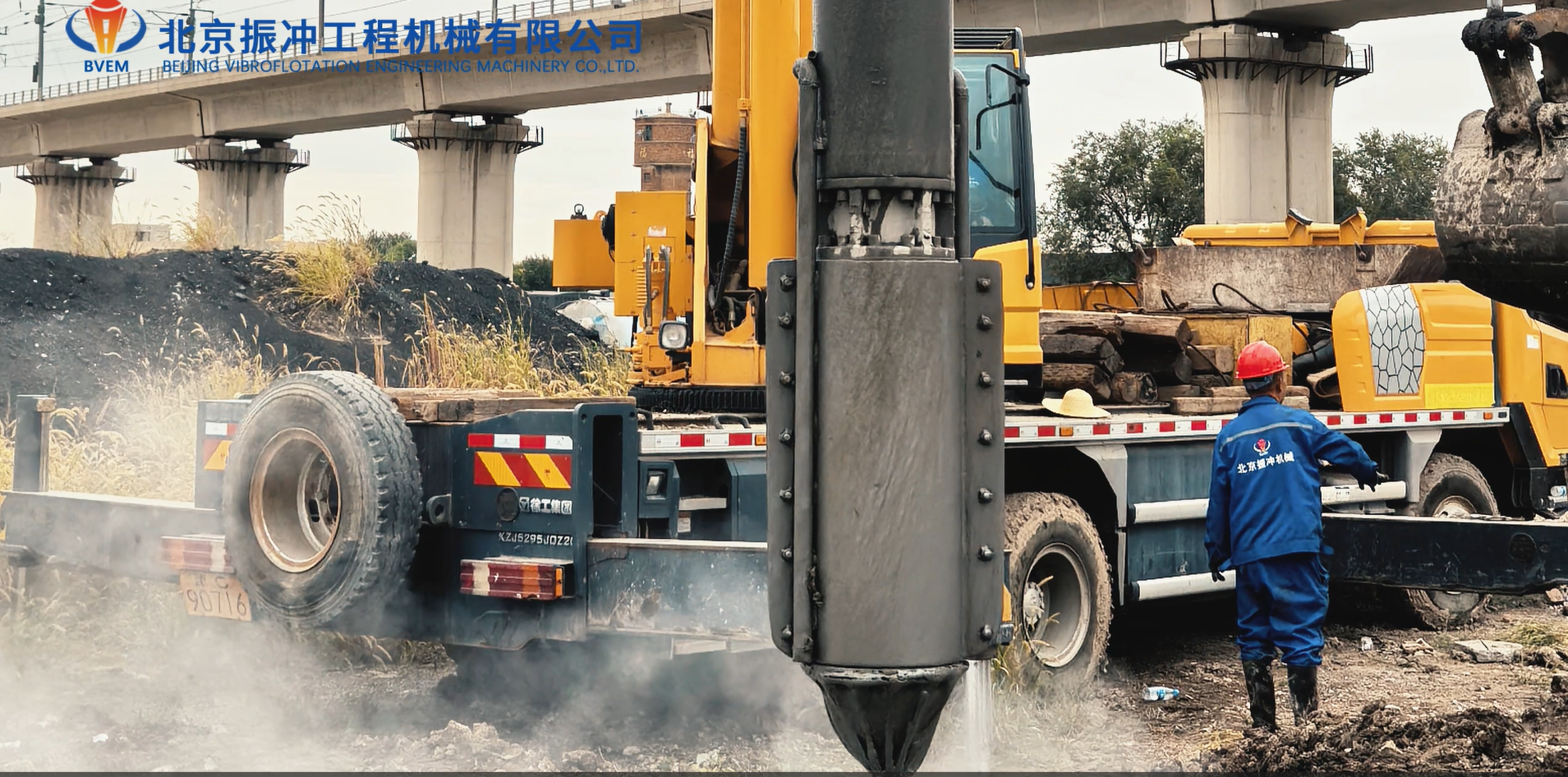
Vibro replacement stone columns are constructed using a vibroflot system, carrier machine, aggregate supply equipment, and monitoring systems. Together, these components support the installation process by controlling installation depth, column diameter, compaction quality, and overall construction performance.
When selecting equipment for a stone column project, you need to consider factors such as treatment depth, soil conditions, and site accessibility. Depending on the project requirements, contractors may use a water supply system, top-feed or bottom-feed vibroflot systems, or slurry management equipment.
Different site conditions require different installation methods. Groundwater level, soil characteristics, and construction limitations all influence the choice of method. Common options include wet top-feed, dry bottom-feed, wet bottom-feed, and other vibro replacement techniques.
With this method, you can achieve more consistent aggregate placement and improve the uniformity of the completed stone columns.
Grouting Equipment and Construction Requirements
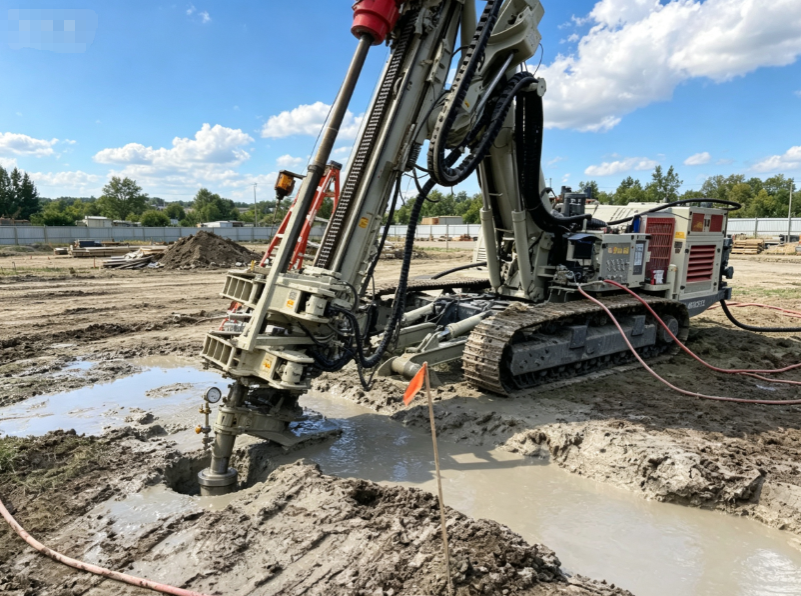
Grouting projects usually involve mixing equipment, injection pumps, drilling rigs, and monitoring systems to complete the ground treatment process.
During grouting, you need to control key factors such as injection pressure, grout characteristics, and soil response to achieve the expected treatment results. These factors directly influence grout distribution and the final performance of the improved ground.
Before starting a large-scale project, you can prepare a construction plan that includes material preparation, injection procedures, and quality control methods to ensure a smoother installation process.
Construction Efficiency and Project Application
Stone Columns for Large-Scale Ground Improvement
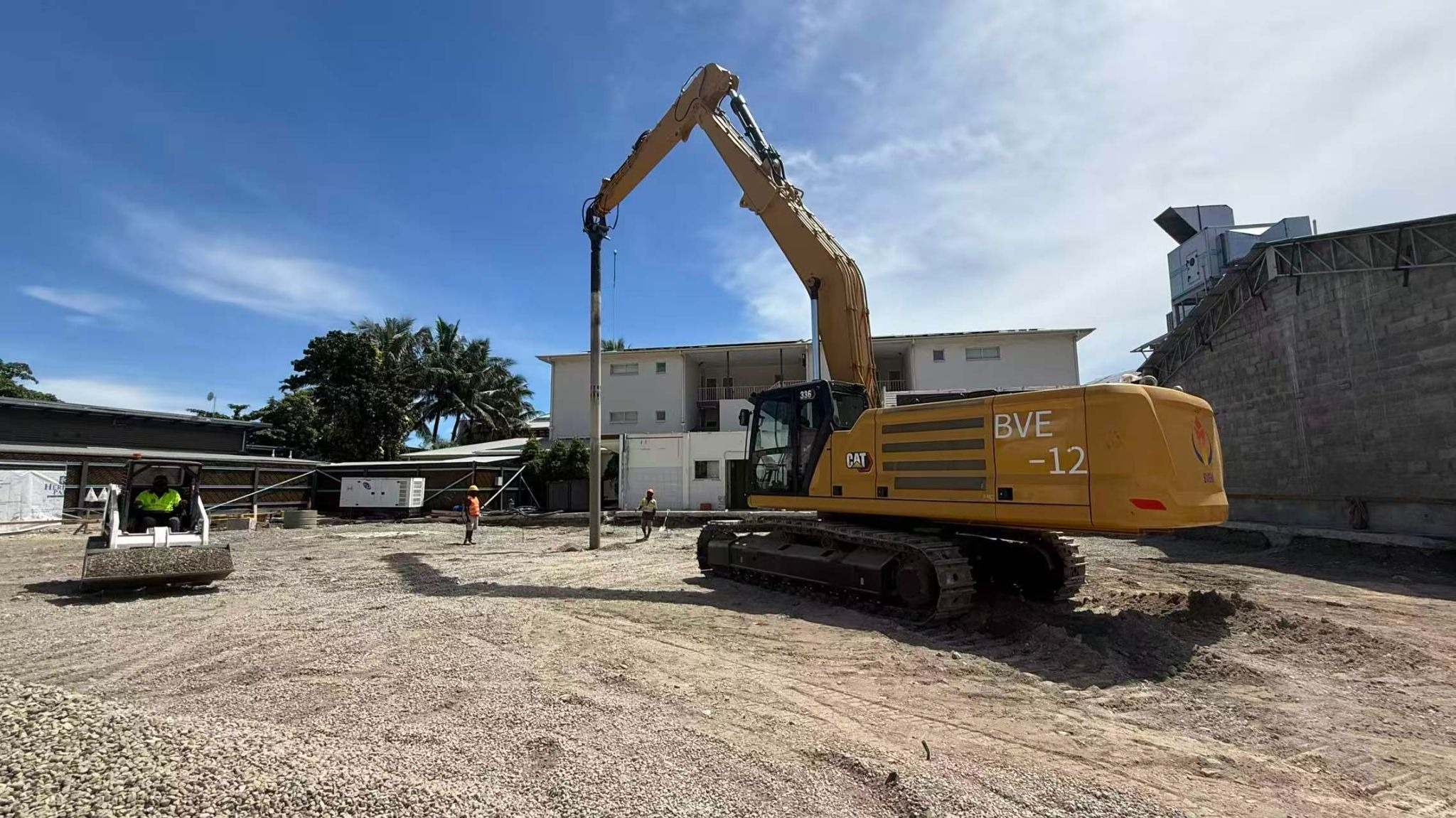
Stone columns are widely used for ground improvement projects where suitable aggregate materials and vibro replacement equipment are available.
Excavator-mounted hydraulic vibroflots can be used for both dry and wet installation methods, making them suitable for sites with limited working space or strict environmental requirements. This method also reduces labor requirements and can improve construction efficiency by up to 50%.
In large foundation projects, ports, reclamation works, and infrastructure developments, the fast installation of stone columns helps shorten construction periods and improve overall project efficiency.
When you work on deep treatment or large-scale projects, bottom-feed vibroflot systems combined with real-time monitoring equipment help you control aggregate placement more accurately and maintain consistent stone column quality.
Grouting for Localized Ground Improvement
Grouting is often selected for projects where only specific areas of the ground need improvement. Unlike stone columns, grouting requires several additional stages, such as drilling, grout injection, curing, and post-construction quality checks.
For projects involving underground structures, water control, or areas with limited access, grouting provides a practical solution when localized improvement is required.
When choosing between stone columns and grouting, you need to consider the project scale, ground conditions, and whether the goal is overall reinforcement or targeted improvement.
Quality Control and Performance Monitoring
Monitoring Stone Column Installation Quality
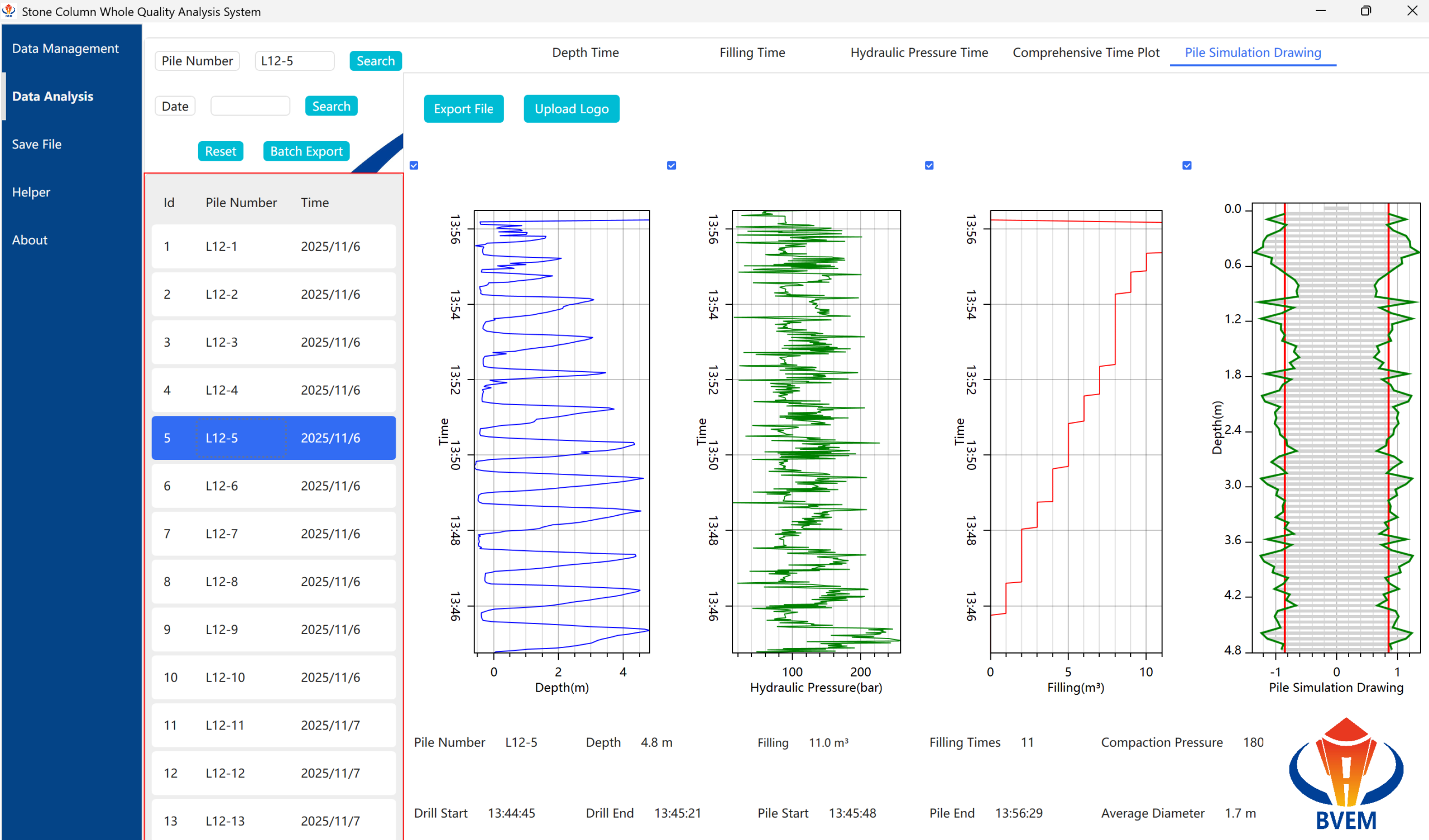
Vibro replacement monitoring systems record key installation parameters such as installation depth, vibration energy, current, and aggregate consumption during stone column construction.
With real-time data collection, engineers can check whether the installation parameters meet project requirements and adjust the construction process when necessary.
Grouting with Injection Control
The performance of grouting depends on several factors, including injection pressure, grout volume, material properties, and how the surrounding ground responds during treatment.
Since ground conditions can vary within the treatment area, you need to monitor injection data and carry out testing to confirm that the improved zone meets the expected performance requirements.
Application Comparison
Stone Columns Applications
Typical applications of stone columns include:
- Building foundations
- Industrial facilities
- Embankments
- Ports and reclamation projects
- Infrastructure construction
Stone columns are commonly used in projects where reinforcement of weak ground is required.
Grouting Applications
Typical grouting applications include:
- Underground structures
- Tunnel reinforcement
- Leakage control
- Foundation repair
- Localized soil strengthening
Grouting is suitable for projects where you need localized improvement, groundwater sealing, or treatment of complex ground conditions.
When selecting between stone columns and grouting, you need to evaluate the soil conditions, treatment area, and the performance requirements of your project.
Cost Comparison: Grouting vs Stone Columns
The cost of ground improvement varies from project to project. Factors such as material usage, equipment selection, site conditions, and construction duration all influence the final investment.
When comparing grouting and stone columns, you need to consider these factors together with your specific project requirements.
Material Cost
Stone columns are formed using crushed stone or gravel, while grouting relies on cement-based grout materials.
In large-area ground improvement projects, stone columns can be more economical in some cases because aggregate is often readily available and the installation process allows contractors to treat larger areas within a shorter time.
Equipment Cost
Equipment selection is another factor that influences construction costs. Grouting projects typically require piling rigs, injection pumps, and other specialized grouting equipment. In comparison, stone column installation uses vibroflot systems, carrier machines, and aggregate feeding equipment.
For your project, equipment costs may vary depending on the installation depth, ground conditions, and construction method. These factors should be evaluated before selecting the most suitable equipment configuration.
Site Conditions
Site conditions are another factor that can influence construction costs. Soil properties, groundwater conditions, site accessibility, and treatment depth all need to be considered when selecting equipment and planning construction methods.
For projects with difficult site conditions, you may need additional equipment or specific construction measures to complete the ground improvement work smoothly.
Construction Time
Stone columns can often be installed faster than grouting methods, especially for projects that require treatment over large areas. This shorter installation period can help you keep the project schedule on track and reduce the impact of ground improvement work on overall construction costs.
How to Choose Between Grouting and Stone Columns Based on Soil Conditions
Choosing between grouting and stone columns requires an understanding of the soil conditions, project goals, and the area that needs treatment.
The following comparison shows which method is generally more suitable for different ground conditions and project requirements.
| Ground condition / Project requirement | Recommended method | Reason |
| Soft clay and cohesive soils | Stone columns (vibro replacement) | Improve load transfer and help control settlement |
| High settlement risk | Stone columns | Reduce settlement by forming reinforced zones within the ground |
| Need drainage improvement | Stone columns | Provide drainage paths and accelerate consolidation |
| Large-area ground improvement | Stone columns | Effective for treating large areas |
| Loose sand with voids or cavities | Grouting | Fill voids and improve soil bonding |
| Rock fissures and fractures | Grouting | Reduce permeability and strengthen weak zones |
| Localized soil improvement | Grouting | Suitable for targeted treatment areas |
| Water sealing requirements | Grouting | Reduce seepage and improve impermeability |
When you compare these two methods for your project, look at the treatment area, soil conditions, and the performance you need to achieve. Stone columns are commonly selected for large-scale ground improvement, while grouting is more suitable when localized treatment or permeability control is required.
Bonded Vibro Stone Columns Combining Grouting and Vibro Replacement Technologies
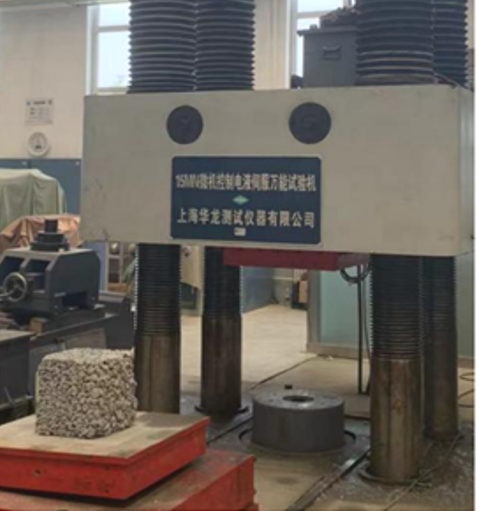
Although stone columns and grouting each provide effective ground improvement solutions, they also have their own limitations. Conventional stone columns rely on soil confinement to achieve reinforcement, while grouting improves soil strength and waterproofing performance but is usually applied to localized treatment areas.
To overcome these limitations, BVEM has developed an innovative Bonded Vibro Stone Column technology, which combines the advantages of vibro replacement and grouting into a single ground improvement solution.
By introducing specially developed bonding materials during vibro stone column installation, the aggregate particles are effectively bonded together to form a stronger composite column. At the same time, the technology maintains the high permeability characteristics of traditional stone columns, allowing the improved ground to achieve both structural reinforcement and drainage performance.
The bonded vibro stone column technology provides significant performance improvements:
- Enhanced bearing capacity: The bearing capacity of a single column can reach 1500–2000 kN, further improving the load-bearing performance of composite foundations.
- Maintained drainage function: The column maintains a permeability coefficient of no less than 1×10⁻² cm/s, ensuring effective drainage and consolidation acceleration.
- High structural strength: The bonded column can achieve a compressive strength of C25 or above, creating a more stable underground reinforcement body.
- Optimized pore structure: A controlled porosity range of 10%–30% balances strength improvement and drainage requirements.
- Deep ground improvement capability: The technology enables installation depths of up to 100 meters, expanding the application range of vibro replacement in challenging ground conditions.
- Excellent construction stability: The bonding materials remain uniformly distributed under high-frequency vibroflot vibration, preventing aggregate segregation during installation.
Furthermore, the bonding material provides waterproofing performance while strengthening the connection between stone aggregates, creating a durable composite structure with improved mechanical properties and long-term stability.
By integrating the load-bearing capacity of grouting with the drainage efficiency of stone columns, BVEM’s Bonded Vibro Stone Column technology offers a new approach for complex ground improvement projects where conventional methods cannot fully meet performance requirements.
FAQ
Why are stone columns more cost-effective for large-scale projects?
Stone columns are often a practical choice for large ground improvement projects because aggregate materials are widely available and vibro replacement allows efficient installation over large treatment areas.
Grouting may involve higher material and equipment requirements, especially for projects that require injection control or specialized treatment. For your project, the final cost depends on factors such as the treatment area, soil conditions, and construction requirements.
Can stone columns be installed in offshore or underwater projects?
Yes. Stone columns can be installed in offshore and underwater environments by using suitable vibro replacement equipment, such as bottom-feed vibroflot systems.
With the bottom-feed method, aggregate is delivered through a feeding pipe directly to the installation depth, which helps overcome material placement difficulties that may occur with traditional top-feed methods in underwater conditions.
You can use this approach for marine projects including ports, reclamation works, artificial islands, and offshore infrastructure developments.
Are stone columns suitable for very soft soils?
Stone columns can be used in soft cohesive soils when the surrounding soil provides enough lateral confinement to support the columns.
In extremely weak soils, such as peat, organic soils, or very soft clay, the surrounding ground may not provide sufficient support, which can reduce column effectiveness. When you consider vibro replacement for soft soil improvement, you need to evaluate soil strength, settlement requirements, and overall project conditions to determine whether the method is appropriate.
What factors affect the selection of wet, dry, and bottom-feed vibro replacement methods?
Choosing the right vbro replacement method requires looking at the site conditions, groundwater situation, treatment depth, and construction requirements.
Wet top-feed methods are often selected when water supply is available and slurry management can be handled on site. Dry methods are commonly used for projects where reducing water consumption and slurry disposal is a priority.
For deeper installations, offshore construction, or projects that require more accurate aggregate placement, you can consider bottom-feed vibroflot technology to improve control over aggregate delivery and stone column formation.
About BVEM: Advanced Ground Improvement Solutions
Successful ground improvement requires not only reliable equipment, but also the right technology and construction solutions for specific site conditions.
BVEM provides vibroflot equipment, bottom-feed vibroflot systems, and customized ground improvement solutions for stone columns, vibro replacement, and bonded vibro stone column applications.
With extensive experience in vibro technology and innovative ground improvement methods, BVEM helps contractors and engineers achieve higher bearing capacity, improved drainage performance, and reliable foundation solutions for challenging projects.