From yard landscaping to full-scale mining, picking the right excavator size comes straight down to project economics. With so many weight classes available, narrowing down the right fit can feel overwhelming. In this guide, we break down standard size categories and key specifications so you can lock in the right machine and get straight to work.
Breakdown of Excavator Size Classes
Excavators are available in different size classes, each designed for specific working conditions, productivity requirements, and applications.
Mini & Compact Excavators (Under 6 Metric Tons / Up to 13,200 lbs)
If you are working in tight spaces where protecting existing surfaces and maintaining access are important, mini excavators are often the preferred choice.
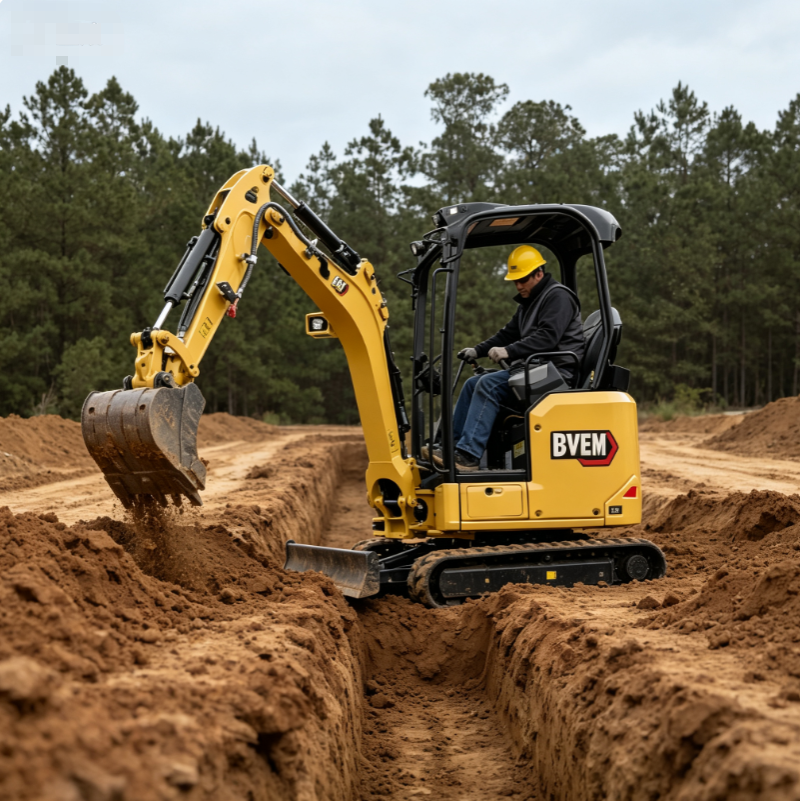
- Spec Benchmarks: Operating weights sit under 6 metric tons (up to 13,200 lbs), with engines putting out 10-50 HP. You can expect maximum dig depths between 6 and 12 feet (1.8 to 3.7 m).
- Key Features: Compact track frames and narrow bodies let you squeeze through tight garden gates and narrow alleys. Most new compact models offer Zero-Tail Swing (ZTS), meaning you can spin the house completely within the track width without clipping fences, walls, or passing vehicles.
- Where They Work Best: Backyard landscaping, indoor wall removals, utility line repairs, farm trenching, and light civil work.
- Limitations: Mini excavators trade off some digging power, bucket capacity, and reach. They are not built for mass dirt moving or breaking hard rock.
Midi / Small Excavators (6 to 10 Metric Tons / 13,200 – 22,000 lbs)
Small excavators fill the gap between compact maneuverability and standard excavator power. They give you a real bump in breakout force while staying easy enough to move from job to job.
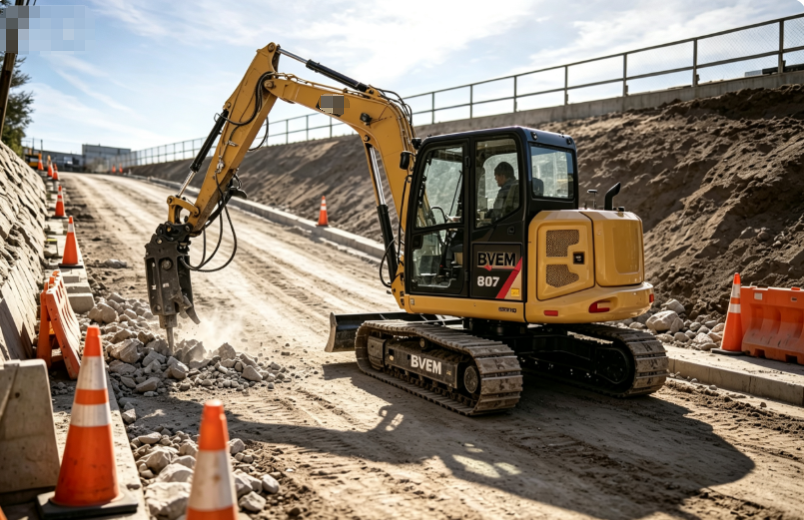
- Spec Benchmarks: Operating weights run from 6 to 10 metric tons (13,200 to 22,000 lbs) with power output climbing to 50-75 HP. Maximum dig depths reach 12 to 15 feet (3.7 to 4.6 m).
- Key Features: They provide a solid, stable base with enough hydraulic punch to tackle tough ground, outperforming manual labor and micro machines by a wide margin.
- Where They Work Best: Small commercial footprints, urban road repairs, foundation footings for light structures, and municipal utility work.
- Limitations: Keep in mind that you’ll get less reach and lifting capacity than a standard machine. If you’re planning massive earthmoving or heavy construction, these won’t be your best call.
Standard & Medium Excavators (10 to 45 Metric Tons / 22,000 – 100,000 lbs)
Medium excavators form the everyday backbone of most commercial fleets. Ranging from nimble 13-ton units up to 45-ton workhorses, this class gives you the right balance of daily production and tool versatility.
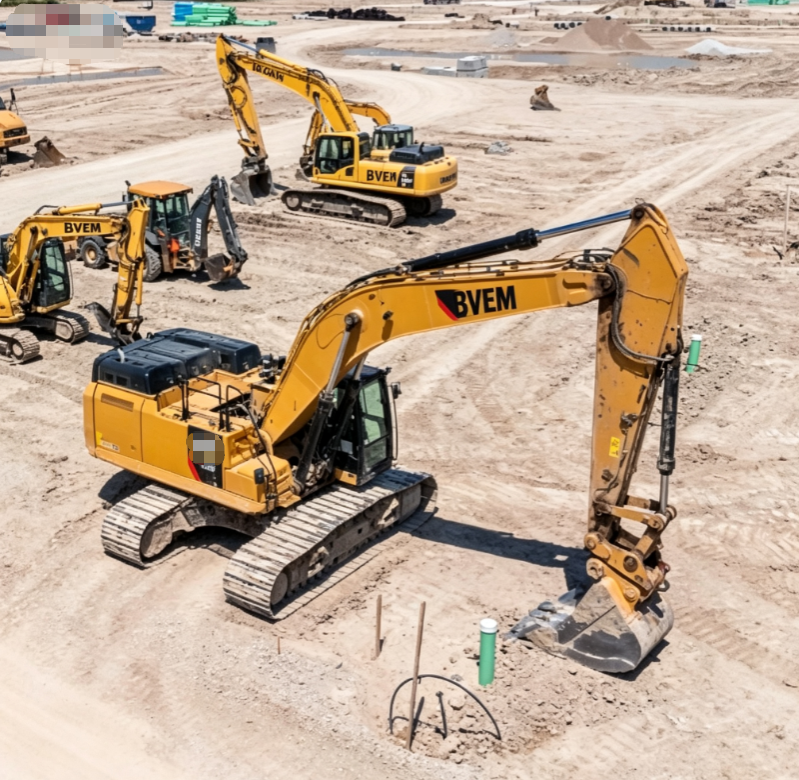
- Spec Benchmarks: Operating weights range from 10 to 45 metric tons (22,000 to 100,000 lbs). Engine output scales from 75 HP to over 300 HP, pushing your maximum digging depth to 15–24 feet (4.6 to 7.3 m).
- Key Features: High-flow hydraulic systems handle heavy ground conditions, from soft clay to packed stone.
- Where They Work Best: Commercial building excavations, road and bridge builds, deep utility trenching, and general infrastructure projects.
- Limitations: Too bulky for tight residential access or indoor work.
Heavy & Mining Excavators (Over 45 Metric Tons / 100,000+ lbs)
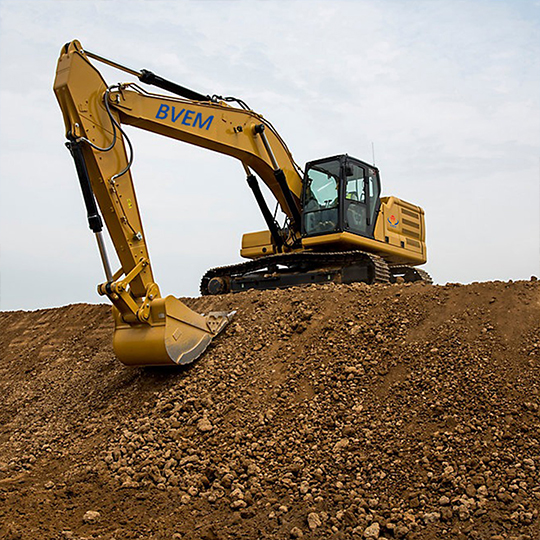
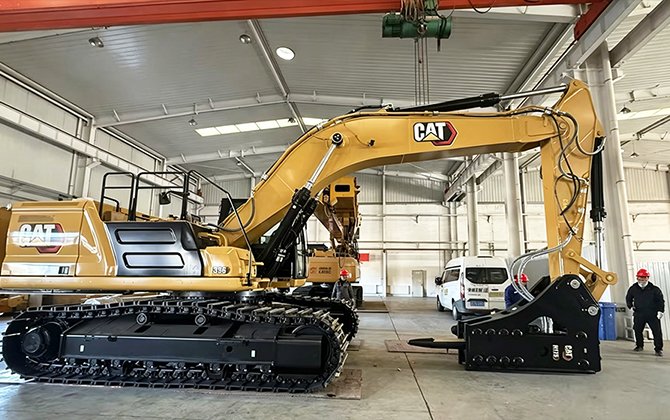
When your crew needs to move thousands of tons of dirt, rock, or concrete as fast as possible, you step up to large excavator.
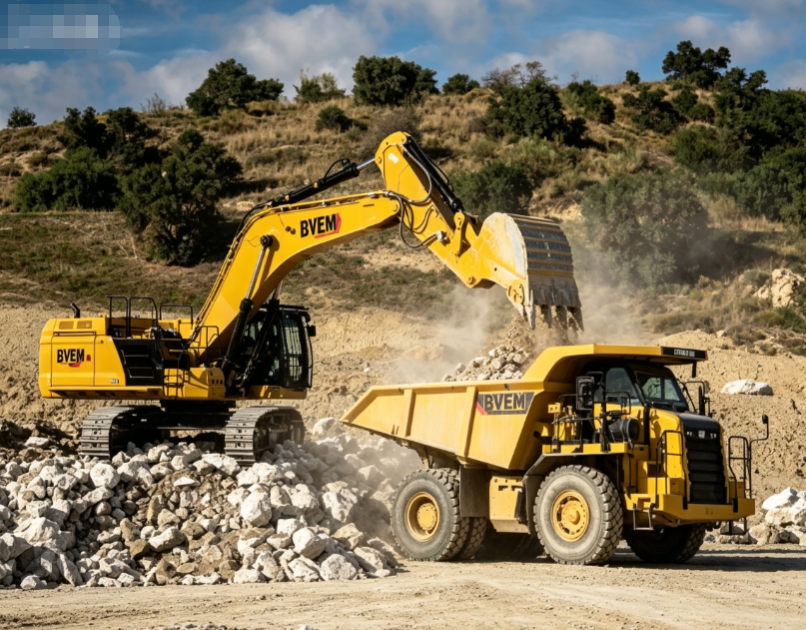
- Spec Benchmarks: Operating weights start at 45 metric tons (100,000 lbs) and push past 90 tons. Engine ratings top 350 to 500+ HP, taking your dig depth down 27 to 32 feet (8.2 to 9.8 m).
- Key Features: Heavy counterweights, massive boom structures, and maximum breakout forces engineered to load large off-highway haul trucks while maintaining reliable performance in demanding loading operations.
- Where They Work Best: Open-pit quarries, mine sites, large-scale highway cuts, and structural demolition.
- Limitations: They’re simply too big and expensive to run on smaller sites. Plus, if you’re working in tight spaces or narrow access routes, maneuvering them in is going to be a real headache.
Wheeled Excavators: A Mobility-Focused Alternative
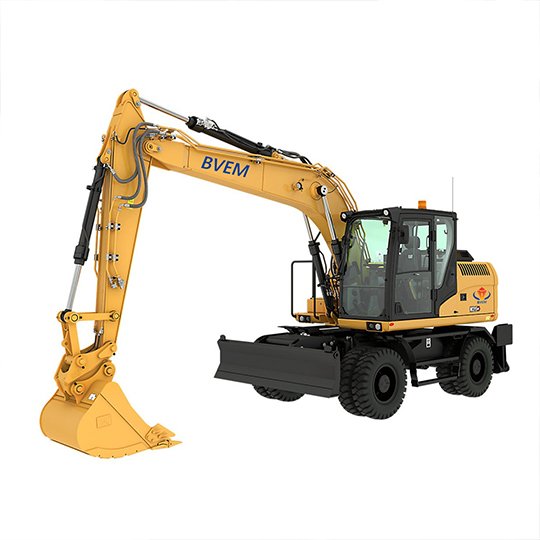
If you need frequent movement between city job sites, wheeled excavators (10 to 25 tons) provide a road-ready alternative.
- Why They Work: You can drive them straight down paved streets at road speeds, cutting out transport trailer delays.
- Best Uses: Great for utility maintenance, asphalt patching, and working on finished pavement—especially when you need to protect delicate surfaces from heavy steel tracks.
Complete Excavator Size Chart
Use the chart below to quickly compare each size class. It breaks down operating weight, engine power, dig depth, and typical jobs so you can find the right match at a glance.
| Size Class | Operating Weight | Engine Power | Max Dig Depth | Best Applications |
| Mini / Compact | Under 6 Tons (< 13,200 lbs) | 10 – 50 HP | 6 – 12 ft (1.8 – 3.7 m) | Backyard landscaping, indoor demolition, utility line repairs, agricultural trenching |
| Midi / Small | 6 – 10 Tons (13,200 – 22,000 lbs) | 50 – 75 HP | 12 – 15 ft (3.7 – 4.6 m) | Urban road repairs, small commercial footprints, light building foundations |
| Standard / Medium | 10 – 45 Tons (22,000 – 100,000 lbs) | 75 – 300+ HP | 15 – 24 ft (4.6 – 7.3 m) | Commercial construction, road & bridge builds, deep utility trenching, site leveling |
| Heavy & Mining | Over 45 Tons (> 100,000 lbs) | 350 – 500+ HP | 27 – 32 ft (8.2 – 9.8 m) | Open-pit mining, quarrying, heavy demolition, mass earthmoving, truck loading |
| Wheeled (Special) | 10 – 25 Tons (22,000 – 55,000 lbs) | 100 – 175 HP | 15 – 20 ft (4.5 – 6.0 m) | Municipal repairs, asphalt patching, work on paved surfaces requiring high road mobility |
How to Choose the Right Excavator Size
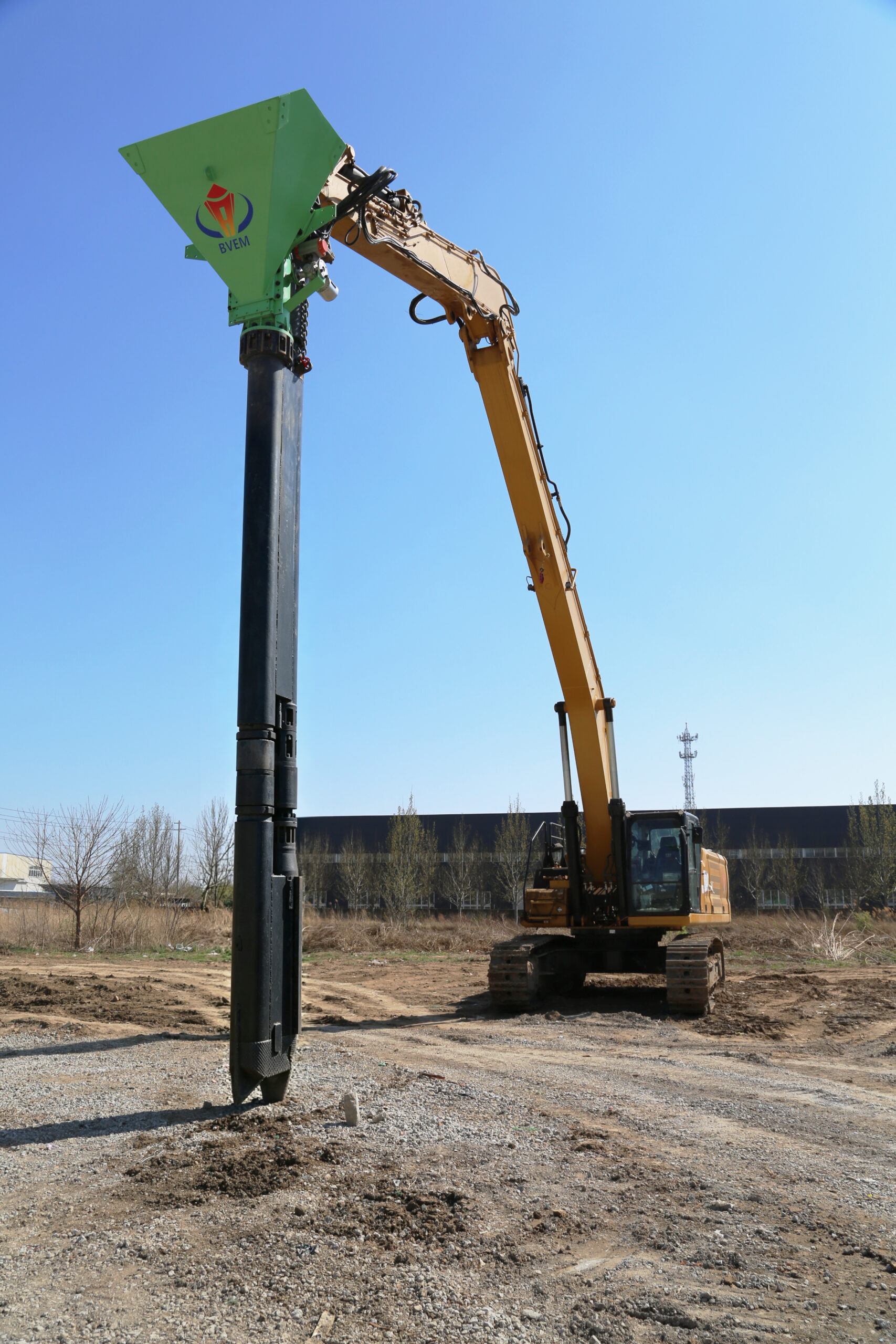
Finding the right excavator size starts with your site conditions and the actual work you need done. Don’t just pick a machine by its operating weight. You’ll want to balance bucket capacity, lifting power, and dig depth against your transport setup, attachment needs, and daily operating costs.
Working Conditions
Your site environment dictates what type of track or frame you need. Compact rigs thrive in tight, restricted alleys, while open earthmoving jobs let big machines run at full throttle. Always double-check your tightest access points, ground stability, and soil type before bringing a machine on-site.
Digging Depth and Reach
Your target digging depth and working reach directly dictate whether a machine can clear the job efficiently. You’ll want an excavator that comfortably handles your average depth—running a machine constantly at its maximum threshold leads to heavy wear, slower cycles, and potential safety risks.
Make sure you size the specs according to your site’s physical limits:
- Maximum Digging Depth: Match this to your trenching needs. Compact/mini models typically dig down 6 to 12 feet (1.8 to 3.7 m), standard/medium excavators reach 15 to 24 feet (4.6 to 7.3 m), while long-reach units can exceed 27 to 32+ feet (8.2 to 9.8+ m).
- Working Radius & Reach: Measure how far out you need to dump material or excavate from a single position. Standard models reach around 25 to 35 feet, whereas specialized long-reach booms can extend well over 100 feet (30+ m) across water or hazardous structures.
- Boom and Arm Configurations: If you’re working in tight, restricted zones, you’ll need a shorter arm or zero-tail swing setup. For deep ditching or dredging, opt for extra-long extendable booms.
- Dump & Lifting Height: Check how high the bucket needs to lift to clear truck beds or dumpsters—standard medium excavators usually clear loading heights around 20 feet (6 m).
Attachments and Hydraulic Performance
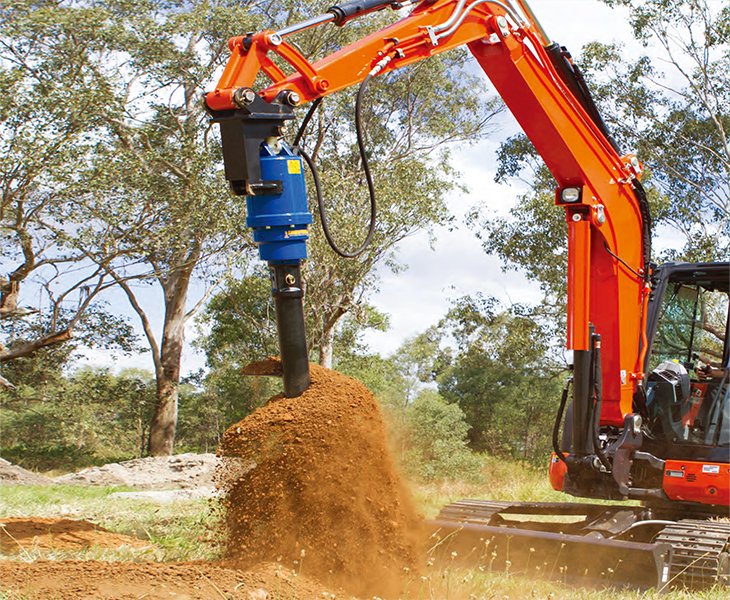
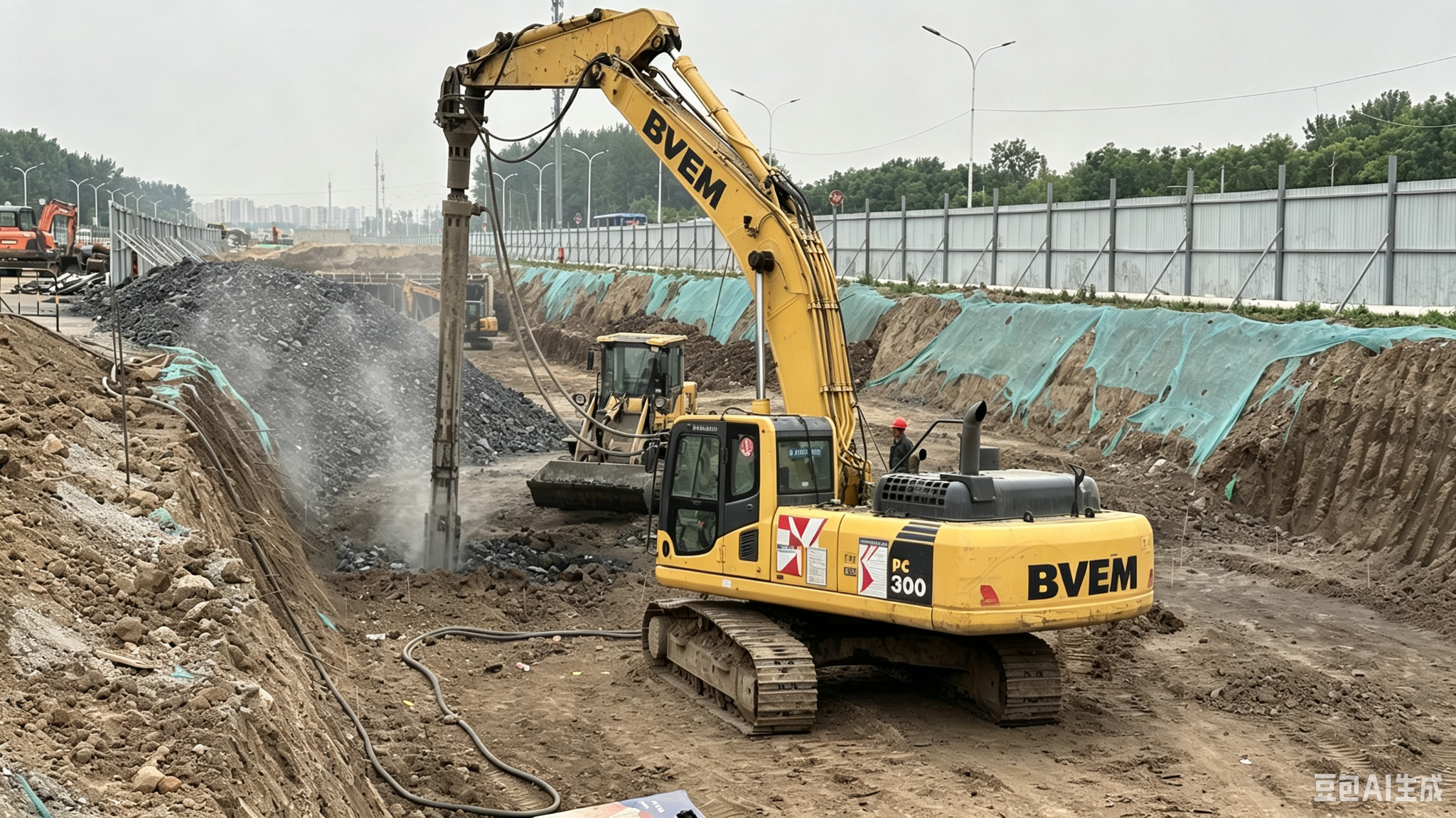
If you’re planning to run heavy attachments like hydraulic breakers, augers, or thumbs, you’ll want to check the auxiliary hydraulic flow (GPM/PSI) and lifting limits first. Getting your hydraulic setup right ensures your machine handles multiple tools smoothly without bogging down.
Transportation Requirements
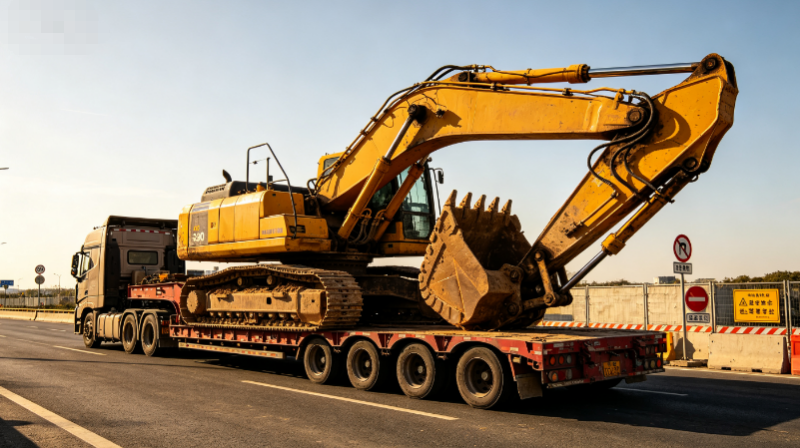
Don’t forget to map out how you’ll move the machine between sites. Compact units under 6 tons can easily be towed on a standard trailer behind a heavy-duty pickup truck. Once you step up to medium or heavy excavators, you’ll need specialized lowboy trailers, oversize permits, and designated transport routes—which directly impacts your mobilization budget.
Budget and Operating Costs
Look beyond the initial sticker or rental price. Larger excavators burn significantly more fuel per hour and carry higher maintenance costs for undercarriage wear and replacement parts. Matching machine size directly to your daily production targets prevents you from paying for power you don’t actually use.
Frequently Asked Questions
Can a mini excavator clear tree stumps effectively?
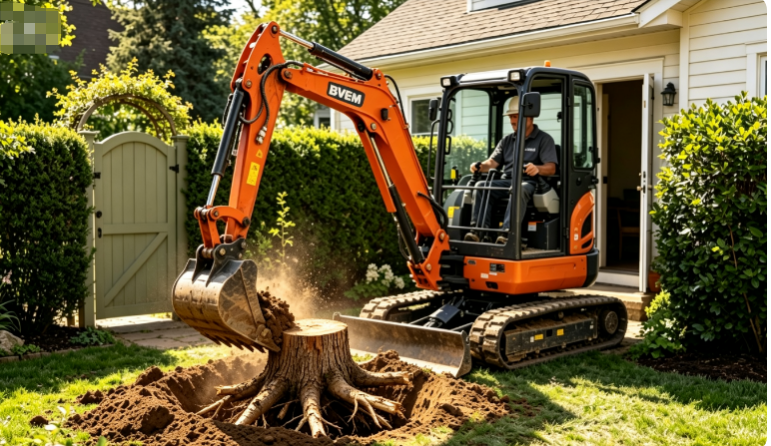
Absolutely. Compact excavators excel at stump removal because they allow operators to precisely dig around the primary root ring and slice through anchor roots using the bucket edge or a ripper attachment. For small to mid-sized stumps (under 12 inches in diameter), a 1.5 to 3.5 ton mini excavator offers plenty of breakout force while fitting through narrow garden gates. However, if you are tackling mature hardwood stumps or clearing dense land, stepping up to a 5 to 8 ton machine is recommended to avoid excessive hydraulic strain and track tipping.
What key specs should I compare when choosing the right excavator size?
Beyond just operating weight, focus on three practical metrics that define job site performance:
- Maximum Reach and Dig Depth: Choose a machine that comfortably exceeds your target trench depth by at least 20% to avoid working at maximum boom extension, which slows cycle times.
- Tail Swing Configuration: If you operate against residential fences or along busy streets, opt for Zero Tail Swing (ZTS) to prevent rear counterweight collisions.
- Transport & Logistics Limits: Standard pickup trucks and dual-axle trailers can usually tow machines under 4 tons. Once you exceed 6–10 tons, moving equipment requires heavy flatbeds and specialized haul permits.
How much earthwork can a compact excavator complete in a full day?
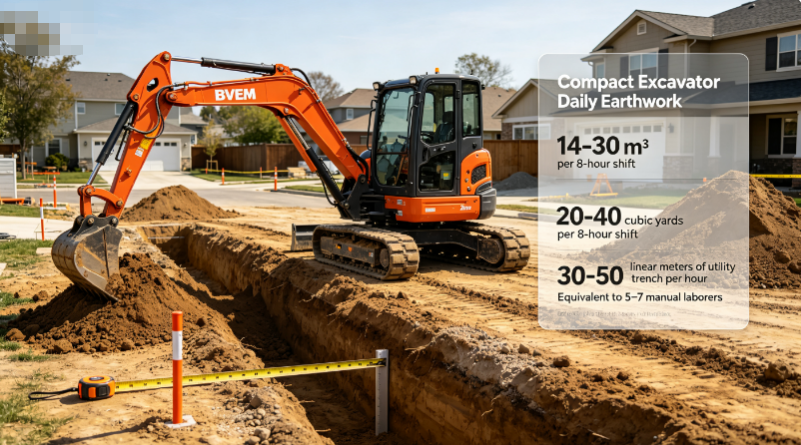
Daily production varies based on soil density and operator capability, but a standard 2 ton mini excavator typically moves between 15 and 30 cubic meters (20–40 cubic yards) of material per 8-hour shift. When digging standard utility trenches (about 1 meter deep in manageable soil), you can expect a production rate of 30 to 50 linear meters per hour. In practical terms, a single micro digger matches the daily output of roughly 5 to 7 manual laborers while dramatically reducing site fatigue.
What excavator tonnage is best suited for residential footings?
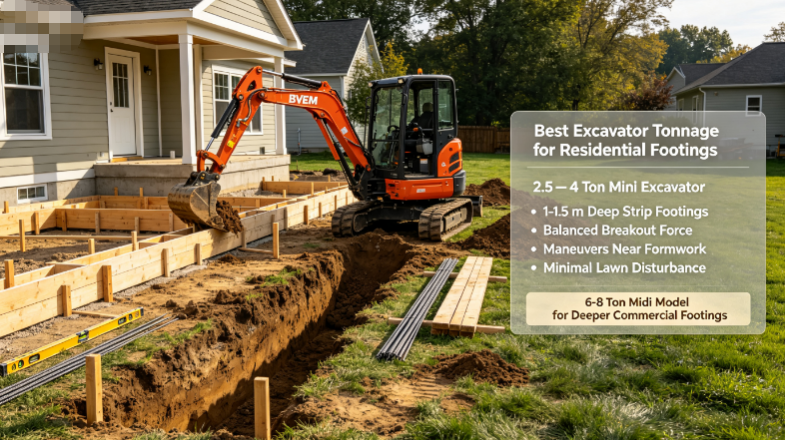
For typical housing foundations and strip footings (ranging from 1 to 1.5 meters deep), a 2.5-4 ton mini excavator hits the ultimate sweet spot. This weight class delivers the ideal balance: sufficient hydraulic breakout force to cut through compacted subsoil, tight maneuvering around formwork, and minimal ground disturbance on lawn surfaces. For deeper commercial footings or heavy trench box installations, contractors usually scale up to a 6-8 ton midi model.
What are the primary types of excavator buckets and their typical sizes?
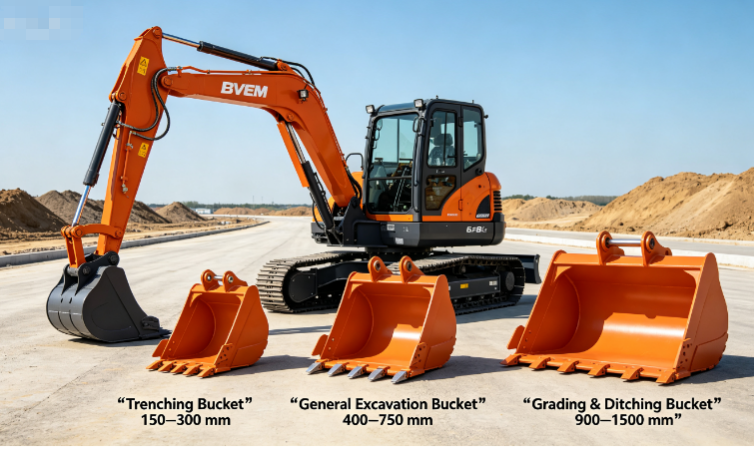
Excavator buckets are engineered for specific ground conditions rather than a one-size-fits-all dimension:
- Trenching Buckets (150–300 mm / 6–12 in): Narrow, deep buckets designed to cut clean slots for utility cables, pipe conduits, and footings without displacing extra soil.
- General Excavation Buckets (400–750 mm / 16–30 in): Fitted with replaceable heavy-duty teeth to slice into hard clay, rocky terrain, and dense topsoil.
- Grading & Ditching Buckets (900–1500 mm / 36–60 in): Wide, toothless buckets with smooth cutting edges built for backfilling, slope leveling, and ditch cleanouts.
Why Choose BVEM for Your Excavator Fleet?
BVEM sources genuine excavators directly from leading manufacturers, offering factory-direct pricing without distributor markups. Backed by proven global delivery experience, we provide tailored equipment sizing, expert technical alignment, and full post-sale support to lower procurement risks and keep your job sites running efficiently.