Choosing between a diesel and hybrid generator depends on how the power system will be used on site. A project with a steady load may have very different needs from one where equipment starts and stops throughout the day. Operating hours, load changes and actual power demand all need to be considered before making a decision.
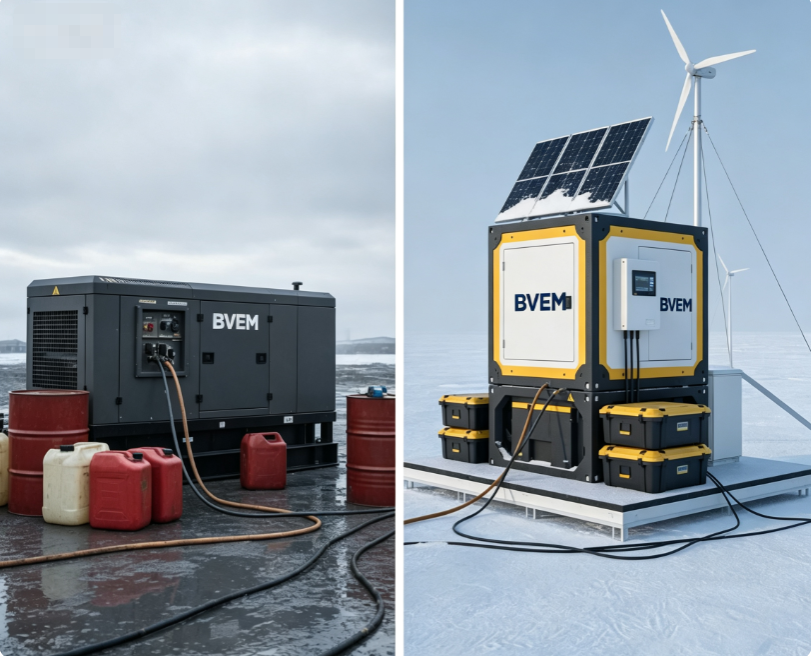
Diesel vs Hybrid Generator: Key Differences
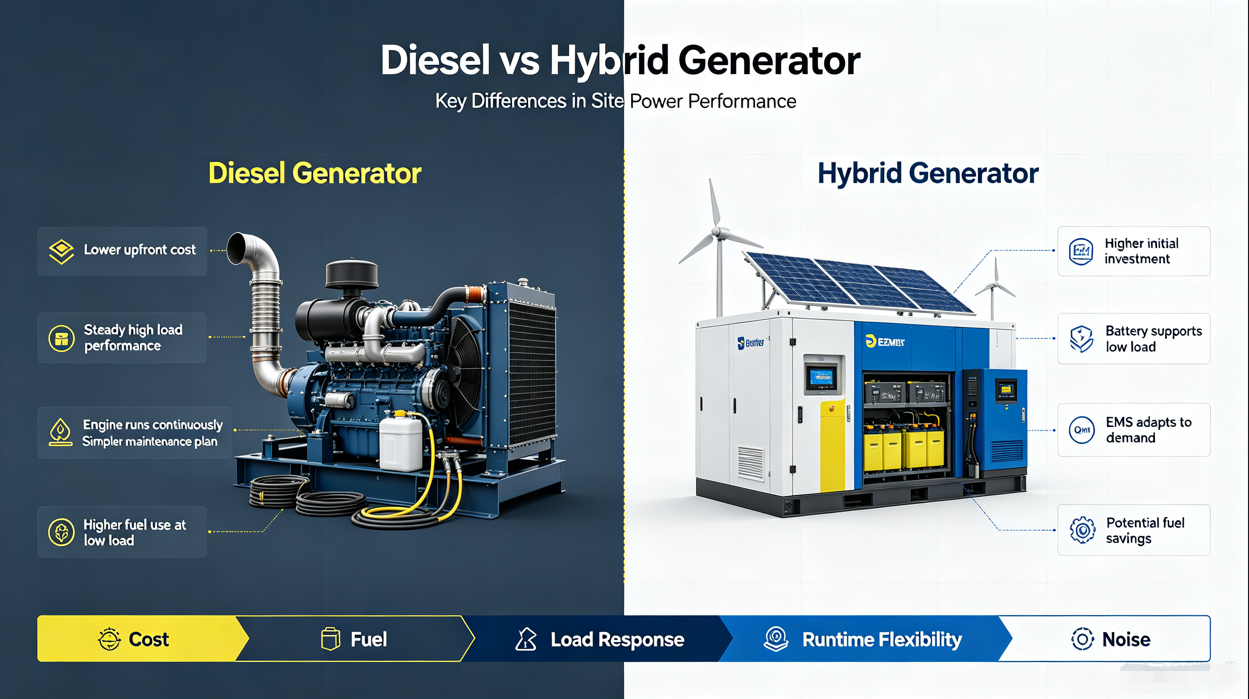
The choice often comes down to how power is used on site. A diesel generator is usually a straightforward option when the load stays fairly steady. A hybrid generator works differently, using battery storage and an energy management system (EMS) to respond to changes in demand. The differences become more noticeable when you look at load, runtime and daily operating conditions.
Initial Cost
Diesel Generator
A diesel generator is generally less expensive to buy. Its main components are the diesel engine, alternator and control system, so the overall setup is relatively simple. For a short-term project or a site that just needs a reliable and straightforward power source, the lower purchase price can be a real advantage.
Hybrid Generator
A hybrid generator normally costs more upfront because the system includes battery storage, power electronics and an EMS in addition to the diesel generator. The higher price mainly comes from these added components and their control functions.
Fuel Consumption
Diesel Generator
Fuel consumption is usually more manageable when you run a diesel generator under a steady, relatively high load. The situation changes when your site spends long periods using only a small part of the generator’s capacity. The engine still needs to keep running to supply power, even when the actual demand is well below its rated output.
Hybrid Generator
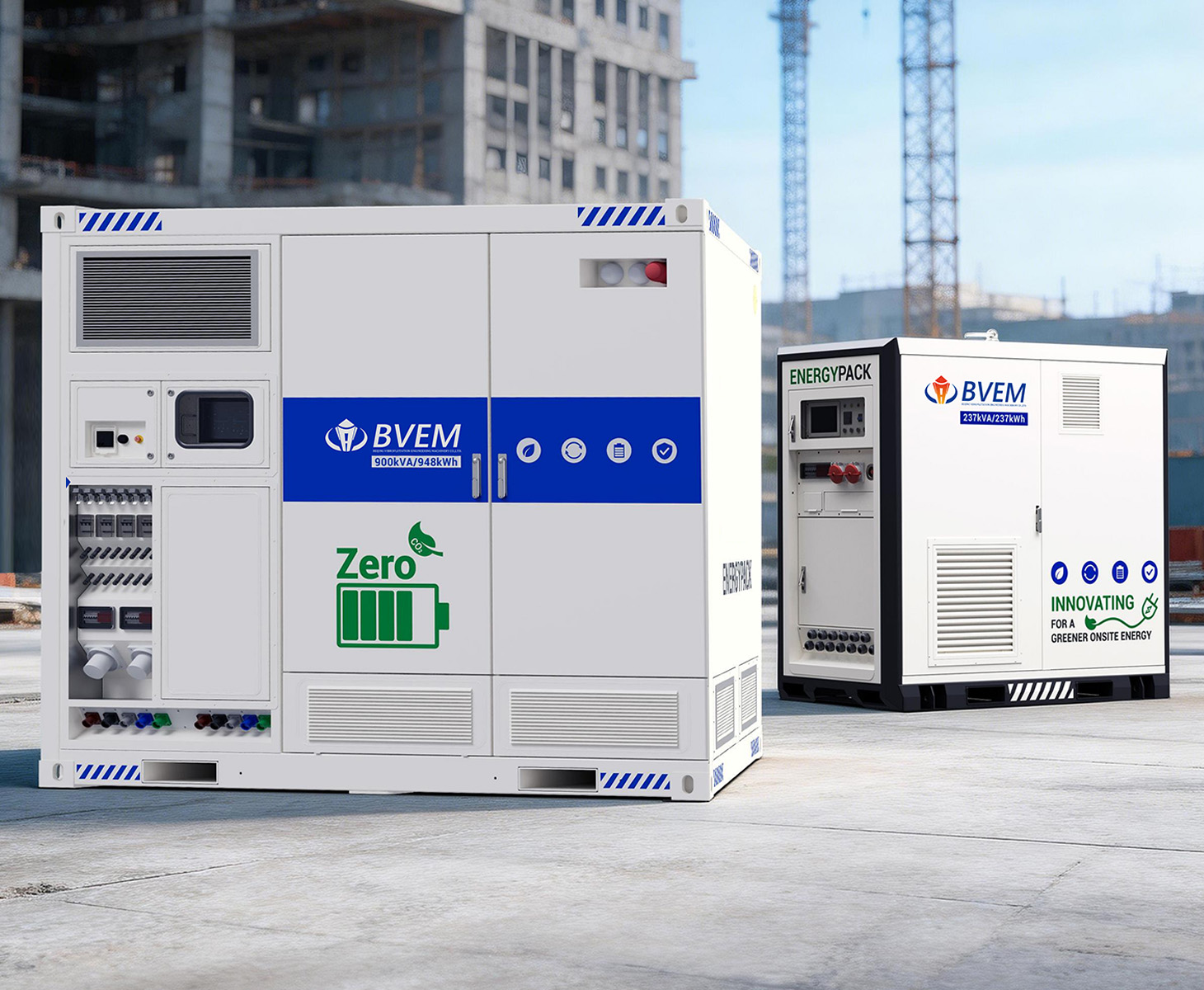
With a hybrid system, the battery can take care of low loads and short bursts of higher demand. The diesel generator can step in when your site needs more power or when the battery requires charging. This reduces the time the engine needs to run and can lower fuel consumption. The actual fuel saving, however, will depend on your load pattern and how the system is operated.
Low-Load Operation
Diesel Generator
When the load on your site drops, a conventional diesel generator still has to keep the engine running to provide the required power. If this happens regularly, the generator may spend a lot of time working below its more suitable load range, which can reduce its overall efficiency.
Hybrid Generator
A hybrid generator gives you another option during these low-load periods. When power demand is low enough, the diesel engine can shut down and the battery can take over the load. This can be useful for sites where your equipment needs only a small amount of power for extended periods.
Peak Load and Starting Power
Diesel Generator
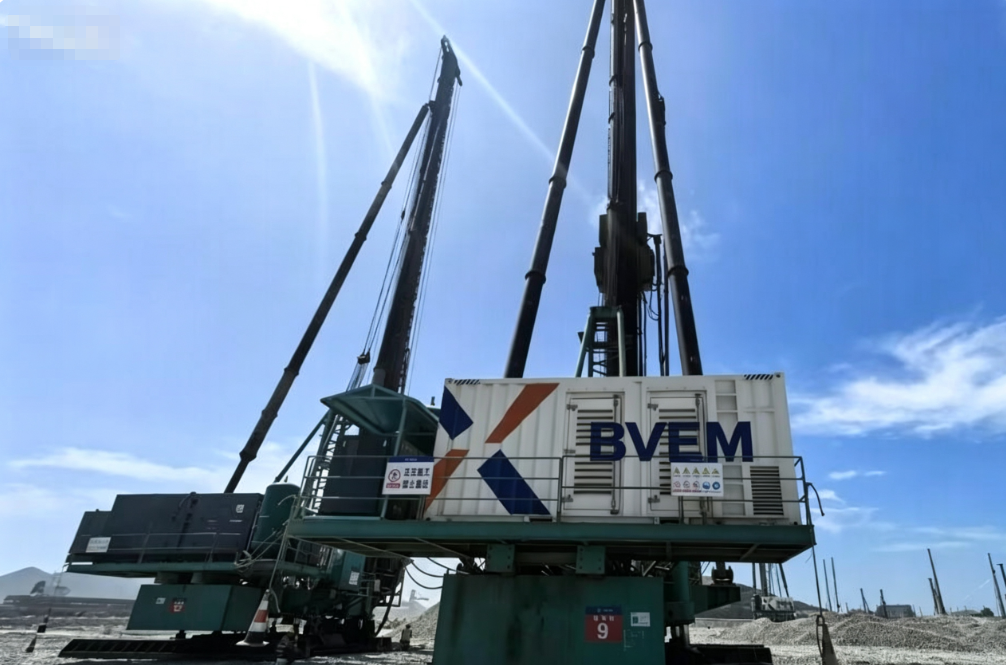
When you choose a diesel generator, the sizing needs to account for the highest power demand your site may reach. Motors, pumps and other heavy equipment can draw a high starting current, so the generator needs enough capacity to handle these moments. Once the equipment is running normally, however, the actual load may be much lower, leaving part of the generator’s capacity unused.
Hybrid Generator
A hybrid system can use the battery to support your site when there is a short spike in power demand. How much support it can provide depends on the inverter and the overall system setup. This means you do not necessarily need the diesel generator to handle every brief peak on its own.
Runtime
Diesel Generator
A diesel generator needs to keep running whenever your site is relying on it for power. This becomes more noticeable on projects with long working hours. Even when the average load is fairly low, the engine may still accumulate many hours of operation simply because the site continues to need a power supply.
Hybrid Generator
Battery storage gives a hybrid system more flexibility during operation. It can take over when the load is low or when there is a short increase in demand, allowing the diesel generator to stay off when the battery has enough capacity. Once more power is required, the generator can start again to meet the higher demand.
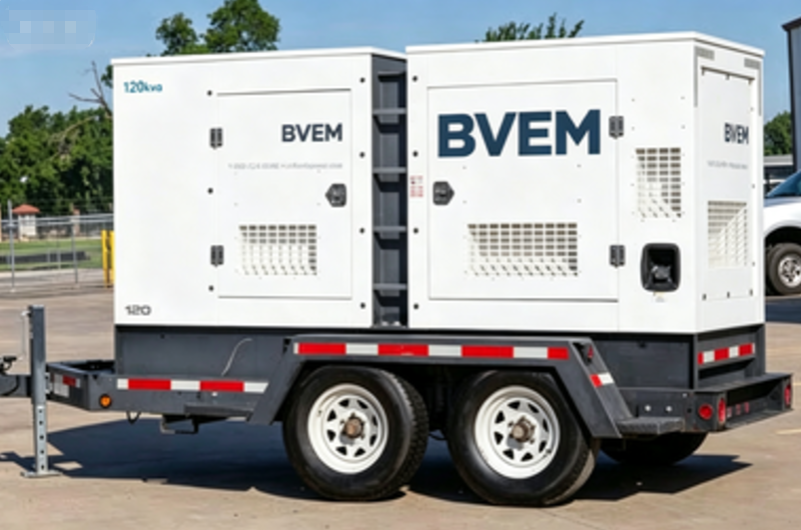
Maintenance
Diesel Generator
The amount of maintenance a diesel generator needs is closely related to how long the engine runs. If the generator operates for many hours every day, routine work such as oil and filter changes will be required more frequently. Other engine-related servicing is also based on operating hours, so a long-running project can mean more maintenance over time.
Hybrid Generator
A hybrid system may cut down on some engine maintenance because the diesel generator does not need to run as many hours. The maintenance plan, however, also needs to cover the battery, inverter, EMS and other electrical parts. These components have their own inspection and servicing requirements.
Noise
Diesel Generator
Noise can also be an important consideration when using a diesel generator. The engine and exhaust system both create noise while the generator is running. This can be a problem if your project is near homes, offices or other places where people are sensitive to noise, especially when the generator has to run continuously.
Hybrid Generator
A hybrid system has an advantage during periods when the diesel engine is not needed. The battery can supply the load while the engine stays off, which makes the system considerably quieter. This can work well for your site if there are local noise limits or if power is required during normally quiet hours.
Stable vs Variable Load
Diesel Generator
A diesel generator can be a good fit for your project when the power demand stays fairly steady and remains high for most of the working day. In this situation, the engine can spend much of its operating time at a suitable load, so there is less need for battery support.
Hybrid Generator
The picture changes when your site’s power demand keeps going up and down. A hybrid generator can make better use of battery storage when the average load is low but short periods of higher demand occur. For projects that run for long hours, this can help the power supply follow actual demand more closely.
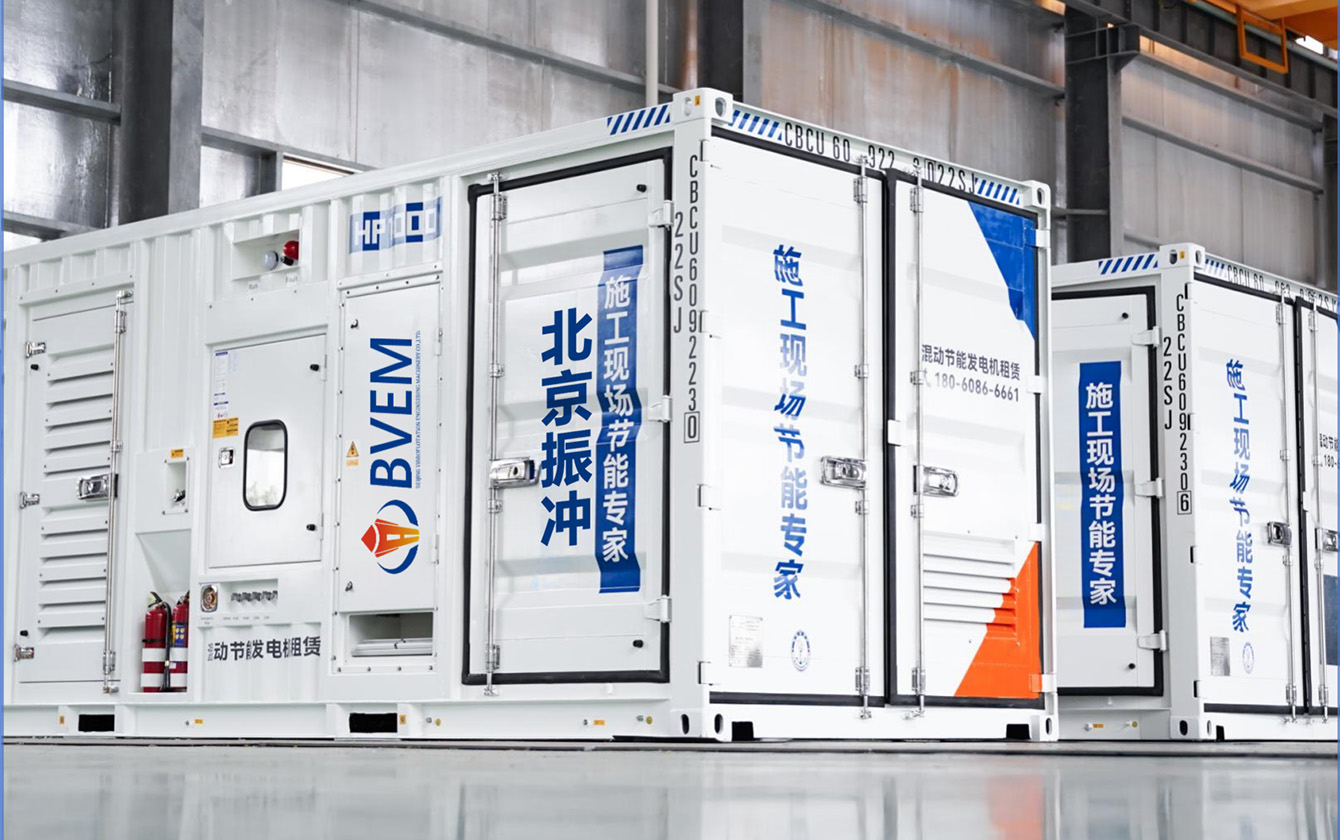
Diesel vs Hybrid Generator: Quick Comparison
| Factor | Diesel Generator | Hybrid Generator |
| Initial Cost | Usually lower | Higher due to battery and power electronics |
| Fuel Consumption | Works well with steady loads | Potentially lower with changing loads |
| Low-load Operation | Engine keeps supplying the load | Battery can take over when suitable |
| Peak Load | Generator needs enough capacity for the peak | Battery can help with short peaks |
| Runtime | Higher engine operating hours | Engine may run fewer hours |
| Maintenance | Mainly engine-related servicing | Engine plus battery and electrical components |
| Noise | Engine noise while running | Quieter when running on battery |
| System Complexity | Relatively simple | Requires battery, inverter and EMS |
| Stable High Load | Usually suitable | Battery benefits may be limited |
| Variable Load | Low-load periods may reduce efficiency | Better suited to changing demand |
| Short-term Project | Lower initial cost can be an advantage | Higher upfront cost may be harder to justify |
| Long-term Project | Operating cost depends on load and runtime | Greater potential to reduce running costs |
The table gives you a quick way to narrow down the choice. A diesel generator may suit a project where power demand stays high and fairly consistent. A hybrid system is worth a closer look when the load varies during the day, short peaks occur, or the generator is expected to run for long periods.
Diesel vs Hybrid: Which Is More Cost-Effective?
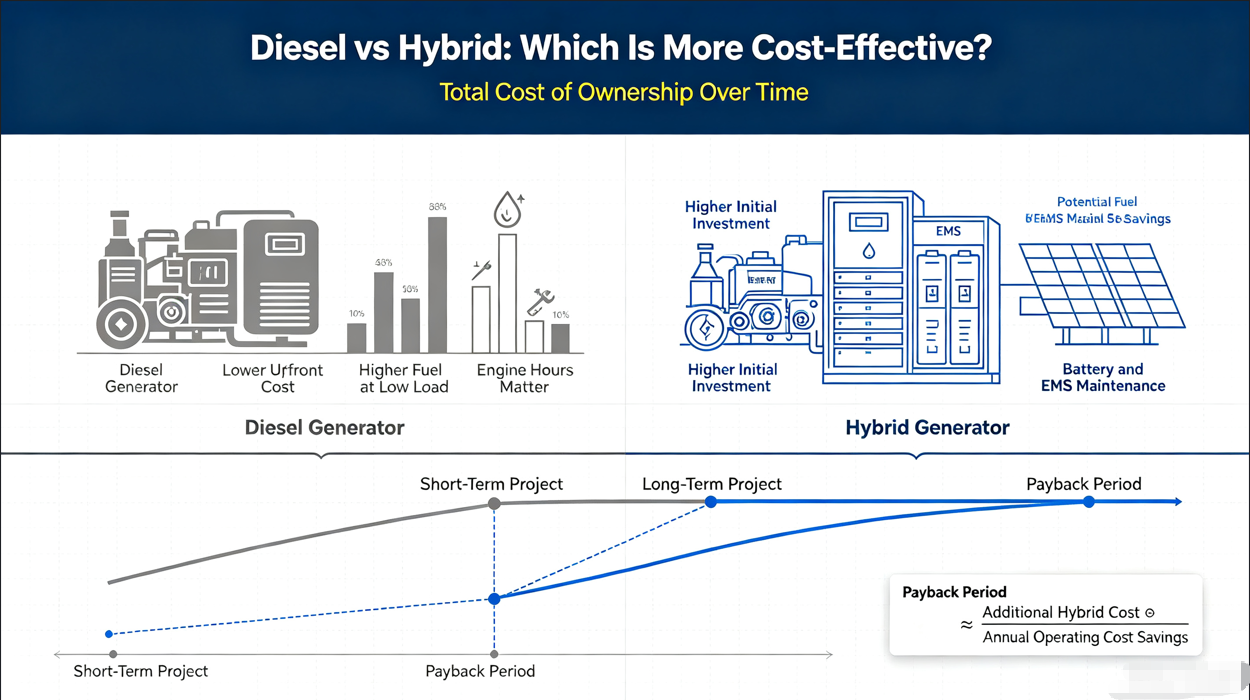
The lower purchase price of a diesel generator does not always mean it will be the cheaper option for your project. If you want to compare the two fairly, look beyond the initial price and consider fuel, maintenance, operating hours and project duration.
Upfront Investment
The higher initial investment is one of the main factors you need to consider when comparing the two systems. A hybrid system costs more because battery storage, power electronics and EMS equipment are added to the diesel generator.
If you are working on a short-term project, this price difference can be more important. There may not be enough operating time for the potential savings from a hybrid system to make up for the additional investment.
Fuel and Operating Cost
Fuel can become a much bigger part of your total cost when the generator runs for long hours.
If your site runs at a low average load, with equipment starting and stopping or only needing extra power for short periods, fuel use can add up quickly. This matters even more on projects where the generator runs for long hours every day, as fuel costs can make up a significant part of the overall operating cost.
You should not assume that every hybrid system will deliver the same fuel saving. The result depends on your actual load profile, daily operating hours, fuel price and how the system is configured and operated.
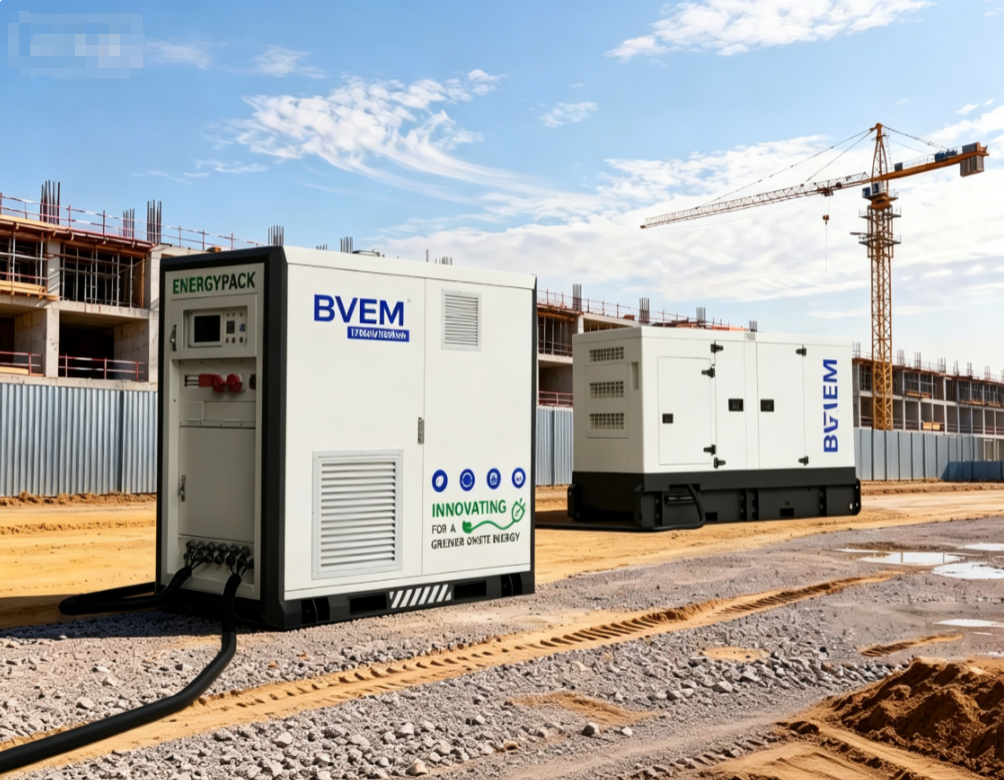
Maintenance Cost
A hybrid system may reduce some engine-related maintenance because the diesel generator can run fewer hours. If you operate the equipment for many hours each day, this can make a difference over the course of a long project.
There are also additional components to consider. The battery, inverter and EMS all require their own inspection and maintenance. When you compare maintenance costs, it is better to look at the complete power system rather than only the diesel engine.
Project Duration
How long you plan to use the generator can have a big effect on which option makes financial sense.
For a short-term project, a diesel generator may be the more practical choice. You pay less upfront, and there may be limited time for fuel savings from a hybrid system to recover the higher purchase cost.
For a long-term project, the calculation can be different. If your hybrid system reduces fuel consumption and diesel runtime every day, those savings have more time to add up. This is one reason a higher initial investment can make sense for projects that operate for a long period.
Total Cost of Ownership
Rather than comparing purchase prices alone, you can compare the expected cost of both systems over the full project period.
You can use a simple payback calculation:
Additional Hybrid Cost = Hybrid System Cost − Comparable Diesel Generator Cost
Payback Period ≈ Additional Hybrid Cost ÷ Annual Operating Cost Savings
This gives you a rough estimate of how long it may take to recover the additional hybrid investment. Your actual payback period will depend on factors such as fuel price, annual operating hours, load profile, maintenance costs and project duration.
If your project is expected to finish before the estimated payback period, the higher upfront cost of a hybrid system may be difficult to justify. If you expect to operate the equipment for several years, the potential fuel and operating savings may have a greater impact on your overall costs.
For your own project, start with a few basic figures: required power, average load, peak load, daily operating hours, fuel price and expected project duration. These numbers will give you a much more useful comparison than looking at the generator’s rated power alone.
Which Generator Fits Your Project?
There is no single answer for every project. The right choice depends on the load, operating hours, project duration and site conditions.
Choose a Diesel Generator If:
- Stable, high power demand
- Continuous operation of heavy equipment
- Short-term project
- Lower upfront cost is important
- Diesel is easy to store and refuel on site
- Battery support offers limited practical value
For a short-term project, the lower initial cost and simpler system of a diesel generator can be a practical advantage. When the generator only needs to run for a limited number of hours, there may be less time to recover the higher upfront cost of a hybrid system through fuel savings.
Consider a Hybrid Generator If:
- Power demand changes frequently
- Average load is well below peak demand
- Frequent starting peaks from motors, pumps or other equipment
- Long daily operating hours
- Long-term project
- High fuel costs over the project period
- Remote site with difficult fuel delivery
- Noise or emission limits
For a longer project, the potential reduction in diesel runtime and fuel consumption has more time to affect your operating costs. This is especially worth considering when you run the equipment for many hours each day and the load changes throughout the working period.
FAQ
5.1 Is a hybrid generator more fuel-efficient than a diesel generator?
A hybrid generator can use less fuel in the right operating conditions, particularly when the load varies or remains low for long periods. A conventional diesel generator may keep running even when your site only needs a small amount of power. A hybrid system can use battery storage during these periods and bring the diesel generator in when demand increases or the battery needs charging. The actual fuel saving depends on your load profile, operating hours, fuel price, and system configuration, so you should evaluate these factors together rather than rely on a fixed percentage.
How do you size a hybrid generator?
You should start with your actual power demand rather than choosing a system only from the highest equipment rating. Look at your average load, peak load, daily energy use, and the starting requirements of major equipment. You should also consider how many hours you operate each day and how long the project will run. These figures help determine the right balance between generator capacity and battery storage. For a more accurate configuration, a load profile from your actual project is much more useful than a single peak-load figure.
What happens when the power demand is higher than the battery capacity?
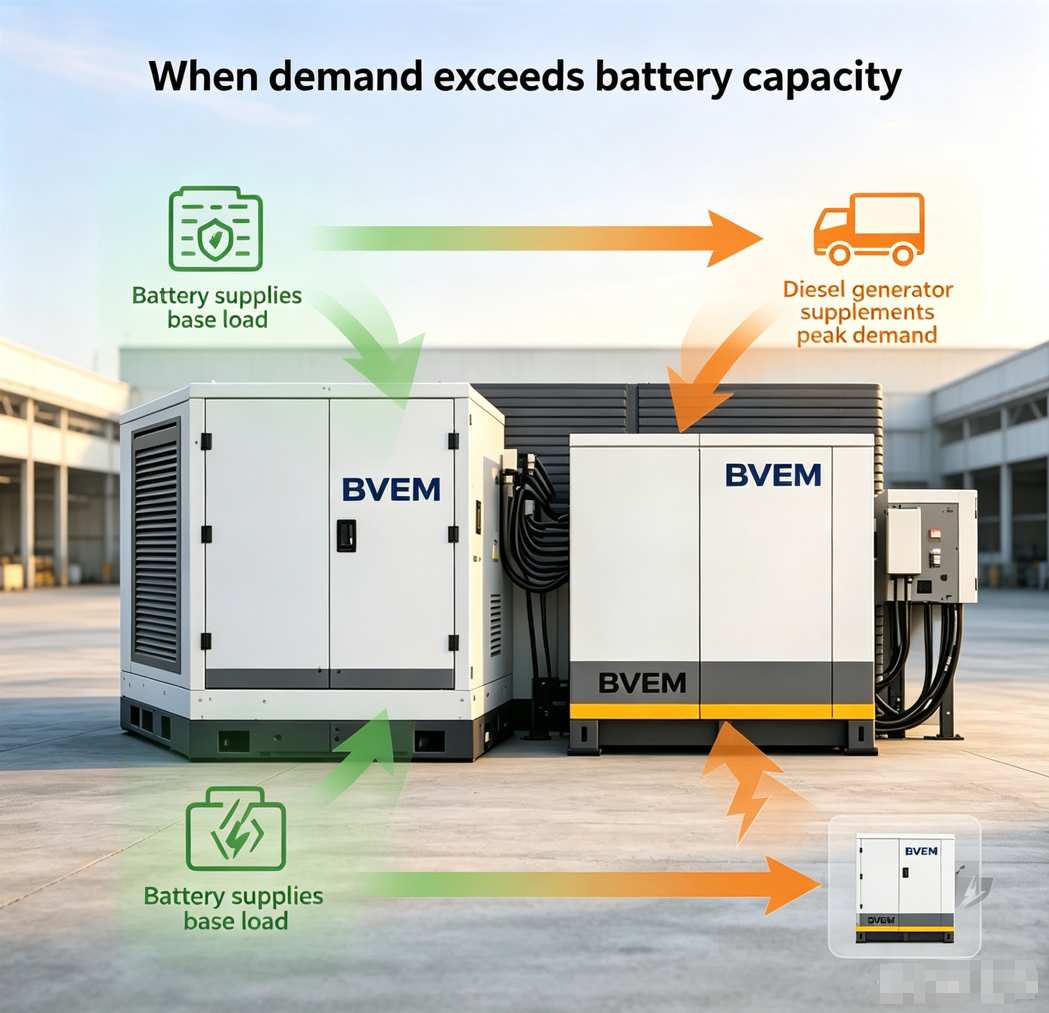
When your site needs more power than the battery can provide, the diesel generator can start or increase its output to meet the additional demand. The battery can also assist during short-term peaks, depending on the system configuration. This allows the generator and battery to work together instead of requiring the diesel generator to cover every demand change by itself. The exact response depends on the battery capacity, inverter rating, generator size, and EMS settings selected for your project.
Are hybrid generators suitable for construction and mining sites?
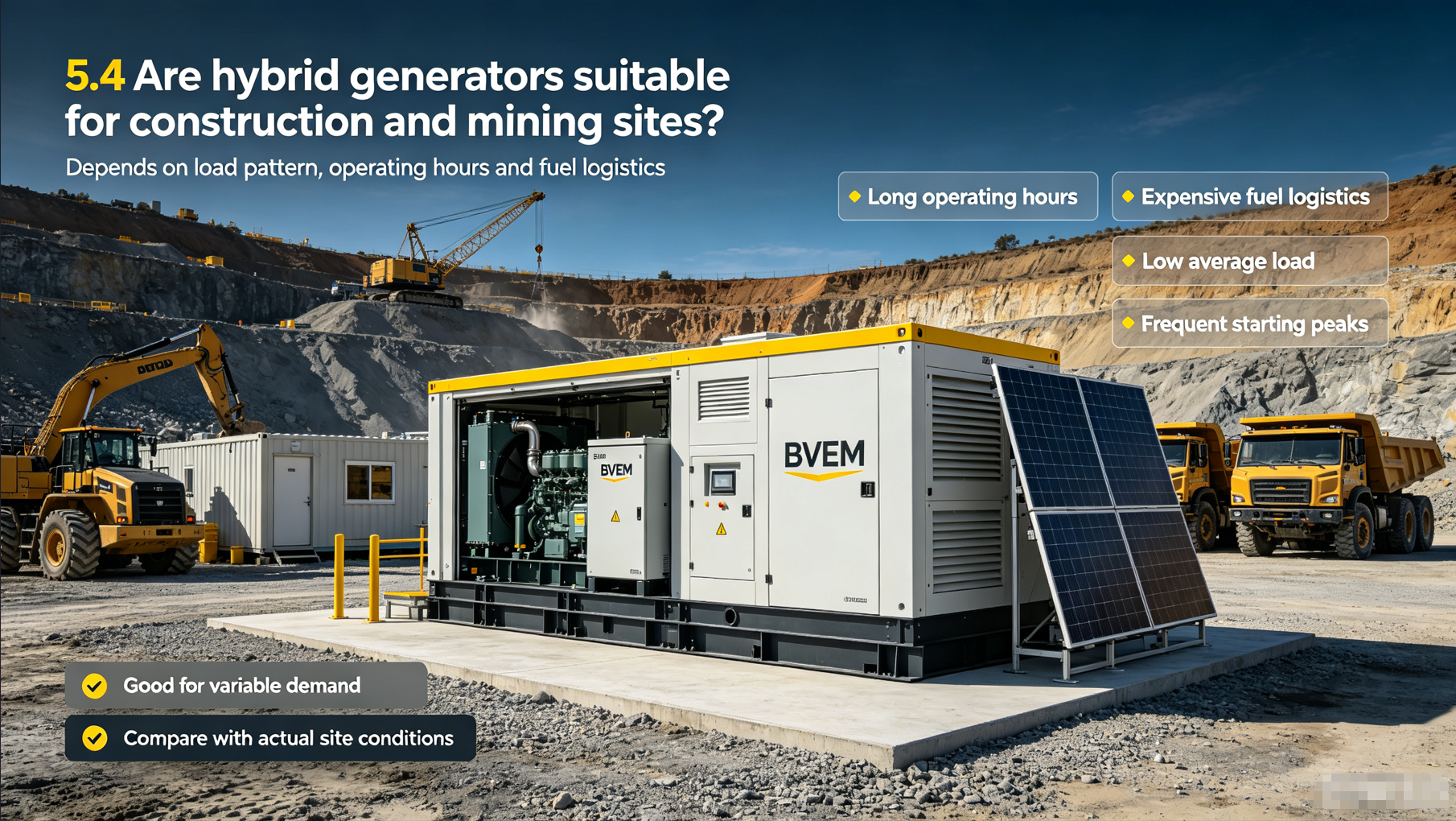
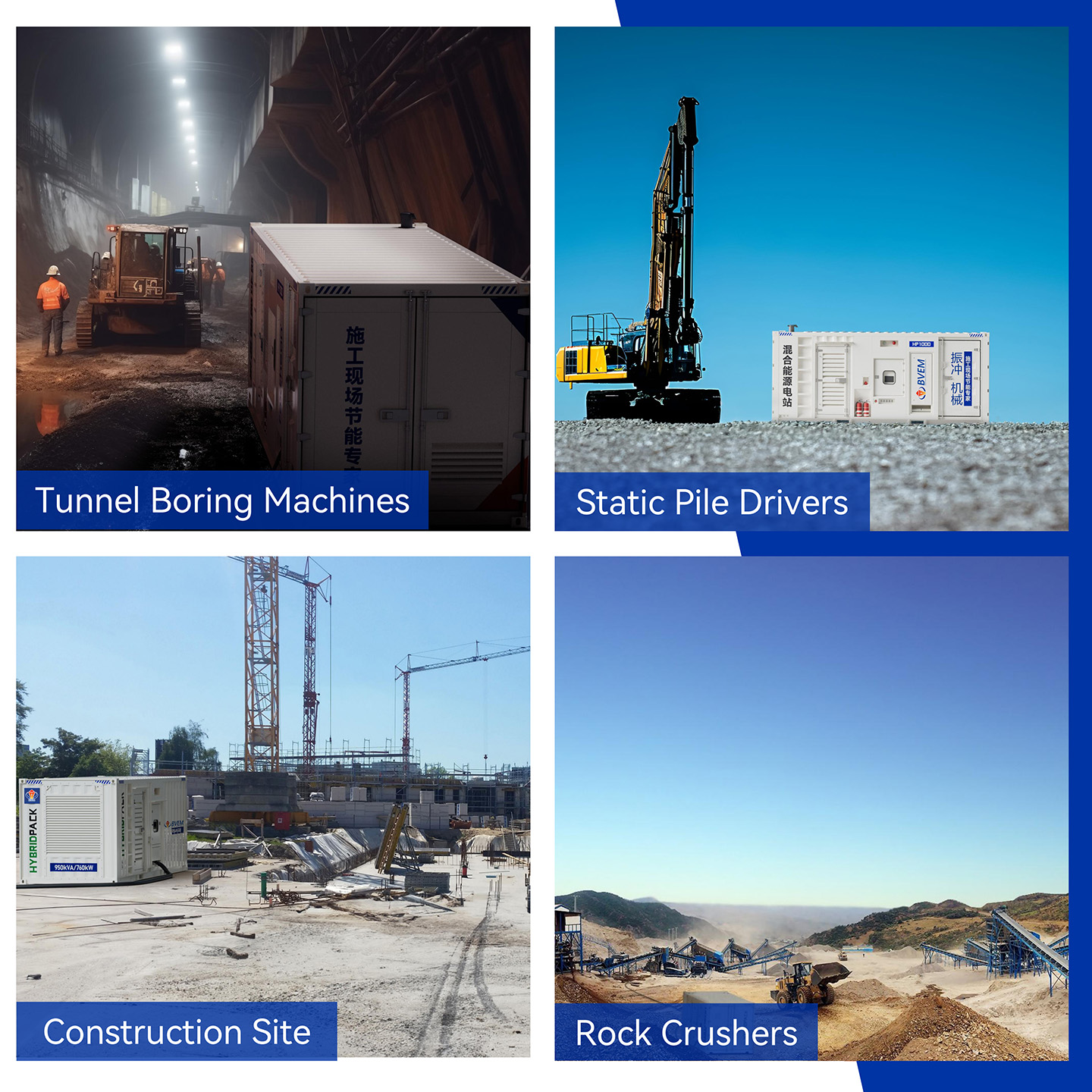
Yes. Hybrid generators can be a practical option for construction sites, mining operations, remote industrial projects, and other applications where power demand changes during the day. They are particularly useful when you have long operating hours, expensive fuel logistics, low average loads, or frequent equipment starting peaks. If your site has a stable and consistently high load, however, a conventional diesel generator may still be the simpler choice. You should compare the system against your actual working conditions before making a decision.
How much can you save by using a hybrid generator?
There is no single saving figure that applies to every project. Your potential savings depend mainly on the load profile, daily operating hours, fuel price, project duration, and how much diesel runtime the battery system can replace. A hybrid system may provide greater savings when the generator often operates at low load or needs to handle frequent short peaks. To estimate the potential return, compare your current fuel and operating costs with the expected hybrid system cost over the full project period.
Why Choose BVEM for Your Hybrid Generator Project?
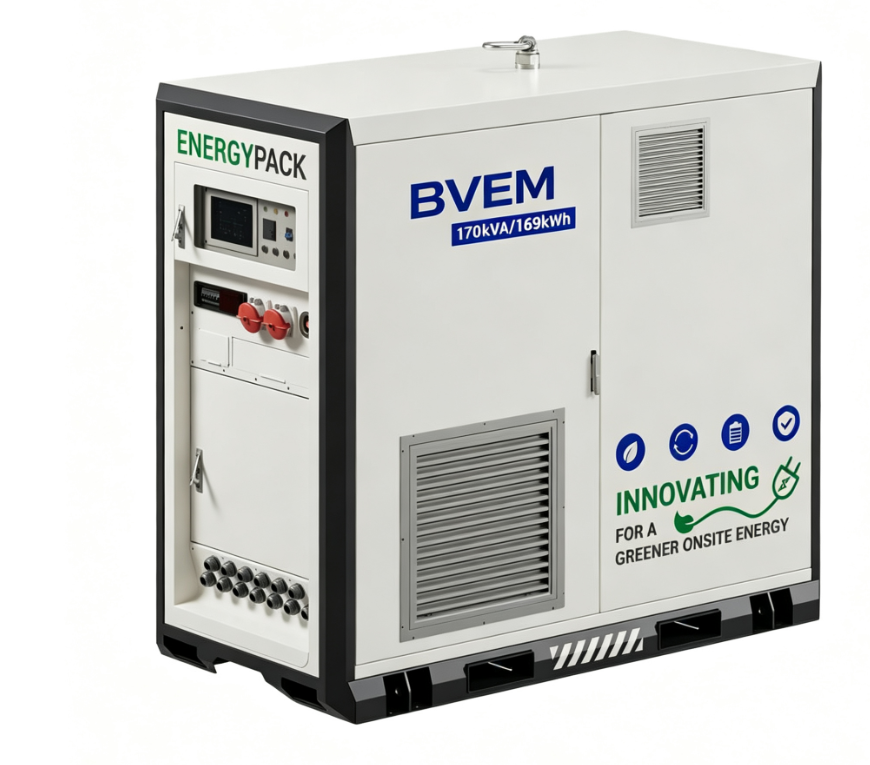
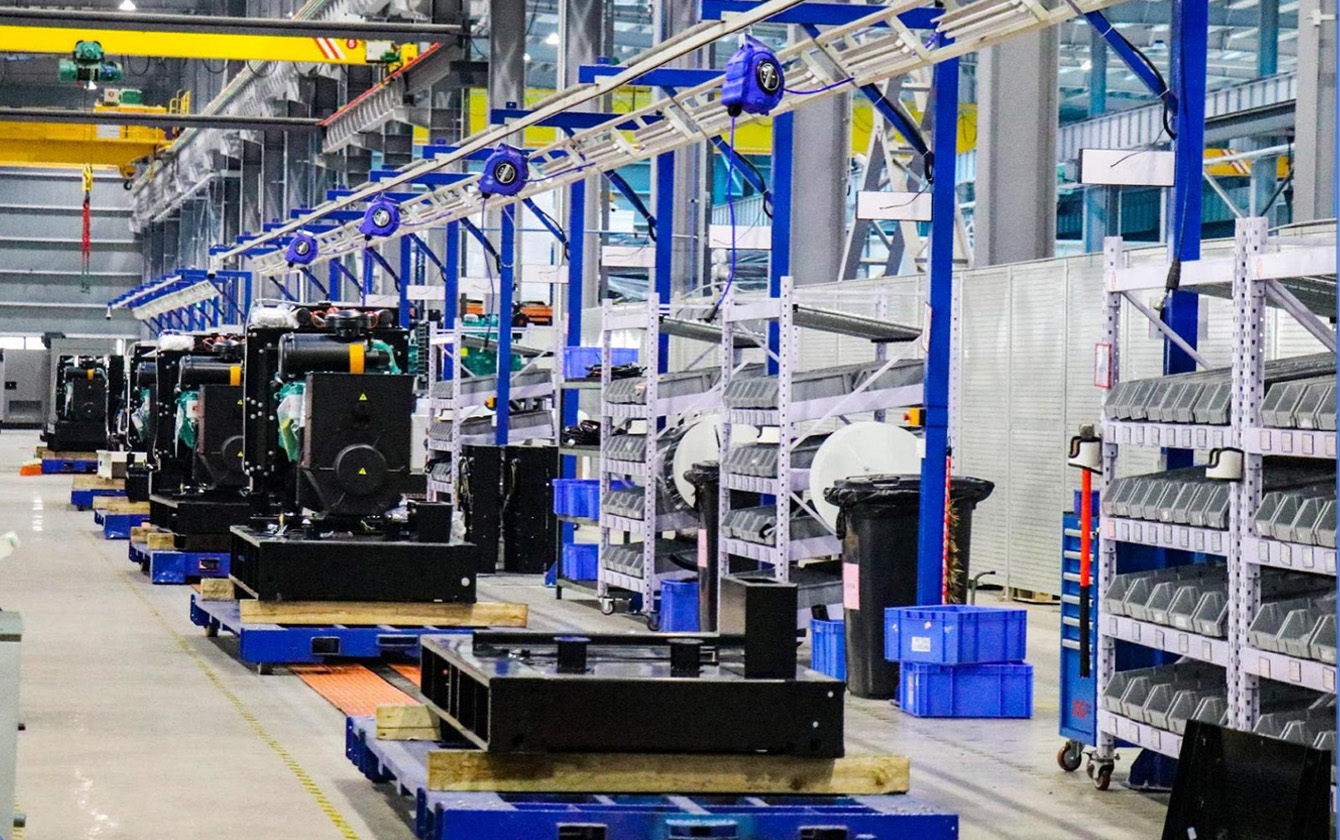
You get more than a hybrid generator. BVEM evaluates your load profile, operating hours and site conditions to configure the right generator, battery and EMS for reliable, fuel-efficient power across construction, mining and off-grid projects.