Executive Summary
Project Name: Tibar Bay New Container Port Development Project
Project Location: Dili, Timor-Leste (10 km West of Capital)
Contract Timeline: 32-Month Execution Schedule
Core Technology: Bottom-Feed Vibro Replacement Stone Column Method (Vibroflotation)
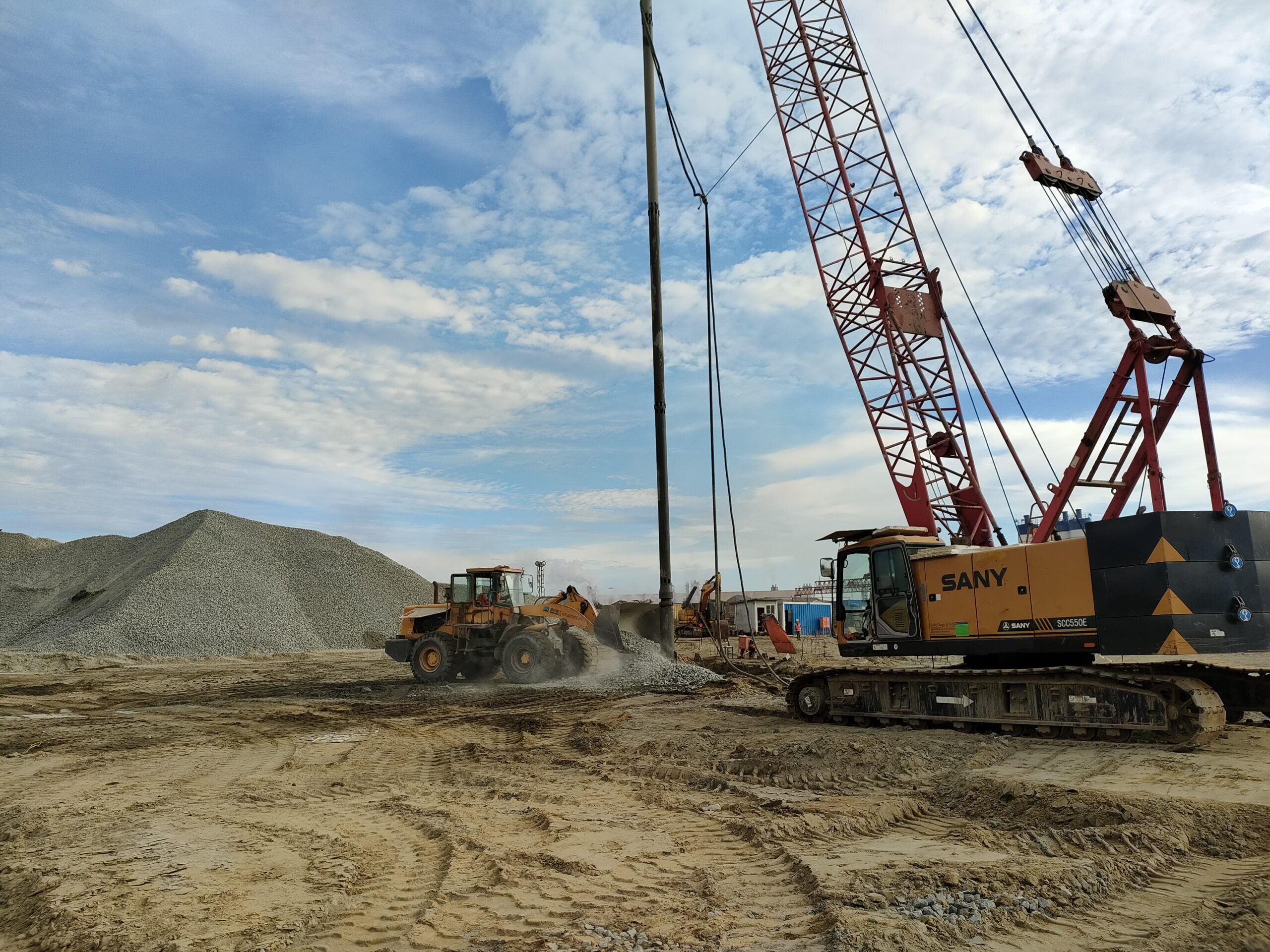
Flagship Equipment: BVEM Vibroflotation System 400-180 (180 kW) Bottom-Feed Vibroflot
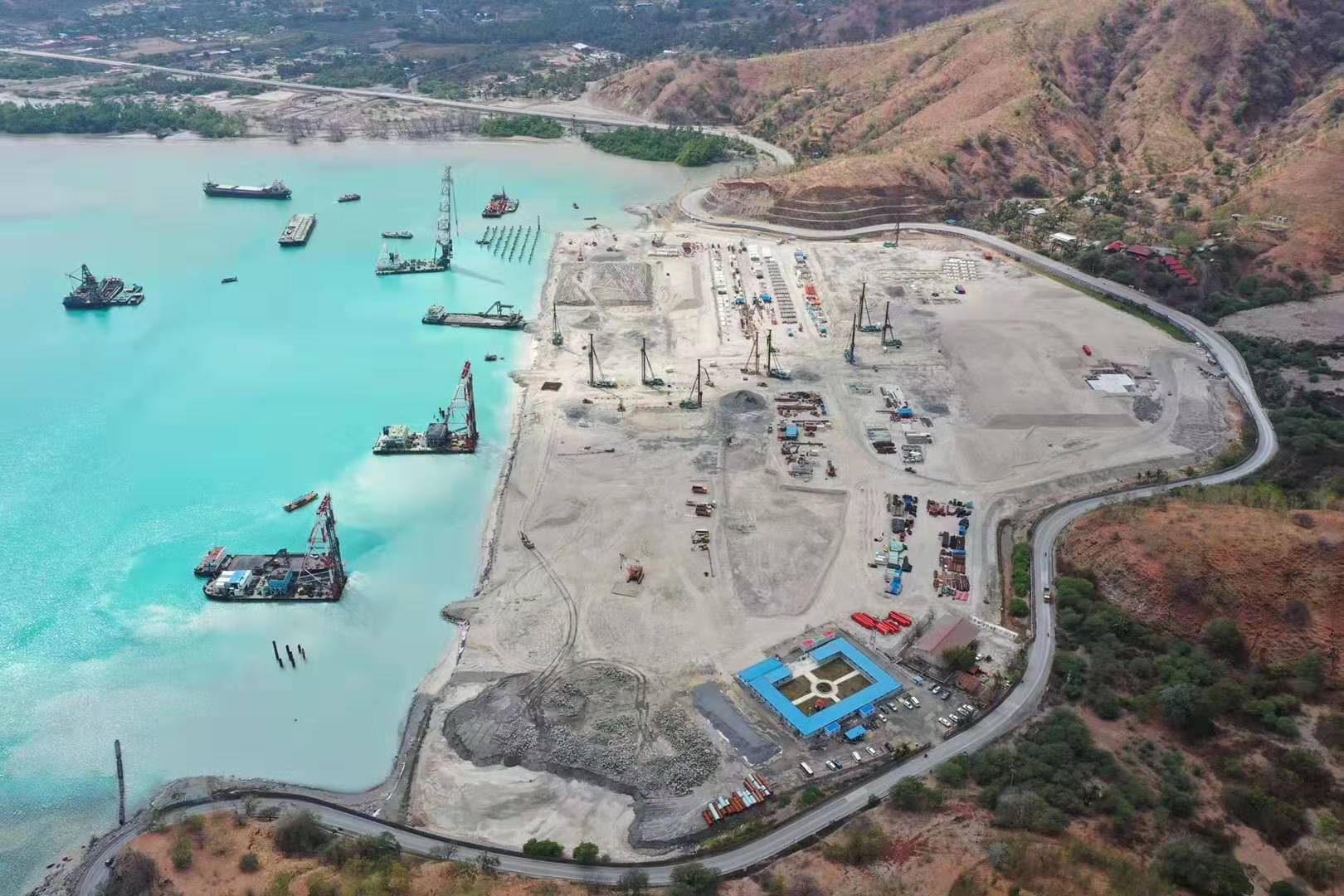
Total Workload: 54,596 Stone Columns across 18.5 Hectares (37,053 Onshore / 17,543 Offshore)
Key Achievements: Penetrated extremely hard coral/sand strata with SPT > 100 blows; successfully executed deep water offshore compaction down to 26 meters depth with RTK automated positioning.
Project Background & Strategic Significance
The Tibar Bay New Container Port is the largest and most critical maritime infrastructure initiative in the history of Timor-Leste. Designed to transform the nation’s logistics capacity and modernise North-South trade links in Southeast Asia, this flagship mega-project encompasses a 630-meter berth container terminal on high piles, 3.5 million cubic meters of capital dredging, 27 hectares of land reclamation, and an extensive 18.5-hectare ground improvement footprint.
As a Greenfield coastal port expansion built over reclaimed marine sediment and highly variable native soils, the structural reliability of the port platform was critical to supporting heavy container stackers, gantry cranes, and massive deadweight loads. Executing 54,596 deep stone columns under tight 32-month master contract constraints demanded equipment that delivered unmatched penetration force, automated quality control, and round-the-clock reliability across both marine and terrestrial construction environments.
Geological Challenges & Complex Site Conditions
The jobsite presented a formidable combination of geotechnical hazards and marine construction bottlenecks:
Extremely Heterogeneous & High-SPT Hard Strata: Site investigations revealed extreme variability in soil density. While 60%–70% of the area recorded Standard Penetration Test (SPT) values ≤20 blows, significant zones exceeded 30 blows. In extreme locations, SPT N-values spiked over 50 and even up to 100 blows. Conventional vibroflots frequently experience penetration stoppage, overheating, or motor burnout when encountering such dense strata.
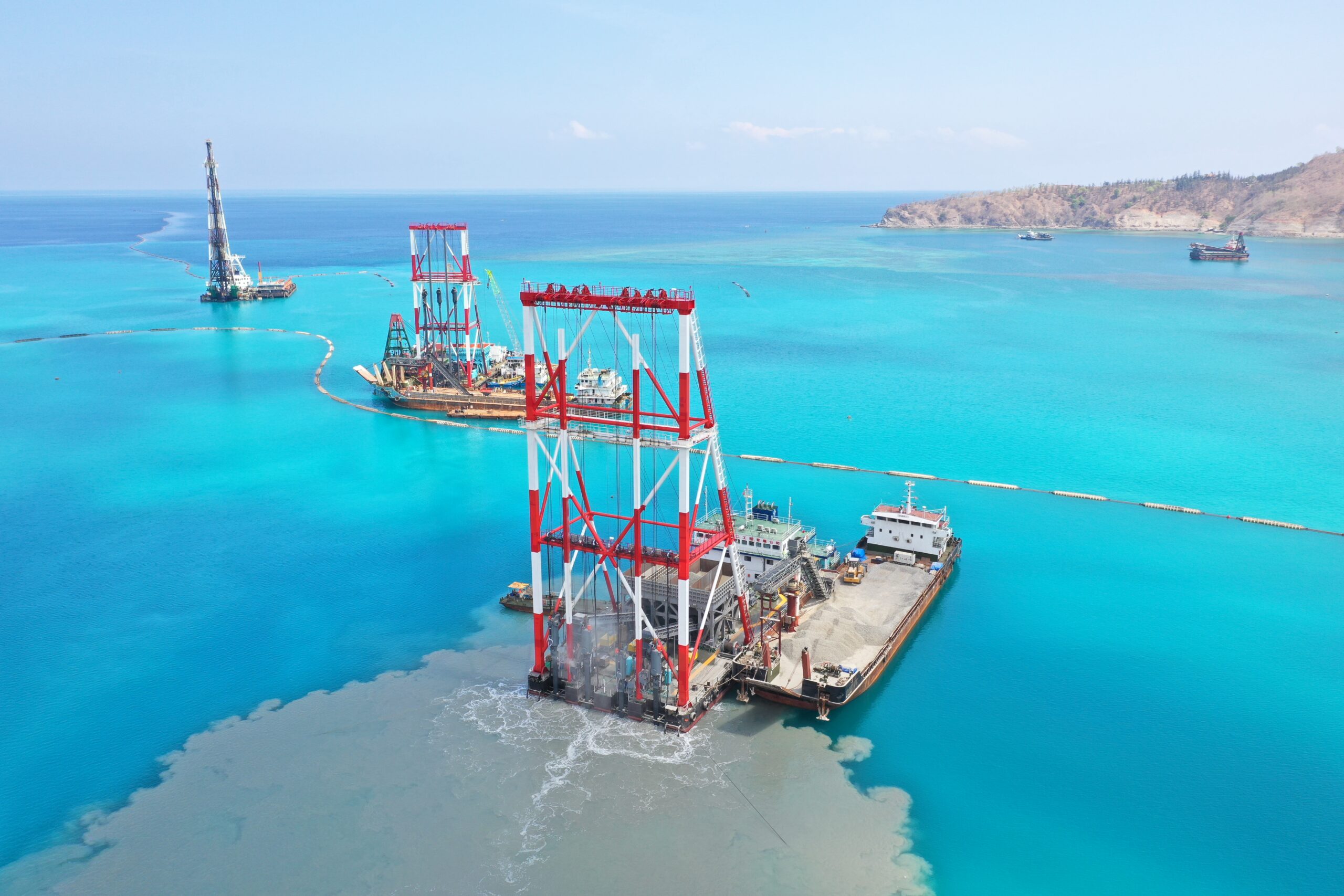
Dual Marine-Terrestrial Execution: Ground treatment was split between onshore land reclamation and deep offshore water zones. Marine operations took place in water depths up to 15 meters, requiring column penetration depths down to 26 meters beneath the sea level.
Strict Marine Environment & Positioning Constraints: Offshore operations faced continuous tidal fluctuations, wave action, and zero visual visibility underwater, necessitating fully automated, high-precision positioning and material delivery systems. Onshore operations required deep installations between 15 and 21 meters while maintaining maximum production cycle efficiency.
The Engineering Solution: Customized Bottom-Feed Vibro System
To overcome hard-stratum penetration and high water-pressure backfilling challenges, project engineers deployed the Bottom-Feed Vibro Replacement Stone Column Method using specialized heavy-duty machinery engineered by Beijing Vibroflotation Engineering Machinery Co., Ltd. (BVEM).
Core Equipment Configuration
The flagship construction unit was built around the BVEM 400-180 Heavy-Duty Bottom-Feed Vibroflotation System. Key technical innovations built into the rig include:
Dual-Lock Air-Pressurized Chamber: Featuring a 1.2 m³ pneumatic dual-lock chamber system that maintains continuous internal air pressure, ensuring gravel backfill is smoothly injected directly into the pile tip without sea-water or mud backflow, even under 26-meter underwater depth pressure.
Rail-Guided Chute Skip Hoist: Optimized material handling mechanism that delivers rapid, jam-free aggregate feeding to maximize hourly production rates.
INVT Variable Frequency Drive Control: Advanced IP65-rated marine-grade VFD electrical cabinet enabling real-time excitation force adjustment, soft starts, and full motor protection against voltage fluctuations.
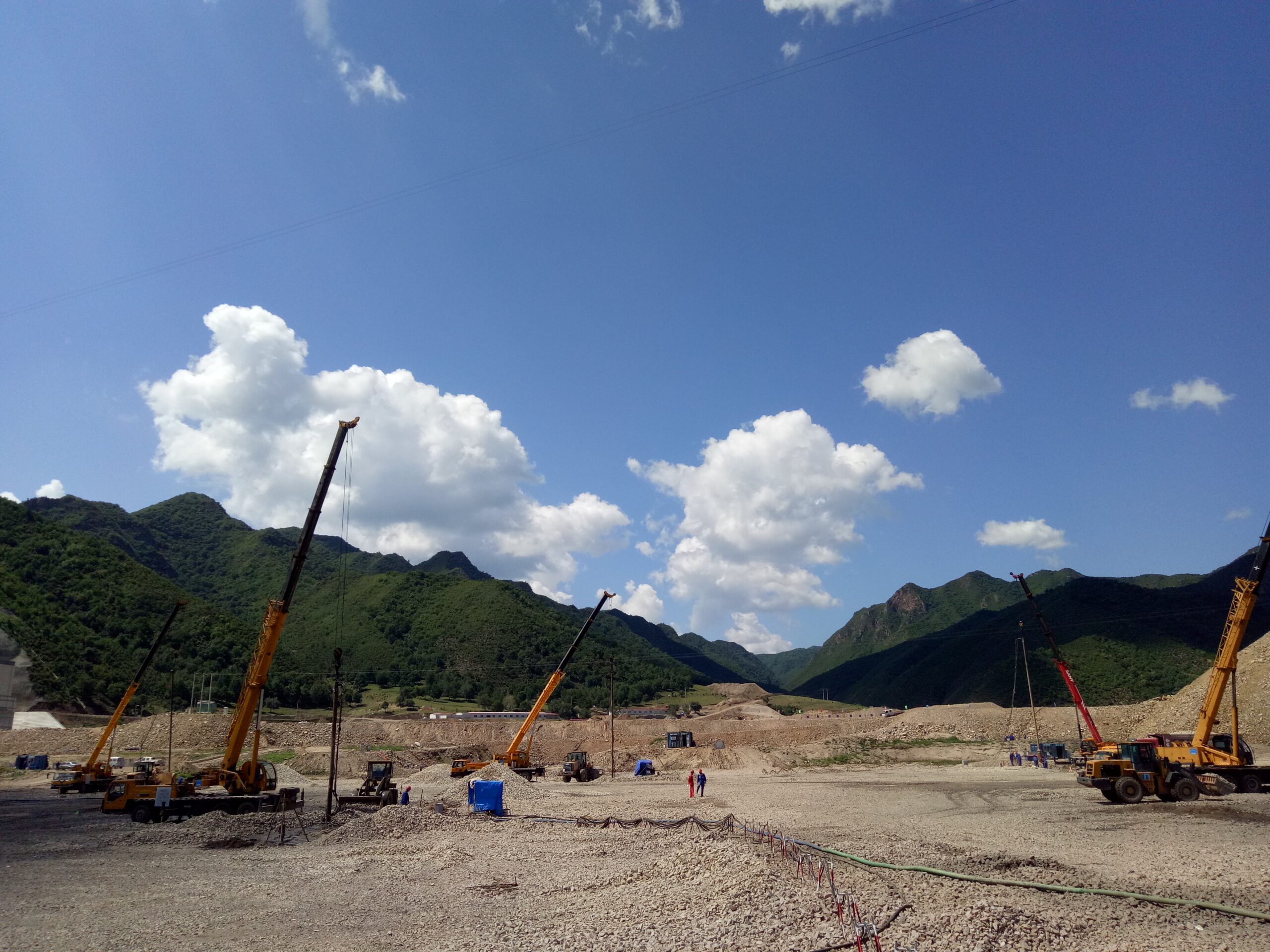
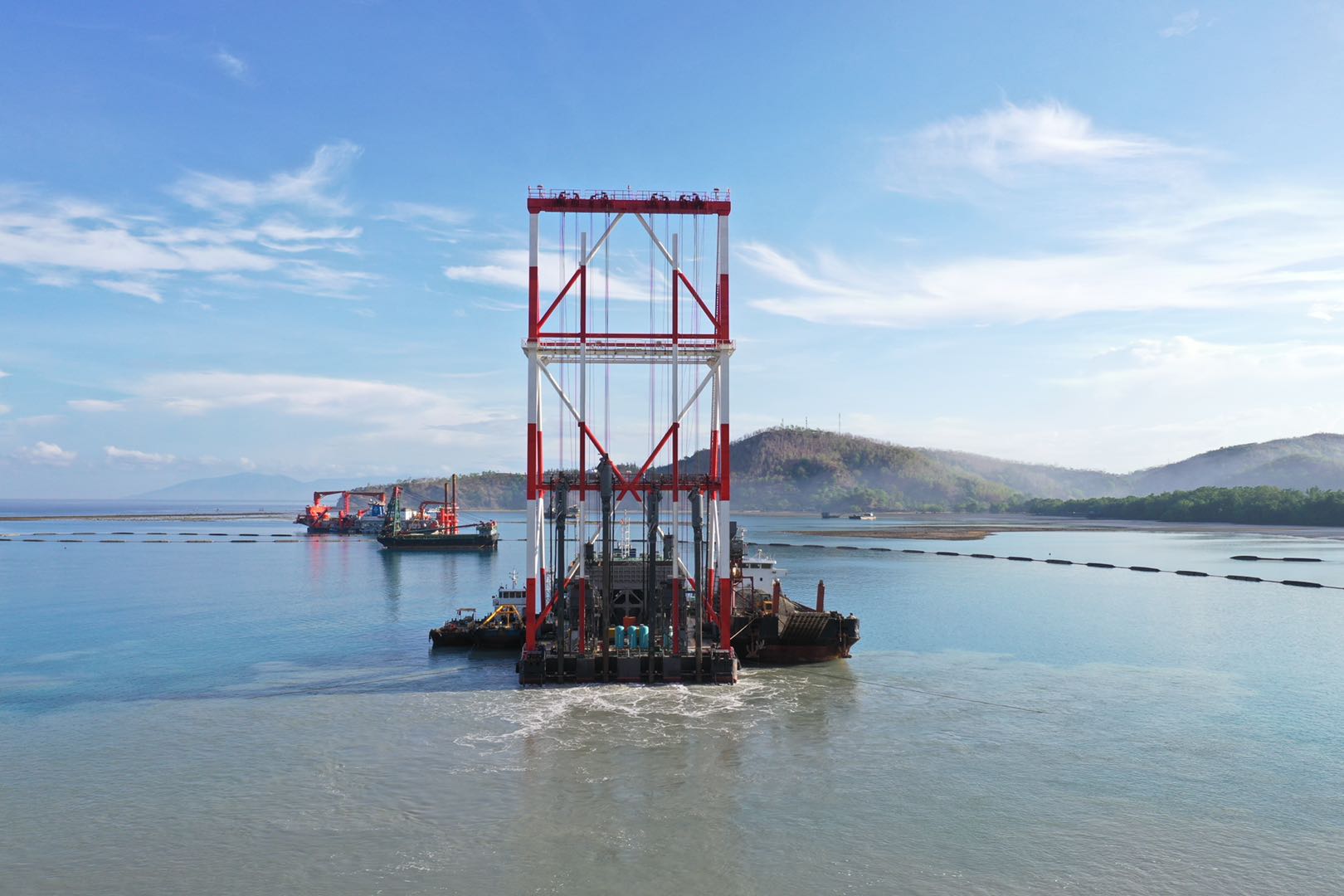
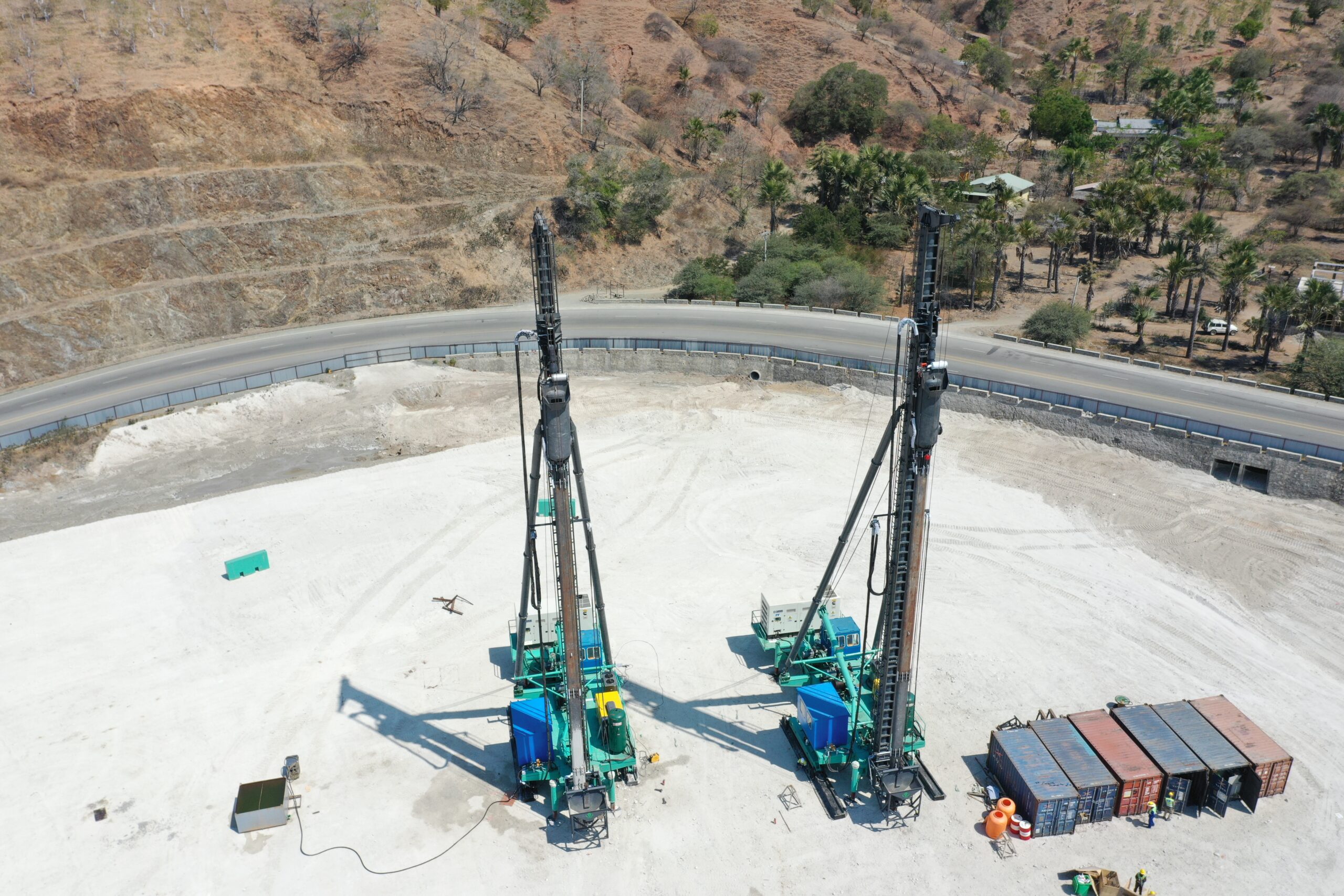
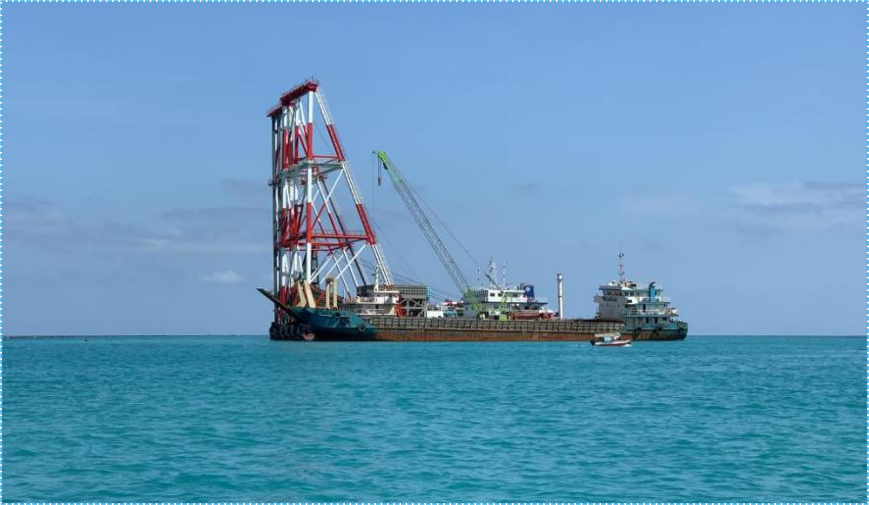
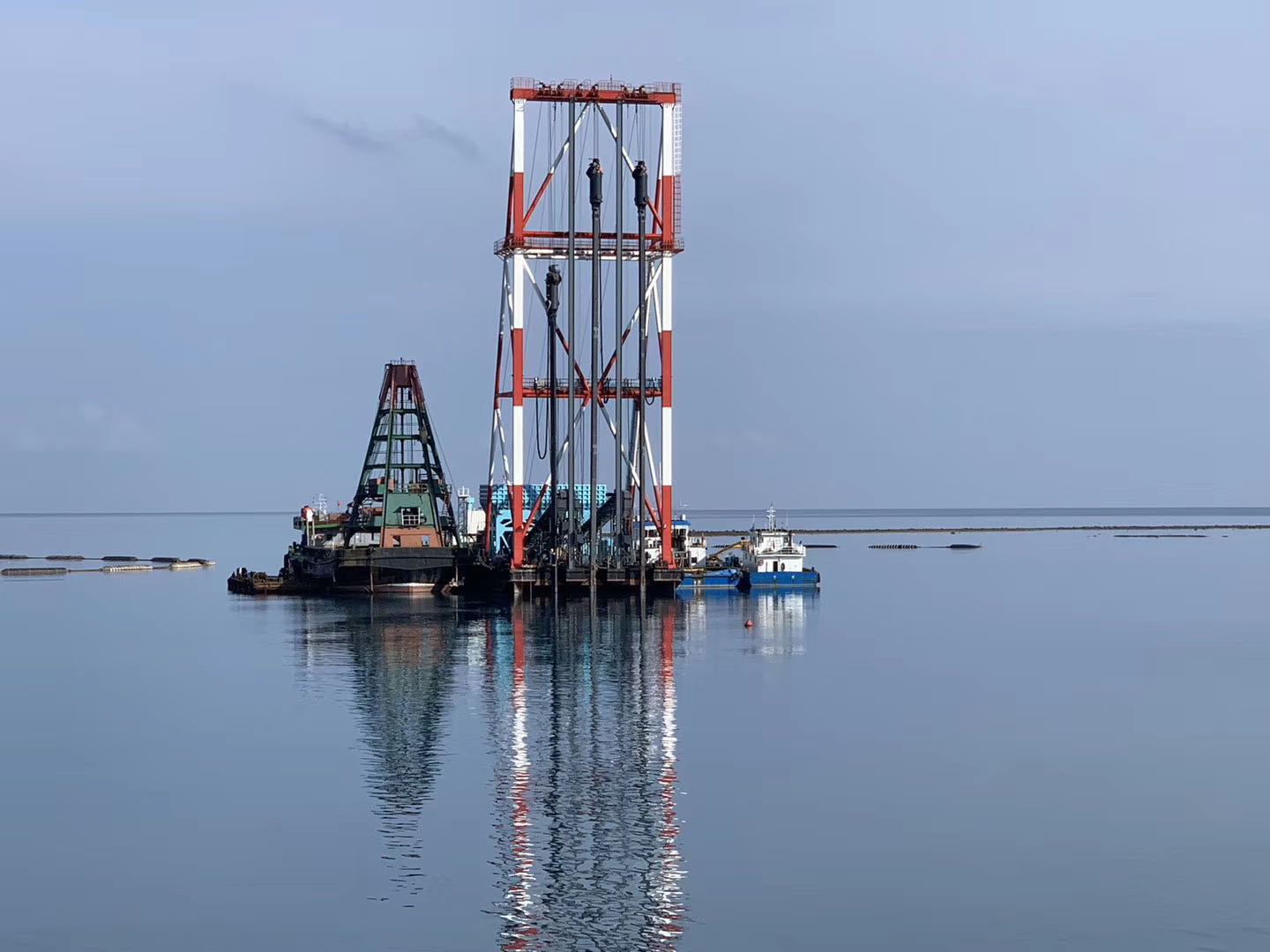
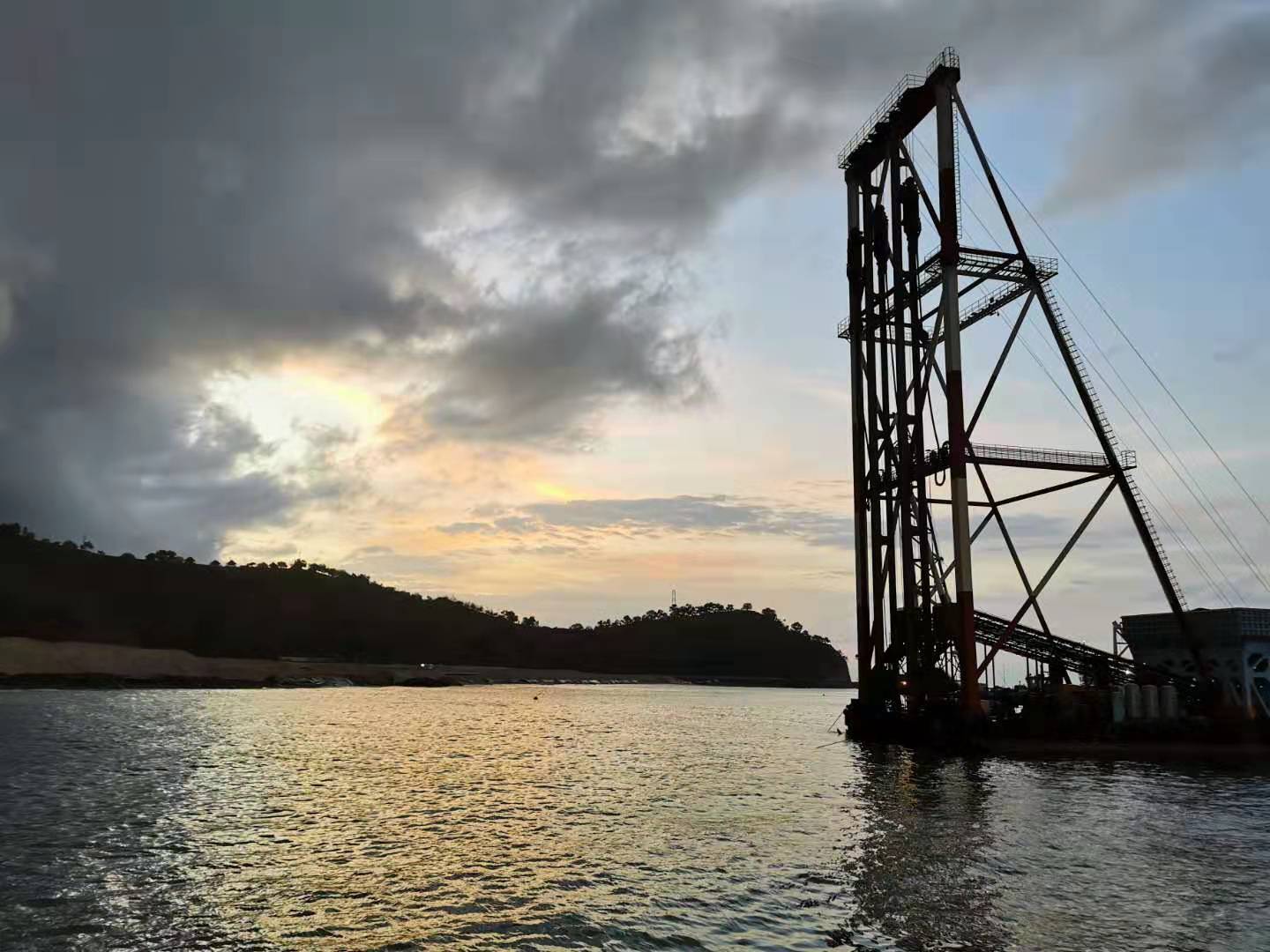
Custom Rig Carriers: Paired with walking pilling frames for onshore dry execution, and two custom marine barges (configured with parallel 4-set and 3-set vibroflot arrays) for offshore operations.
Execution Methodology: Advanced Offshore & Onshore Operations
Marine Operations (Offshore Fleet)
Offshore compaction was managed from a centralized barge control center, transforming complex underwater piling into a push-button automated process:
RTK GPS Precision Positioning: Integrated Real-Time Kinematic GPS systems automatically aligned barge crane arms over exact target pile coordinates in up to 15m water depths.
Automated Material Supply Chain: Main aggregate hoppers, conveyor belts, intermediate hoppers, and skip hoists operated in synchronized automation, feeding aggregate continuously into the 180 kW vibroflot system.
Centralized Multi-Unit Control: Operators inside an air-conditioned central control room monitored multiple underwater vibroflots simultaneously. Integrated video feeds, depth sensors, compressed air regulators, and automated cooling loops ensured uncompromised underwater execution.
Onshore Dry-Method Execution
Dry Penetration & Rapid Cycles: Onshore rigs utilized dry-method compressed-air flushing. The 180 kW motor torque drove through high-SPT strata effortlessly.
Rapid Cycle Times: Achieved hole penetration in 15–25 minutes and stone densification in 30–35 minutes per pile, completing full 15–21m columns in 50–70 total machine minutes.
Wireless Remote Operation: Field personnel operated rigs via 100-meter wireless remotes, keeping workers at a safe distance while reviewing live pile-formation data on dual-language (English/Chinese) touchscreens.
Proven Outcomes & Quality Assurance
The application of BVEM’s bottom-feed vibroflotation system delivered outstanding structural and operational metrics across the entire 18.5-hectare footprint:
Hard Soil Penetration Solved: The 180 kW high-torque vibroflot successfully penetrated tough coral gravel and high-SPT ($>100$ blows) soil layers without mechanical downtime or thermal overload.
54,596 Columns Completed Ahead of Schedule: Onshore crews completed 37,053 stone columns, while marine barges successfully installed 17,543 underwater columns in challenging open-water conditions.
Total QA/QC Transparency: Built-in material level sensors, depth encoders, amperage loggers, and cameras recorded every second of piling activity, providing verifiable digital quality certificates for every single column installed.
Solid Foundation for Port Infrastructure: Post-treatment heavy dynamic probing and static load tests confirmed that composite bearing capacity and settlement control exceeded international port engineering standards, setting a solid foundation for the berth structure.
Value Delivered: Why Global Contractors Choose BVEM
The Tibar Bay Port project serves as a definitive case study for marine contractors, port authorities, and foundation equipment buyers worldwide:
Extreme Power for Extreme Conditions: Penetrating SPT > 100 soils and penetrating 26m underwater requires more than standard force—it demands engineered torque. The 180 kW BVEM system provides the raw power required to complete projects where lower-tier equipment fails.
Turnkey Offshore Piling Capabilities: Offshore marine piling is notoriously expensive. BVEM’s ability to supply complete integrated systems—including dual-lock chambers, VFD control cabinets, RTK navigation integration, and automated feeding systems—drastically lowers technical integration risks for international EPC contractors.
Automated Precision & Reduced Labor Overhead: Wireless remote controls, automated dual-chamber pressure regulation, and digital QC logging allow contractors to achieve higher daily production with fewer on-site technicians, increasing safety and project profitability.